
Quick answer: A re-engagement (or win-back) campaign is a short sequence sent to subscribers who have stopped opening and clicking, followed by a decision: re-engage them, email them less, or remove them. The reason it matters is not sentimental — it is deliverability. Chad S. White, Head of Research at Oracle Marketing Consulting, advises to “only email your full cadence to subscribers who have opened or clicked recently — which for most companies will be the past 6 months. Everyone else should receive emails less frequently, or not at all” (Dyspatch). This guide covers when to trigger, what to send, and when to let go. Written with AI assistance and reviewed against primary sources.
Every list decays. People change jobs, lose interest, or just stop caring. The mistake is not losing them — it is continuing to email them as if nothing happened, which quietly poisons your inbox placement for everyone else.
Why re-engagement matters (it is a deliverability problem)
Mailbox providers read engagement as a relevance signal. If a large share of your recipients never open or click, providers infer your mail is not wanted and start routing it to spam — including the mail your engaged subscribers wanted (Mailchimp).
That is the counterintuitive part: a smaller, engaged list can out-deliver and out-earn a bigger, half-dead one, because inbox placement compounds across every send. Sending to everyone is not free — you pay for it in the inbox.
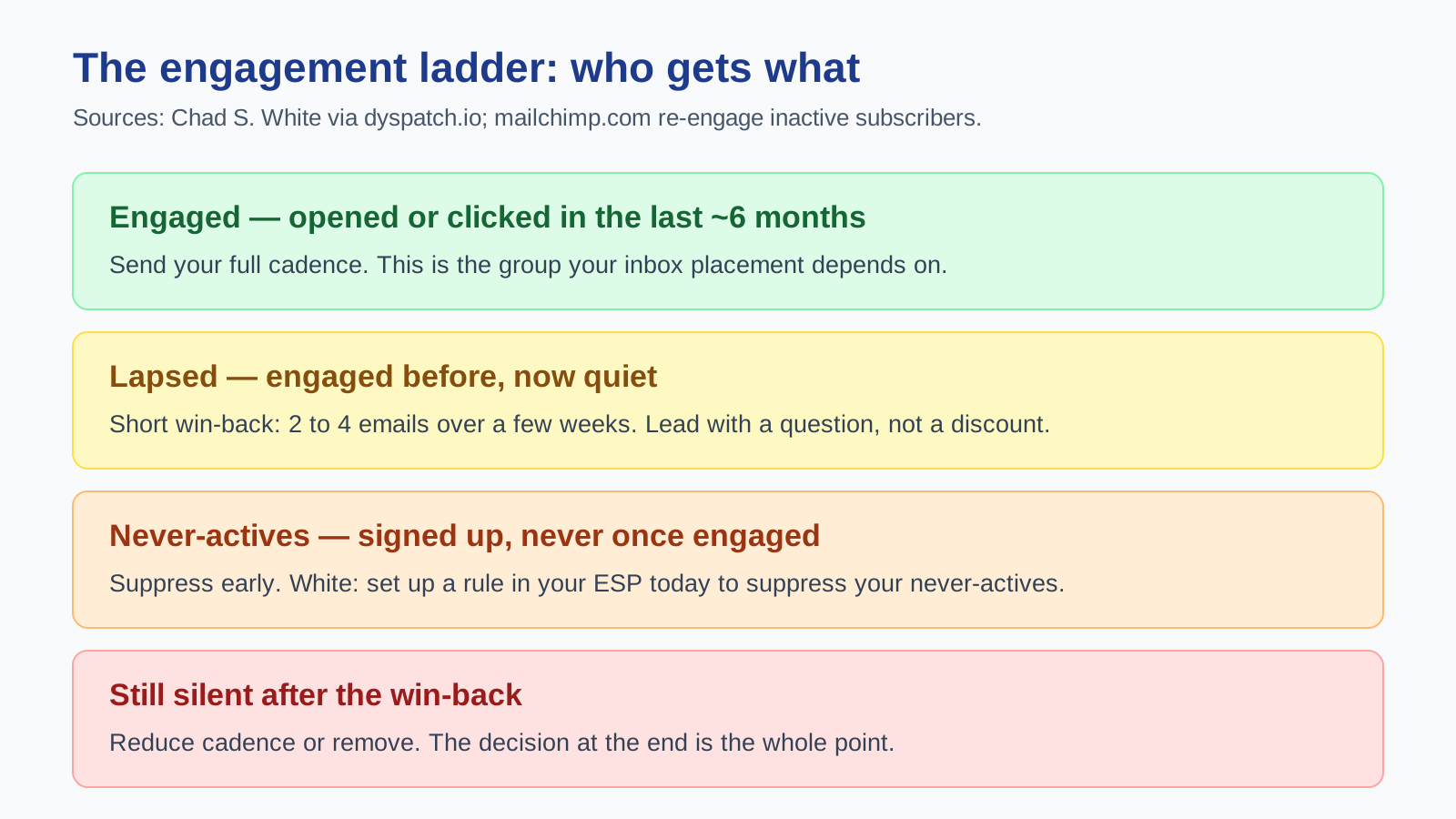
Chad S. White is blunt about the most-skipped fix: “If you have not already, set up a rule in your ESP today to suppress your never-actives” — the subscribers who joined and never once engaged (Dyspatch). He also notes that US senders are far worse than European ones at managing inactives, with many waiting for the subscriber to unsubscribe themselves rather than acting first.
When is a subscriber inactive?
There is no universal number — it depends on your sending cadence and purchase cycle. A daily newsletter can call 60 days silent; a brand that emails monthly, or sells something people buy once a year, cannot.
A defensible default comes straight from the White rule above: full cadence only for people who opened or clicked in the last ~6 months; everyone else gets reduced frequency or nothing. Set your own window by asking how long a genuinely interested subscriber could plausibly go without clicking.
Two groups deserve different treatment. Never-actives signed up and never engaged once — suppress these early; they are the clearest drag. Lapsed subscribers engaged before and went quiet — these are worth a real win-back attempt, because they have already shown intent.
How to build a re-engagement sequence
1. Define the segment precisely. No open and no click in the last 6 months, and not currently in another automation. Build it as a dynamic segment so it maintains itself — see email segmentation.
2. Lead with a question, not a discount. The first message should acknowledge the silence plainly: are you still interested? A discount as the opener teaches your list that going quiet earns coupons.
3. Make the preference centre the hero. Often people do not want out — they want less, or a different topic. Offering fewer emails or just the monthly roundup rescues subscribers a pure win-back-or-die sequence would lose.
4. Keep it short — 2 to 4 emails over a few weeks. A long sequence to people ignoring you is exactly the sending pattern you are trying to fix.
5. Then act on the silence. This is the step almost everyone skips. If they do not engage, reduce cadence or remove them. A re-engagement campaign that ends with everyone still on the list at full frequency accomplished nothing.
6. Measure re-engagement, not opens. With Apple Mail Privacy Protection inflating open data, judge success on clicks and conversions.
What to send
The honest check-in. You have not opened our last few emails — should we keep sending? Two buttons: stay, or go. Clean and respectful.
The preference update. Let them pick frequency and topics instead of a binary.
The value reminder. Show what they have been missing — your best recent content or a bestseller — for people who simply forgot why they subscribed.
The goodbye. A final we are removing you unless you click is a legitimate close, and it converts some people precisely because it is final.
Common mistakes
Never sunsetting. Running the campaign but keeping everyone anyway. The whole point is the decision at the end.
Discount-first. Trains subscribers to disengage, and buys a transaction rather than a relationship.
Waiting too long. A three-year-dead address is unlikely to return and may now be a spam trap. Act at months, not years.
Judging on opens alone. Open rates are unreliable post-MPP; a subscriber who opens via privacy proxy is not necessarily engaged. Use clicks.
Ignoring the root cause. If people go quiet fast, the problem may be acquisition or relevance, not re-engagement. Fix deliverability and targeting upstream.
Frequently asked questions
What is a re-engagement email campaign? A short sequence to subscribers who have stopped engaging, ending in a decision to keep, reduce, or remove them.
When should I consider someone inactive? Depends on cadence, but a defensible default is no open or click in ~6 months, per the Chad S. White full-cadence rule (Dyspatch).
Should I delete inactive subscribers? Suppress never-actives early; give lapsed subscribers a short win-back first, then reduce cadence or remove (Mailchimp).
Will removing subscribers hurt my reach? Not usually — engagement drives inbox placement, so a cleaner list often reaches more real people (Mailchimp).
How many emails should a win-back sequence have? Two to four over a few weeks. More sending to disengaged people works against you.
Getting started
Re-engagement is list hygiene with good manners: define inactivity honestly, ask a real question, offer less instead of nothing, and then — the hard part — actually act on the silence. Suppress your never-actives this week; that single rule is the highest-leverage change most senders can make.
For the bigger picture, read the complete email marketing guide, build the segments with email segmentation, protect inbox placement with the email deliverability guide, or automate the sequence using the email marketing automation guide.
— Shivam
Need the actual copy? See our 4 re-engagement email templates you can copy.