
Quick answer: Email deliverability is the share of your emails that actually land in the inbox instead of spam or nowhere. The average across 15 tested platforms is just 83.1% — meaning nearly 1 in 6 marketing emails never reaches the inbox (EmailTooltester). To fix it: authenticate your domain (SPF, DKIM, DMARC), keep your list clean, and earn engagement — because mailbox providers judge you like a credit score. Full disclosure: Bluey Email is my own product; this guide is platform-neutral.
Great content is worthless if it lands in spam. Here’s what deliverability really is, the benchmarks to aim for, and the levers that actually move the needle in 2026.
What is email deliverability?
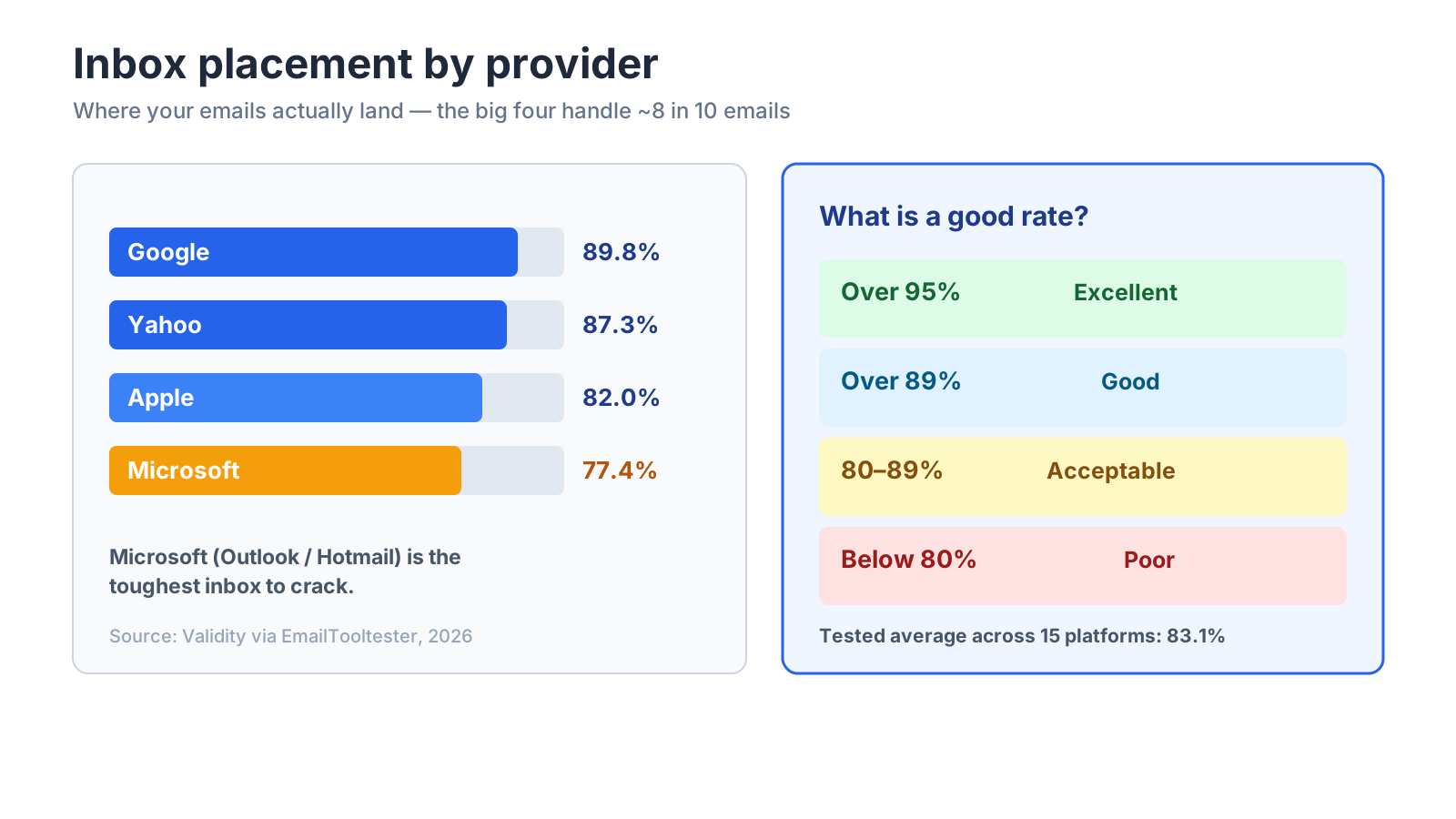
Email deliverability is the percentage of your sent emails that reach the recipient’s inbox — not the spam folder, and not lost entirely. EmailTooltester’s SEO Manager Cai Ellis, who has run deliverability tests on major platforms for six years, puts it bluntly: across the 15 email services they tested, the average deliverability rate was 83.1%, which means “nearly 1 in 6 marketing emails never reach the inbox” (EmailTooltester). Of the emails that miss, about 10.5% land in spam and 6.4% go missing altogether.
What is a good deliverability rate?
Use these benchmarks (EmailTooltester):
| Deliverability rate | Verdict |
|---|---|
| Over 95% | Excellent |
| Over 89% | Good |
| 80–89% | Acceptable |
| Below 80% | Poor — needs work |
Rates also vary by mailbox provider. Validity’s benchmark data (via EmailTooltester) shows Google places ~89.8% in the inbox, Yahoo ~87.3%, Apple ~82%, and Microsoft (Outlook/Hotmail) just ~77.4% — the toughest inbox to crack. Since these four handle roughly 8 in 10 emails, your real-world number is a blend weighted by where your subscribers are.
Why do my emails go to spam?
Because mailbox providers decide whether you’re trustworthy — and most senders don’t even monitor how they’re seen. Mailgun’s State of Email Deliverability survey of 1,100 senders found nearly 70% aren’t using any reputation-monitoring service like Google Postmaster Tools, Microsoft SNDS, or Yahoo Sender Hub, and only 25.5% feel they have a strong understanding of their sender reputation (Mailgun).
Mailgun compares sender reputation to a credit score: providers watch your sending patterns, list quality, complaints, and engagement, then score you invisibly. Two facts worth remembering: “Domain reputation follows you wherever you go” — you can’t escape a bad reputation by switching IPs — and “the more that people open, read, click, respond to, and forward your messages, the more apparent it is to mailbox providers that your campaigns belong in the inbox” (Mailgun).
How do I improve email deliverability?
Five levers, in rough priority order:
- Authenticate your domain. Publish SPF, DKIM, and DMARC — mandatory for bulk senders since Google and Yahoo’s February 2024 rules (Valimail). See SPF, DKIM & DMARC explained.
- Clean your list. Senders ranked improving list hygiene (34.5%) and reducing spam complaints (28.3%) as the top reputation levers (Mailgun). Remove hard bounces and long-inactive contacts.
- Earn engagement. Send relevant, segmented email people actually open and click — the strongest positive signal you control.
- Make unsubscribing easy. Offer one-click unsubscribe and keep spam complaints under 0.3%.
- Warm up and separate mail streams. Ramp new domains slowly; nearly 50% of senders over 50,000 emails/month split promotional and transactional email onto different subdomains (Mailgun).
Does my email platform affect deliverability?
Partly. Your platform provides the sending infrastructure, authentication tooling, and shared-IP hygiene — and platforms do measurably differ (EmailTooltester rates Klaviyo, Omnisend, and ActiveCampaign highest for deliverability features). But the biggest levers — list quality, engagement, complaint rate — are yours. A good platform (Bluey included) makes authentication a guided setup and monitors its shared IPs so one bad sender can’t tank everyone; the sending discipline is still on you.
Frequently asked questions
What’s a good email deliverability rate? Over 95% is excellent, over 89% is good, and below 80% is poor (EmailTooltester).
Why are my emails going to spam? Usually missing authentication, a stale list with high complaints, or low engagement (Mailgun).
Can I fix a bad reputation by switching IPs? Not really — domain reputation follows you. Fix the underlying habits instead (Mailgun).
Does authentication guarantee the inbox? No — it’s the entry ticket. Engagement and list hygiene do the rest (Valimail).
Which inbox is hardest? Microsoft (Outlook/Hotmail), at ~77.4% inbox placement (EmailTooltester).
The verdict
Deliverability isn’t luck — it’s authentication plus reputation plus engagement, and nearly 1 in 6 marketing emails fails at it. Publish SPF, DKIM, and DMARC; prune your list; send email worth opening; make unsubscribing easy; and monitor your reputation with the free tools most senders ignore. Start with the SPF, DKIM & DMARC guide, lift engagement with email subject line formulas and a strong welcome email series, and see the whole picture in the complete email marketing guide.
— Shivam
Free tools for this
Put this into practice with our free, no-signup tools — everything runs in your browser:
Browse all 15 free tools →
3 thoughts on “Email Deliverability Guide (2026): How to Actually Reach the Inbox”