
Quick answer: A welcome email series is a short automated sequence (usually 3–5 emails) that fires when someone subscribes — it introduces your brand, delivers what they signed up for, and guides them to a first action. It’s the highest-leverage automation you can build: a three-email welcome series generates about 90% more orders than a single welcome email (Omnisend), and welcome emails average a 35.5% open rate and $6.16 in revenue per email (Omnisend). Full disclosure: Bluey Email is my own product; the sequence below works on any platform.
New subscribers are never more interested than in the minutes after they opt in. A welcome series turns that peak attention into a relationship instead of a one-off “thanks for subscribing.” Here’s what to send, when to send it, and why the series beats the single email.
Why send a welcome series instead of one email?
Because the numbers compound. 74% of new subscribers expect a welcome email (Mailmodo), and welcome emails earn roughly 4x the open rate and 5x the click rate of regular campaigns (Mailmodo). Stretching that first impression across three emails rather than one lifts orders by about 90% (Omnisend). More broadly, automated emails like these average a 38% open rate and $2.87 per email, versus $0.18 for one-off campaigns (Omnisend) — automation is simply where the revenue is.
The tone matters as much as the timing. Email strategist Val Geisler stresses that a real welcome isn’t a receipt: “By welcome email, I don’t mean ‘Here’s your account information, your login and the link to your dashboard.’ I mean an actual welcome email that comes from a person, preferably the founder or CEO” (Intercom). Ann Handley makes the same point about voice: the most important part of an email is not the news but “the ‘letter’ — your email should feel more like a letter from one person to another” (Ann Handley).
What should each email in the series say?
A reliable three-to-five email structure, each with one job:
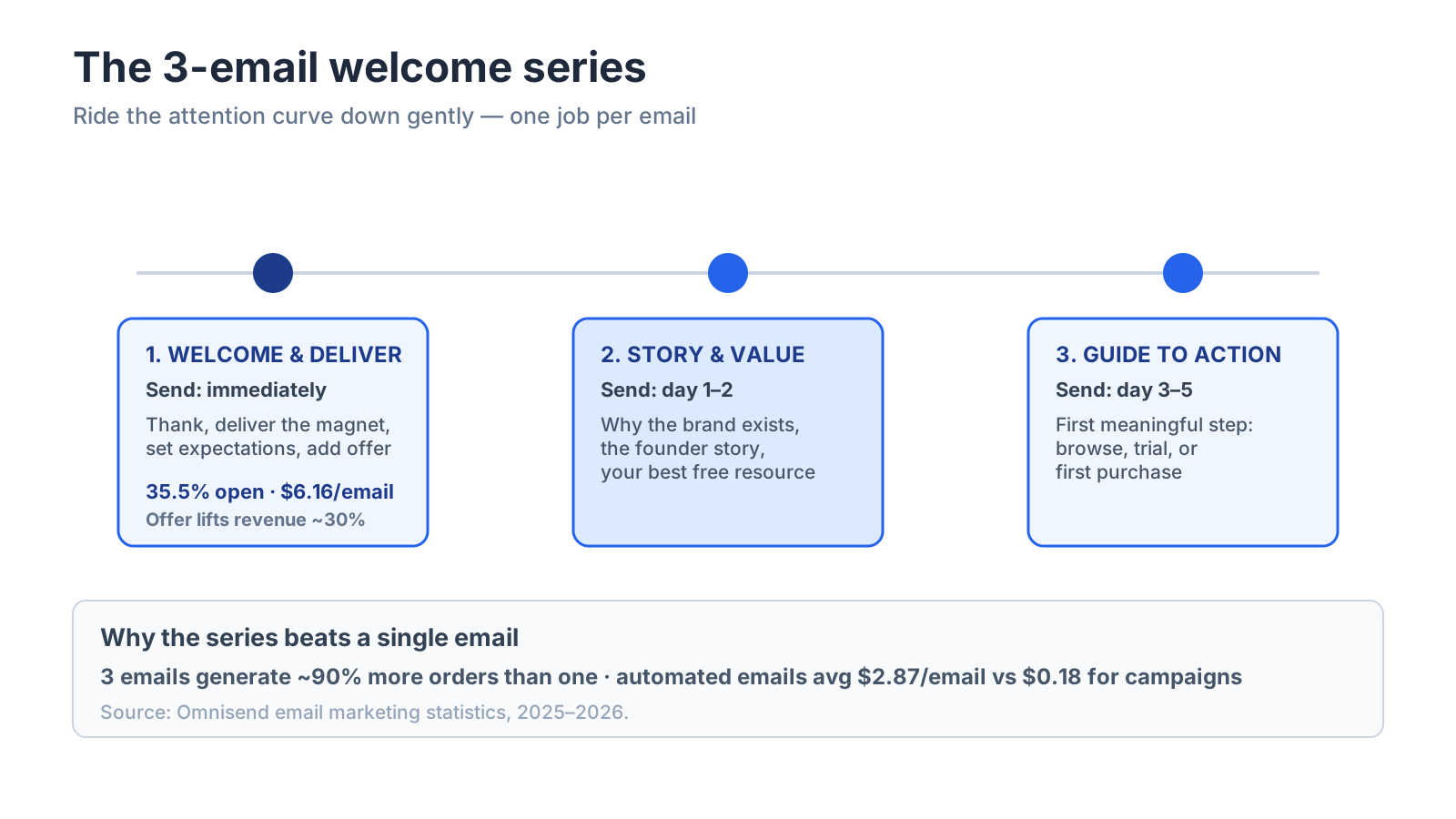
Email 1 — Welcome & deliver (send immediately). Say thank you, deliver exactly what they signed up for (the lead magnet, discount, or first content), and set expectations for what’s coming. This is your highest-open email — don’t waste it. Include an offer if you have one: adding an offer to a welcome email can lift revenue by about 30% per email (Omnisend).
Email 2 — Story & value (1–2 days later). Tell the short story of why the brand exists and what you stand for — Geisler’s “founder story” beat. Point to your best free resource.
Email 3 — Guide to action (2–3 days later). Move them toward the first meaningful step: browse the bestsellers, start the trial, read the cornerstone guide. For ecommerce, this is where a first-purchase nudge belongs.
Emails 4–5 (optional) — Social proof & soft ask. Reviews, a case study, or an FAQ that removes the last objection, then a clear call to convert.
When should each email send?
Timing rides the attention curve down gently. Send Email 1 immediately on confirmation — that instant fire is what captures the 35.5% open rate (Omnisend). Space the rest one to three days apart so you stay present without crowding the inbox. The whole series should wrap inside about a week, while the subscriber still remembers signing up.
| Timing | Job | |
|---|---|---|
| 1. Welcome & deliver | Immediately | Thank, deliver, set expectations (+ optional offer) |
| 2. Story & value | Day 1–2 | Founder story, best free resource |
| 3. Guide to action | Day 3–5 | First meaningful step / first purchase |
| 4–5. Proof & ask (optional) | Day 5–7 | Social proof, clear conversion CTA |
How do I set up a welcome series in Bluey?
Build it once as an automation triggered by a new subscriber (or a new signup-form submission). Drop in the three emails, set the delays between them, and add a branch if you want buyers to exit early. Because it runs on autopilot, every new subscriber gets the same strong first impression without any manual work — which is exactly why it should be the first automation you build after your signup form. New to capturing subscribers? Pair this with the how to build an email list guide.
Frequently asked questions
How many emails should a welcome series have? Three to five. A three-email series generates about 90% more orders than a single welcome email (Omnisend); more than five risks fatigue before the relationship is established.
When should the first welcome email send? Immediately on signup — that’s when open rates peak (about 35.5%) (Omnisend).
Should I put a discount in the welcome email? If you sell something, yes — an offer can raise welcome-email revenue by roughly 30% per email (Omnisend).
Who should the welcome email come from? A person, ideally the founder — Val Geisler recommends a genuine welcome over an automated “account details” receipt (Intercom).
Does a welcome series really outperform a single email? Yes — about 90% more orders across a three-email series, and automated emails average $2.87 per email versus $0.18 for campaigns (Omnisend).
The verdict
A welcome series is the highest-return automation in email: it meets subscribers at peak attention, delivers on the promise that got them to opt in, and walks them to a first action across three to five well-timed emails. Write it like a letter from a real person, fire the first one instantly, add an offer if you sell, and let it run. Build your list first with the how to build an email list guide, choose your tool with Best Email Marketing Software in 2026, and see the complete email marketing guide for the full picture.
— Shivam
Free tools for this
Put this into practice with our free, no-signup tools — everything runs in your browser:
Browse all 15 free tools →Need the actual copy? See our 5 copy-and-paste welcome email templates.
4 thoughts on “Welcome Email Series: Templates, Timing & Examples (2026)”