
Quick answer: To build an email list, put a valuable offer (a lead magnet) behind a signup form, promote that form everywhere you already have attention, and start the relationship with an automated welcome — then keep earning attention with consistent, useful email. It’s worth the effort because email returns an average of $36 for every $1 spent, the highest ROI of any channel (Litmus). Full disclosure: Bluey Email is my own product, and its free plan is one way to start; the tactics below work on any platform.
An email list is the one audience you actually own — no algorithm decides who sees your message. This guide walks the whole path: what to offer, where to capture signups, how to stay legal, and how to turn a new subscriber into a reader who sticks around.
Why build an email list at all?
Because you own it. Neil Patel, co-founder of Neil Patel Digital, frames it bluntly: “Your email list isn’t just another channel; it’s the foundation of your entire marketing ecosystem… You own that relationship. You’re not at the mercy of an algorithm deciding how many people see your content” (GetResponse). That ownership is why email keeps returning about $36 per $1 spent (Litmus) while reach on social platforms rises and falls with the feed.
Step 1 — Create a lead magnet people actually want
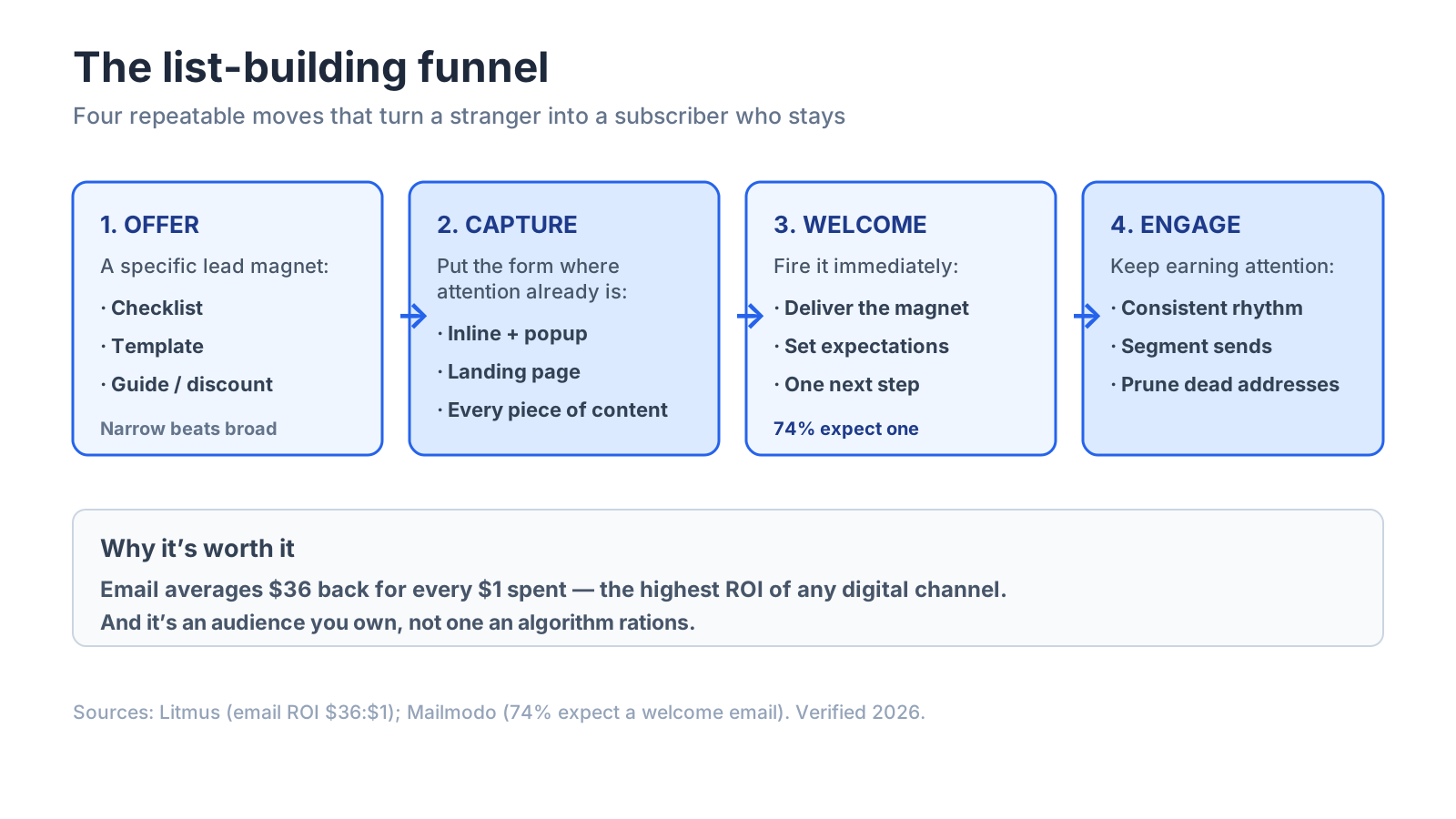
A lead magnet is the value you trade for an email address. The rule is specificity: “The solution isn’t creating more content, it’s creating the right lead magnet that solves a specific problem for your ideal customer” (AWeber). The formats that convert are the ones that save time or remove friction:
- Checklists — a one-page list that helps someone finish a specific task.
- Templates — ready-to-use files people would otherwise build themselves.
- Short guides or ebooks — for a more involved problem you can position as the expert on.
- Discounts / early access — the highest-intent magnet for ecommerce.
Avoid the common mistake of a generic asset that “appeals to everyone and converts no one” (AWeber). Narrow beats broad.
Step 2 — Put a signup form where attention already is
A great magnet does nothing behind a hidden form. Place capture points where people already look:
On your site — an inline form in relevant posts, a footer form, and a well-timed popup or slide-in. In every piece of content — Patel’s advice is to “drop email sign-up CTAs into every piece of content you create — videos, blog posts, social media captions” (GetResponse). On a dedicated landing page you can link from anywhere — your bio, a talk, a partner’s newsletter. Most email platforms, Bluey included, give you hosted forms and landing pages so you can start capturing before you have a website ready.
Step 3 — Stay permission-based and legal
Only email people who asked to hear from you. Use clear opt-in language, avoid pre-checked consent boxes, and honor unsubscribes immediately — laws like GDPR and CAN-SPAM require it, and permission is also what protects your deliverability. A double opt-in (a confirmation click) trims fake addresses and keeps your list clean from day one. Never buy a list: bought contacts didn’t consent, tank your sender reputation, and can breach the law.
Step 4 — Welcome new subscribers immediately
The moment someone signs up is your peak-attention window. 74% of new subscribers expect a welcome email when they join a list (Mailmodo), and welcome emails earn about 4x the open rate and 5x the click rate of regular campaigns (Mailmodo). Automate it so it fires the second they confirm — deliver the magnet, set expectations, and point them to one clear next step. A full welcome email series does even more, and it’s the first automation worth building.
Step 5 — Keep the list engaged (or it decays)
A list you ignore goes stale. Patel’s fix is consistency with value: “Would you call someone only when you need a favor? Of course not… Your emails should offer something useful” (GetResponse). Send on a predictable rhythm, segment so the right people get the right message, and prune chronically unengaged addresses so your sender reputation stays strong. Growth and retention are the same job done twice.
Frequently asked questions
How do I start an email list with no audience? Create one specific lead magnet, put it behind a hosted form or landing page, and share that link everywhere you already show up. A free plan (Bluey’s covers 500 contacts) lets you start at zero cost.
How fast should an email list grow? Steadily beats fast. A smaller list of people who genuinely opted in outperforms a big list of cold or bought contacts on both revenue and deliverability.
What’s the best lead magnet? The most specific one — a checklist, template, or discount that solves one clear problem for your ideal subscriber (AWeber).
Is buying an email list ever okay? No. Bought contacts didn’t consent, damage your sender reputation, and can violate GDPR/CAN-SPAM.
How much can email make? Email averages about $36 back for every $1 spent (Litmus) — the highest ROI of any digital channel.
The verdict
Building an email list is five repeatable moves: make a specific lead magnet, put the form where attention already is, stay permission-based, welcome people instantly, and keep earning their attention with useful email. Do that and you own an audience worth roughly $36 back on every $1 — no algorithm required. Ready to send? See Best Email Marketing Software in 2026, wire your signup forms to your stack with the integrations guide, and build your first automation with the welcome email series guide. New to all this? Start with the complete email marketing guide.
— Shivam
Free tools for this
Put this into practice with our free, no-signup tools — everything runs in your browser:
Browse all 15 free tools →Need the actual copy? See our welcome email templates.
1 thought on “How to Build an Email List From Scratch (2026 Guide)”