
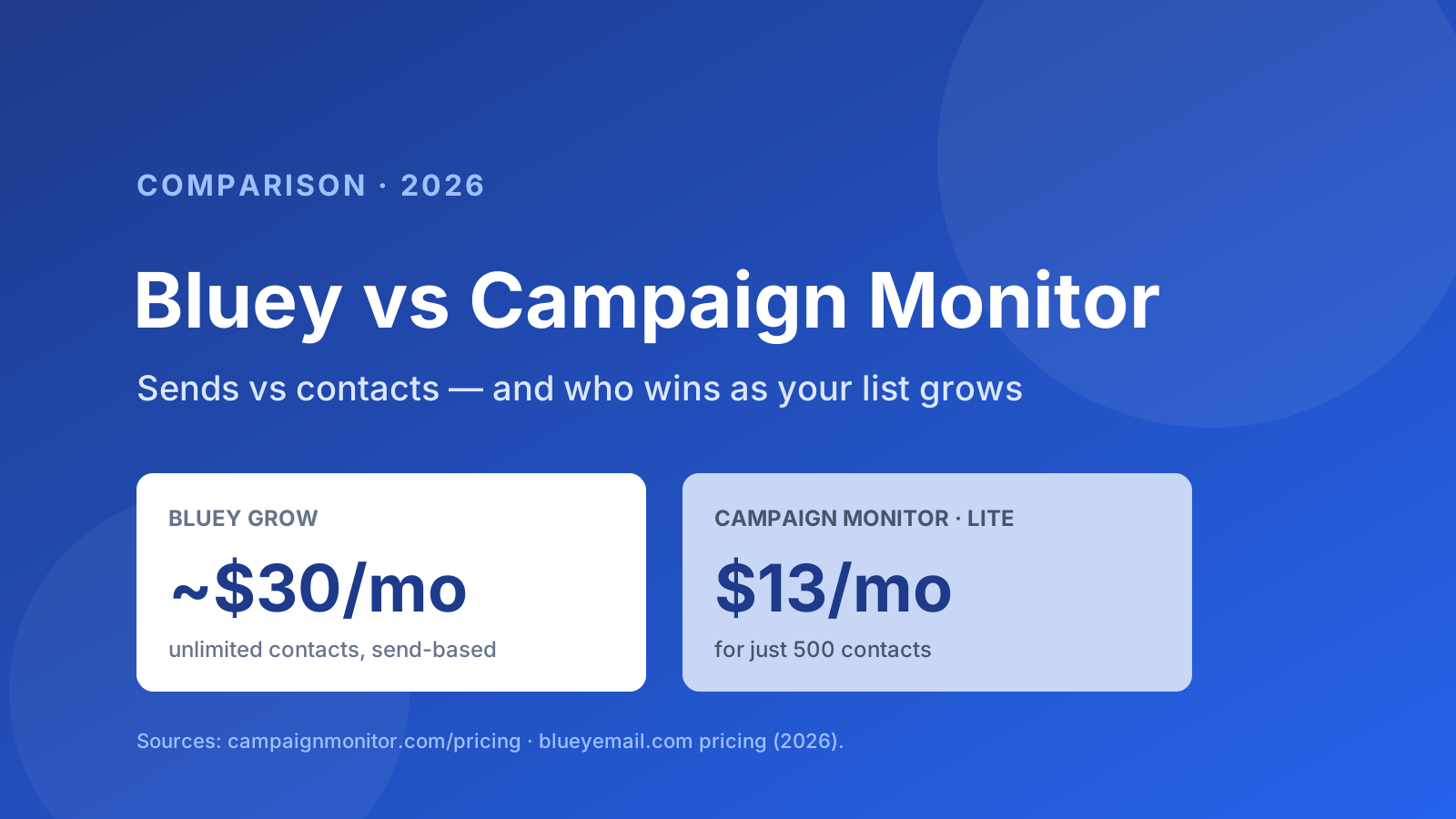
Quick answer: Campaign Monitor charges by contacts stored; Bluey Email charges by emails sent. Campaign Monitor’s plans start at Lite $13/mo, Essentials $31/mo, and Premier $171/mo — all for just 500 contacts (Campaign Monitor), and the price climbs steeply as your list grows. Bluey costs about $14/mo at 10,000 sends and $30/mo on Grow with unlimited contacts. So Campaign Monitor suits design-led teams who love its templates; Bluey wins on price for a growing list and adds automation depth, a CRM, and transactional email Campaign Monitor lacks. Full disclosure: Bluey is my own product; same yardstick for both, and I say where Campaign Monitor wins.
Campaign Monitor (now part of Marigold) has been a design-first email tool since 2004, prized for polished templates and brand-locked layouts. It rebranded its plans and raised prices in 2025, and like most legacy tools it bills per contact — engaged or not.
How much does Campaign Monitor cost in 2026?
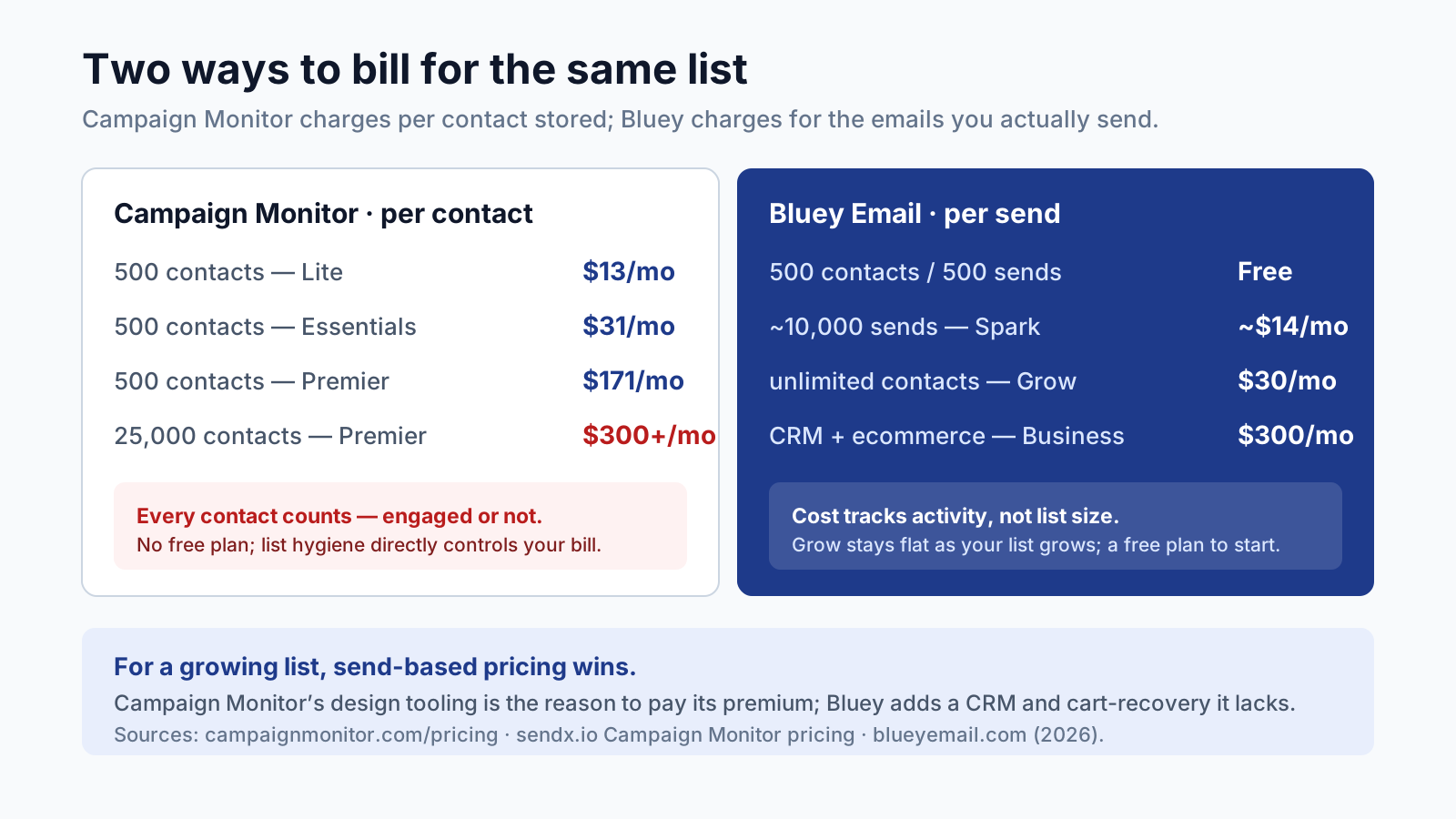
Campaign Monitor has three paid plans, all priced by contact count, with no free plan (only a trial).
| Plan | From (500 contacts) | Sends | Notable |
|---|---|---|---|
| Lite | $13/mo | 5× contacts/mo cap | Core features, AI Writer |
| Essentials | $31/mo | Unlimited | All core features, priority support |
| Premier | $171/mo | Unlimited | Phone support, send-time optimization |
Source: Campaign Monitor pricing (monthly billing; annual saves ~10%). Prices scale with your contact count — a 25,000-contact list on Premier can exceed $300/mo (SendX analysis) — and Campaign Monitor charges for all contacts, including unengaged ones, so list hygiene directly affects your bill.
One limitation to weigh: EmailTooltester notes that with Campaign Monitor “there’s not even an abandoned cart email automation, and it doesn’t come with extra features like a landing page builder or CRM” (EmailTooltester).
How much does Bluey Email cost?
Bluey bills on emails sent, not contacts stored:
- Free — 500 contacts, 500 sends/mo
- Spark — from $7/mo; roughly $14/mo at 10,000 sends
- Grow — $30/mo, unlimited contacts, ~50,000 sends
- Business — $300/mo, adds the built-in CRM, landing pages, transactional email, and pre-built ecommerce flows
Which is cheaper?
It depends on list size and cadence — the familiar split.
10,000 contacts, emailed twice a month = 20,000 sends. Campaign Monitor’s Essentials plan scales well past its $31 entry price at that contact tier (contact-based tiers climb steeply into the low hundreds per month). Bluey Grow: $30/mo, unlimited contacts. Bluey is dramatically cheaper for a larger list.
500 contacts, light sending. Campaign Monitor Lite: $13/mo with a 5× send cap. Bluey: free at 500 contacts / 500 sends, or Spark from $7. Bluey’s free tier wins at the very bottom; Campaign Monitor Lite is competitive if you want its templates.
The rule holds: Campaign Monitor’s per-contact pricing charges you for the size of your list; Bluey’s charges you for the work you do with it. For a growing list, that favours Bluey. For a design-obsessed team emailing a small, curated list, Campaign Monitor’s polish may justify the premium.
Feature comparison
| Bluey Email | Campaign Monitor | |
|---|---|---|
| Pricing basis | Emails sent | Contacts stored |
| Free plan | 500 contacts / 500 sends | None (trial only) |
| Send cap on entry plan | Generous | Lite: 5× contacts/mo |
| Abandoned cart automation | Yes (Business flows) | No |
| Built-in CRM | Yes (Business) | No |
| Transactional email | Yes, same bill | Separate feature |
| Landing pages | Business | No native builder |
| Template design | Good | Excellent, brand-locked |
| Phone support | No | Premier tier only |
Where Campaign Monitor plainly wins
- Template design and brand control. Its drag-and-drop builder and locked-section brand templates are best-in-class — EmailTooltester calls the templates “plentiful with modern designs” and the interface “clean and easy to navigate” (EmailTooltester).
- 250+ integrations. A large, mature integration catalogue.
- Agency-friendly. Sub-accounts and client management suit agencies serving brand-conscious clients.
- Send-time optimization on Premier.
Where Bluey wins
- Price for a growing list. ~$30 on Grow with unlimited contacts versus contact-tiered plans that climb into the hundreds — the substantiated reason I rank Bluey first here.
- Send-based pricing. No charge for unengaged contacts; no per-contact escalator.
- A real CRM on Business — Campaign Monitor has none.
- Abandoned cart and ecommerce automation built in — Campaign Monitor lacks even a cart-recovery flow.
- Transactional and marketing email on one bill.
- A genuine free plan to start on.
Frequently asked questions
Does Campaign Monitor have a free plan? No — it offers a trial, then paid plans from $13/mo (Lite) for 500 contacts (Campaign Monitor).
Does Campaign Monitor charge for contacts or emails? Contacts. You pay for everyone on your list, engaged or not, so regular list cleaning controls the bill.
Does Campaign Monitor have abandoned cart automation? No — EmailTooltester notes it lacks cart-recovery automation, a landing page builder, and a CRM (EmailTooltester).
Is Campaign Monitor good for design? Yes — polished, brand-locked templates are its standout strength, especially for agencies and brand teams.
Which is better for a growing list? Bluey — send-based pricing means cost tracks activity, not list size, so it stays cheap as you scale.
The verdict
Choose Campaign Monitor if template design and brand consistency are the priority, you run an agency serving brand-conscious clients, or you email a small, curated list and value its polish.
Choose Bluey Email if your list is growing, you want abandoned-cart automation and a CRM Campaign Monitor does not offer, or you would rather pay for sends than for stored contacts. At 10,000 contacts that is about $30 on Grow against contact-tiered plans in the hundreds — the specific reason I put it first for most businesses.
Compare the wider field in Best Email Marketing Software in 2026, see the sibling head-to-head Bluey Email vs AWeber, the Constant Contact alternatives roundup, or start with the complete email marketing guide.
— Shivam