
Quick answer: SPF, DKIM, and DMARC are three DNS records that prove your emails really come from you, so mailbox providers trust and deliver them. They’re no longer optional: since February 2024, Google and Yahoo require anyone sending more than 5,000 emails a day to use SPF, DKIM, and DMARC (Valimail), and from November 2025 Gmail tightened enforcement toward outright rejection of non-compliant mail (Security Boulevard). Full disclosure: Bluey Email is my own product; this guide is platform-neutral.
If your marketing email lands in spam — or bounces entirely — missing authentication is often why. Here’s what each of the three records does, in plain English, and exactly what you need in place in 2026.
What are SPF, DKIM, and DMARC?
They are three layers of email authentication that together answer one question: is this sender who they claim to be? Google’s Neil Kumaran, Group Product Manager for Gmail Security & Trust, explains the problem they solve: “Many bulk senders don’t appropriately secure and configure their systems, allowing attackers to easily hide in their midst. To help fix that, we’ve focused on a crucial aspect of email security: the validation that a sender is who they claim to be” (Google).
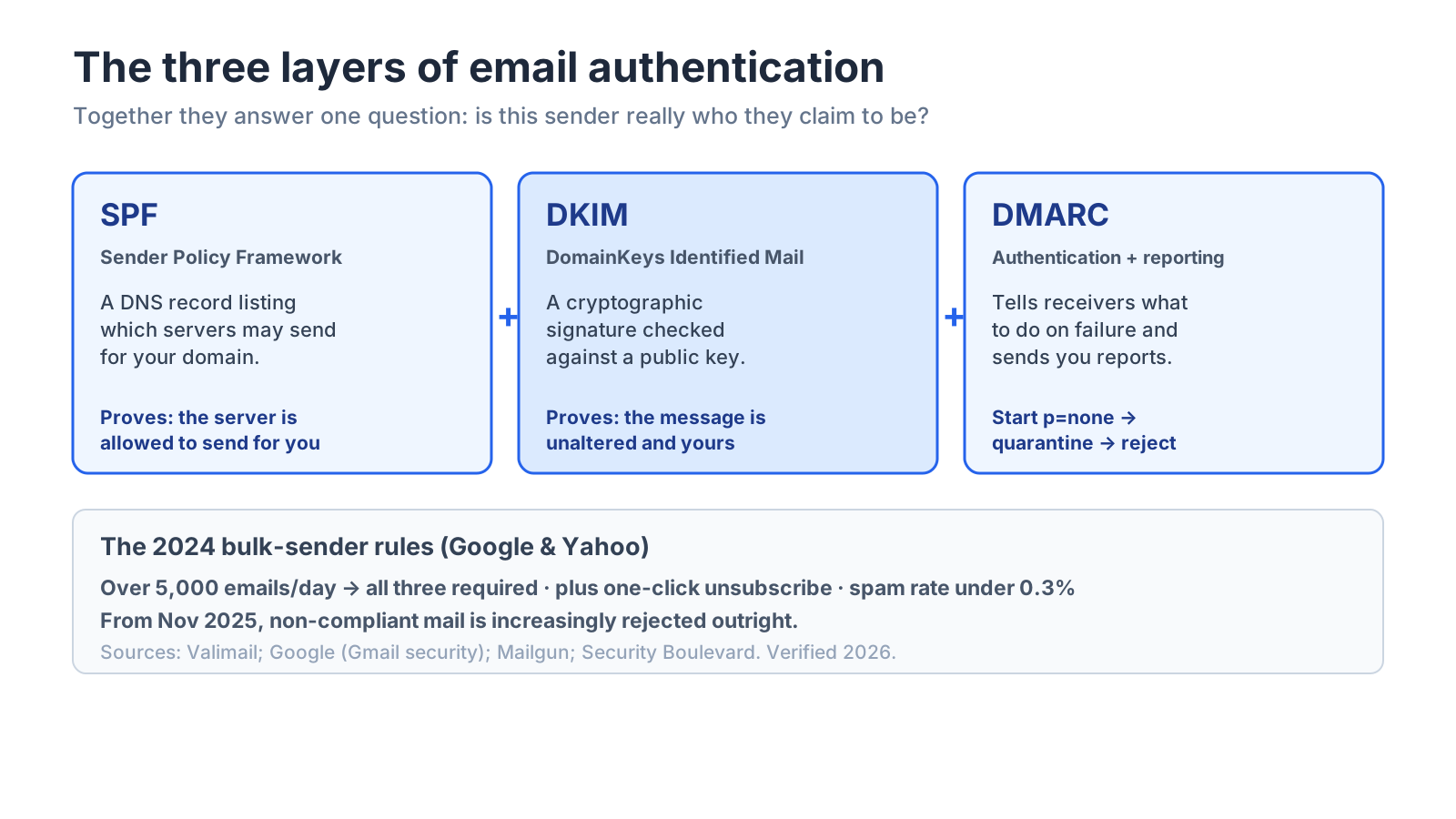
SPF (Sender Policy Framework) is a DNS record listing which servers are allowed to send email for your domain. The receiving server checks whether the sending IP is on your approved list (Valimail).
DKIM (DomainKeys Identified Mail) adds a cryptographic signature to each message. The receiver uses a public key in your DNS to confirm the email wasn’t altered in transit and truly came from your domain (Valimail).
DMARC (Domain-based Message Authentication, Reporting & Conformance) ties the two together: it tells receivers what to do if SPF or DKIM fails (nothing, quarantine, or reject) and sends you reports on who’s using your domain (Valimail).
Why do SPF, DKIM, and DMARC matter now?
Because the two biggest inbox providers made them mandatory. Since February 2024, all senders must authenticate with SPF or DKIM, and bulk senders (over 5,000 messages/day) must use SPF, DKIM, and DMARC with at least a p=none policy (Valimail). Google began enforcing in February 2024 with delays for non-compliant mail, and from November 2025 those delays became temporary or permanent rejections (Security Boulevard).
The bulk-sender rules also require one-click unsubscribe and keeping your spam-complaint rate below 0.3% (Mailgun). In short: authenticate, make unsubscribing easy, and don’t get marked as spam — or your email stops arriving.
What do I actually need to set up?
Three DNS records at your domain registrar, plus the sending settings your email platform gives you:
| Record | What it proves | Minimum in 2026 |
|---|---|---|
| SPF | The server is allowed to send for you | Published, listing your sending platform |
| DKIM | The message is unaltered and yours | Signing enabled for your domain |
| DMARC | What to do on failure + reporting | At least p=none (progress toward quarantine/reject) |
A good email platform generates the exact SPF include and DKIM keys for you; you paste them into DNS once. Start DMARC at p=none to monitor without risk, read the reports, then tighten to quarantine and eventually reject as you confirm all your legitimate mail passes.
Does my email platform handle this for me?
Partly — and this is the honest split. Your platform (Bluey included) supplies the SPF include, DKIM keys, and a DMARC starting policy, and handles the signing on send. But the DNS records live at your domain registrar, so you have to publish them — no platform can edit your DNS for you. Authenticating a sending domain in Bluey is a guided, one-time setup; the same is true of every reputable sender. Get it done before you send at volume, because it directly protects deliverability.
Frequently asked questions
Do I need all three of SPF, DKIM, and DMARC? If you send more than 5,000 emails/day to Gmail/Yahoo, yes — all three are required (Valimail). Below that, at least SPF or DKIM is required.
What DMARC policy should I start with? Start at p=none to monitor safely, then move to quarantine and reject once you confirm legitimate mail passes (Valimail).
What happens if I don’t authenticate? Gmail and Yahoo delay non-compliant mail, and since November 2025 increasingly reject it outright (Security Boulevard).
Where do these records go? In your domain’s DNS at your registrar — your email platform gives you the values to paste in.
Does authentication improve deliverability? Yes — it’s a prerequisite for the inbox, plus you must offer one-click unsubscribe and keep spam complaints under 0.3% (Mailgun).
The verdict
SPF, DKIM, and DMARC are three DNS records that prove your mail is really yours — and as of 2024 they’re mandatory for bulk senders to Gmail and Yahoo, with rejection now the penalty for skipping them. Publish all three, start DMARC at p=none and tighten over time, enable one-click unsubscribe, and keep complaints low. Your platform hands you the values; you paste them into DNS once. Ready to send well? See Best Email Marketing Software in 2026, keep opens high with email subject line formulas, and start with the complete email marketing guide.
— Shivam
Free tools for this
Put this into practice with our free, no-signup tools — everything runs in your browser:
Browse all 15 free tools →
10 thoughts on “SPF, DKIM & DMARC Explained (Plain-English 2026 Guide)”