
Quick answer: Email marketing automation sends the right message automatically when someone takes an action — signs up, abandons a cart, goes quiet. It is absurdly efficient: Omnisend’s analysis of 24 billion emails found automated emails drove 37% of email sales from just 2% of total email volume (Omnisend). Start with three flows — welcome, abandoned cart, and browse abandonment — before anything else. Full disclosure: Bluey Email is my own product; this guide is platform-neutral.
Most of your email revenue can come from a handful of automations you set up once. Here’s what automation is, which flows to build first, and how to start.
What is email marketing automation?
Email marketing automation is a set of pre-built email sequences (flows or workflows) that trigger automatically based on subscriber behavior or data — rather than one-off campaigns you send manually. A welcome email when someone subscribes, a reminder when they leave items in their cart, a win-back when they stop engaging: each fires on its own, around the clock.
The efficiency is the whole point. Across Omnisend’s dataset of 24 billion emails, automated messages generated 37% of all email sales while making up only 2% of sends (Omnisend). That is the leverage: a tiny slice of your sending volume doing an outsized share of the work.
Which automations should I build first?
Start with the three that drive the most revenue. Omnisend’s in-house email expert Greg Zakowicz recommends beginning with abandoned cart, welcome, and browse abandonment messages, because they drive the most revenue and can also reduce retargeting costs — and together welcome, cart abandonment, and browse abandonment make up about 87% of all automated orders (Omnisend).
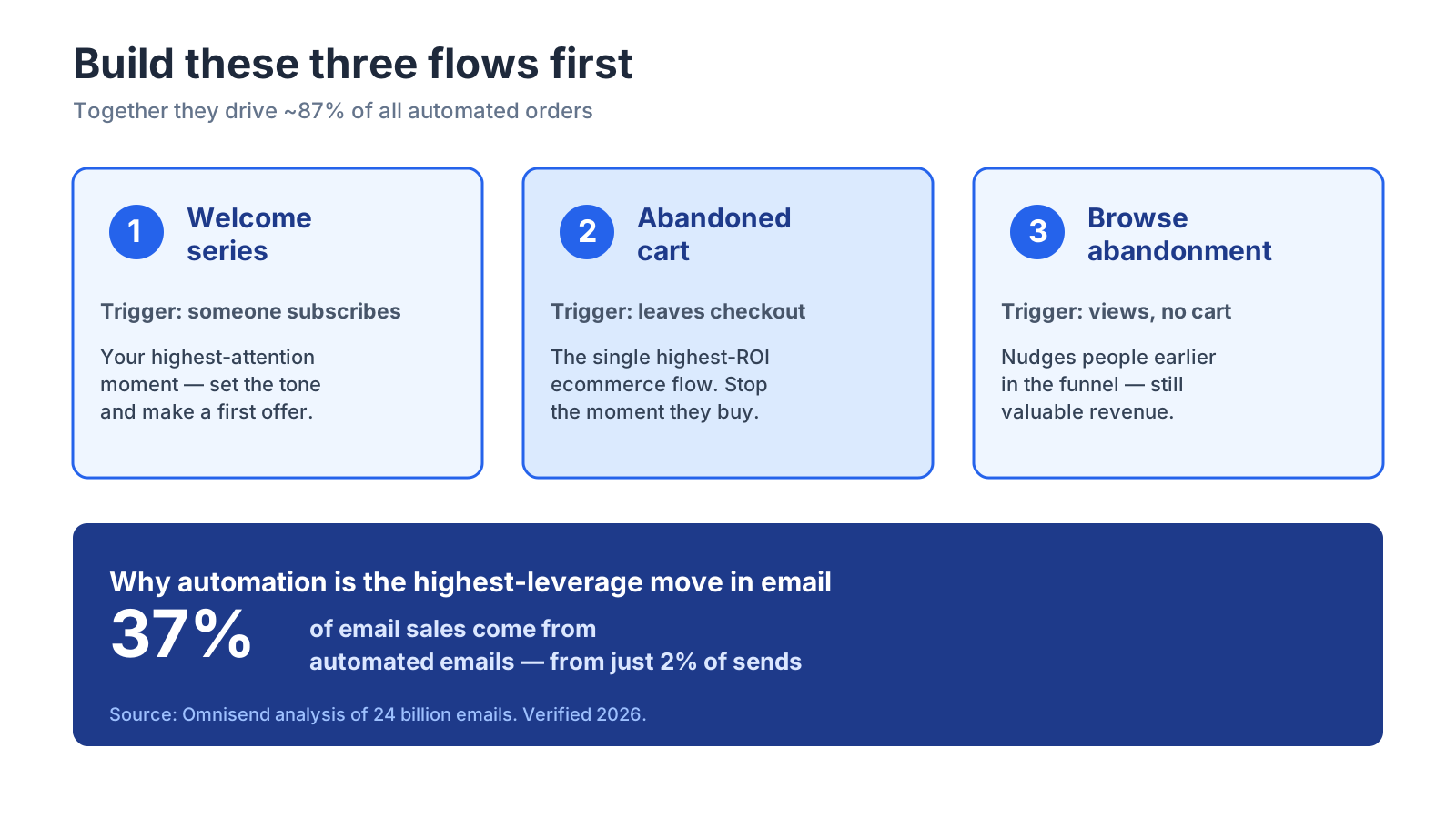
- Welcome series. Fires the moment someone subscribes — your highest-attention moment. Set the tone, deliver any promised lead magnet, and make a first offer. See how to build a welcome email series.
- Abandoned cart. Reminds shoppers who left checkout — the single highest-ROI ecommerce flow. Details in the abandoned cart email guide.
- Browse abandonment. Nudges people who viewed products but never added to cart — earlier in the funnel, still valuable.
Once those are live, layer on post-purchase, win-back, and birthday flows.
How much revenue can automation actually add?
A lot — and it compounds. Zakowicz’s benchmark is to move brands from roughly 20% to 40% of their email revenue coming from automation (Omnisend). Given that email marketing overall returns an estimated $36 for every $1 spent (EmailTooltester), shifting more of your program into automated, behavior-triggered flows is one of the highest-leverage moves in marketing.
How do I set up email automation?
- Map the trigger. Decide what event starts the flow (subscribe, cart abandon, purchase, inactivity).
- Write the sequence. Usually 2–4 emails spaced over days, each with one clear job and one call to action.
- Set timing and exit rules. A cart flow should stop the moment the person buys.
- Segment where it helps. Relevance lifts engagement, which also protects deliverability.
- Turn it on and measure. Track revenue per recipient, not just opens — automated emails typically outperform campaigns on every metric.
Any modern platform (Bluey included) ships pre-built ecommerce flows so you are editing a template, not building from a blank canvas.
Frequently asked questions
What is email marketing automation? Pre-built email sequences that trigger automatically on subscriber behavior or data, instead of manual one-off sends.
Which automation makes the most money? For ecommerce, abandoned cart — part of the welcome/cart/browse trio that drives ~87% of automated orders (Omnisend).
How many emails should a flow have? Typically 2–4 per flow, spaced over a few days, each with a single clear purpose.
Is automation worth it for small senders? Yes — a welcome flow works for any list size and captures your subscribers’ highest-attention moment.
Does automation hurt deliverability? No — well-segmented, expected automated emails usually see higher engagement, which helps reputation. See the deliverability guide.
The verdict
Automation is the closest thing email has to free money: a handful of behavior-triggered flows can drive a third or more of your revenue from a tiny fraction of your sends. Build welcome, abandoned cart, and browse abandonment first, then expand. Start with a strong welcome email series and abandoned cart emails, make sure it all reaches the inbox with the email deliverability guide, and see the full picture in the complete email marketing guide.
— Shivam
Free tools for this
Put this into practice with our free, no-signup tools — everything runs in your browser:
Browse all 15 free tools →Need the actual copy? See our welcome email templates.
What it actually costs: ActiveCampaign pricing explained.
3 thoughts on “Email Marketing Automation Guide (2026): The Flows That Print Money”