

Quick answer: On average, email drives an ROI of $36 for every $1 spent — higher than any other channel, according to Litmus (Litmus). The figure is a self-reported survey average and varies from about 32:1 for media and publishing to 45:1 for retail and ecommerce, so treat it as a benchmark, not a promise. You calculate your own ROI as (revenue attributed to email − cost) ÷ cost.
Email marketing ROI is the return you earn for every dollar you put into email. It is the number that justifies the channel to a CFO — and email consistently tops the table. Here is what the data says, how to calculate your own, and the levers that actually move it.
A quick note: Bluey Email is my own product, so when I mention it below, weigh that accordingly.
What is the average email marketing ROI?
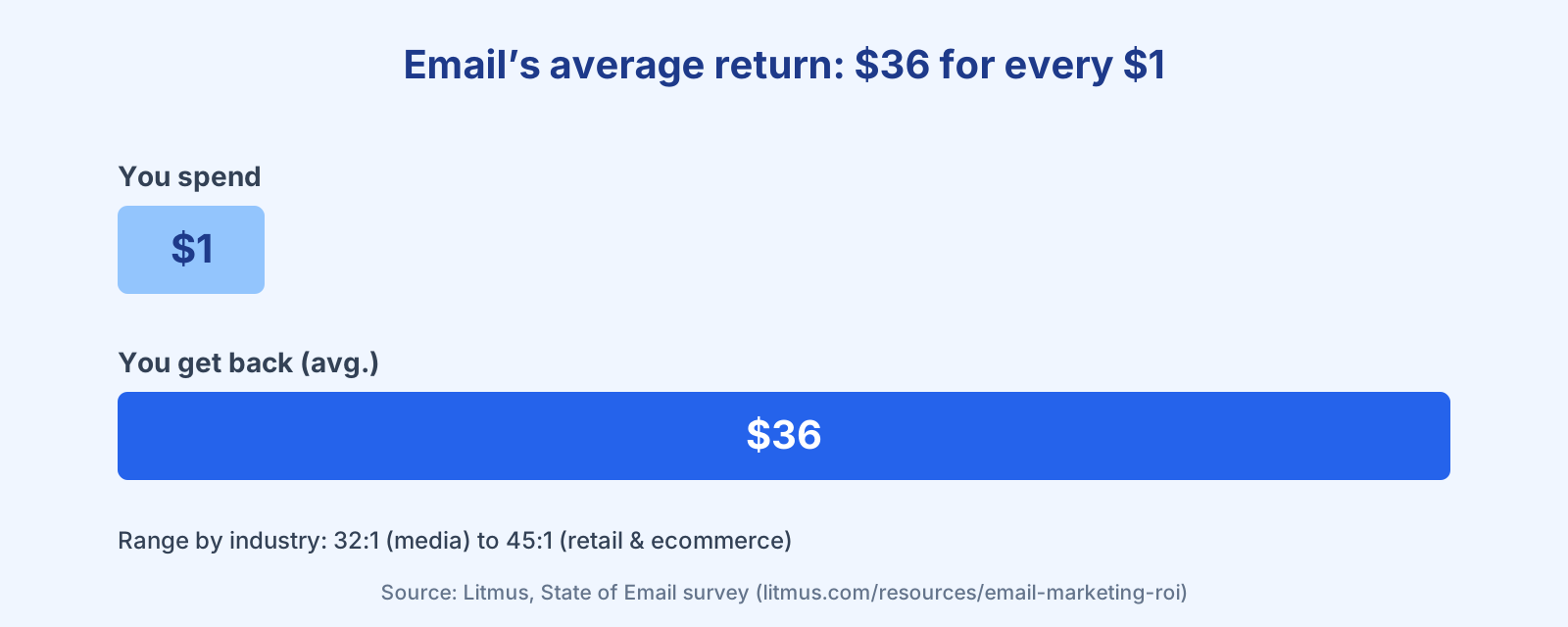
Litmus, in its State of Email research, states plainly: “On average, email drives an ROI of $36 for every dollar spent, higher than any other channel” (Litmus). That headline hides real spread. Litmus reports the return ranges by industry — roughly 32:1 for media, publishing, events and entertainment, up to 45:1 for retail, ecommerce and consumer goods. Be honest with yourself about which end you are likely at.
One important caveat: this is survey data, self-reported by marketers, not audited accounting. It is a strong directional benchmark, not a guaranteed result. Your ROI depends on your list, your offer, and your execution.
How do you calculate email marketing ROI?
The formula is simple: ROI = (revenue attributed to email − cost of email) ÷ cost of email, usually expressed as a ratio or percentage. If email generated $10,000 in tracked revenue and cost you $500 (tool plus time), your return is ($10,000 − $500) ÷ $500 = 19:1. The hard part is attribution — tag campaigns, use tracked links, and connect email to conversions rather than guessing.
| Input | Example |
|---|---|
| Revenue attributed to email | $10,000 |
| Cost (tool + labor) | $500 |
| Net return | $9,500 |
| ROI ratio | 19:1 |
What drives higher email ROI?
The biggest levers are relevance and reach. Sending the right message to the right segment beats blasting everyone, which is why segmentation and personalization are the highest-leverage tactics. Deliverability matters too — ROI is zero on mail that never reaches the inbox — and sensible frequency keeps your list engaged rather than fatigued.
Litmus surfaced one counterintuitive finding worth flagging: “Single opt in (SOI) programs show an 80% higher return than DOI programs” unless regulation compels double opt-in (Litmus). That does not make double opt-in wrong — see double opt-in explained for the trade-offs — but it challenges the assumption that it is always the ROI-maximizing choice.
Why email out-earns other channels
Email is owned, not rented. You are not paying per click or fighting an algorithm to reach people who already asked to hear from you. The marginal cost of another send is tiny, so incremental revenue drops almost straight to the return line. That structural advantage is why email keeps topping ROI tables year after year. To build the program that earns it, start with the complete email marketing guide.
Frequently asked questions
What is the average ROI of email marketing? About $36 for every $1 spent, per Litmus — higher than any other channel, though it is a self-reported survey average that ranges from roughly 32:1 to 45:1 by industry.
How do I calculate email ROI? (Revenue attributed to email − cost) ÷ cost. Accurate attribution via tracked links and tagged campaigns is what makes the number trustworthy.
Is the $36 ROI figure reliable? It is a widely cited benchmark from Litmus survey data, not audited accounting. Use it to set expectations, then measure your own return.
How can I improve my email ROI? Segment and personalize, protect deliverability, right-size frequency, and grow an engaged, permission-based list. Relevance is the multiplier.
References
- Litmus — CMO’s Guide to Email Marketing ROI: https://www.litmus.com/resources/email-marketing-roi
— Shivam