
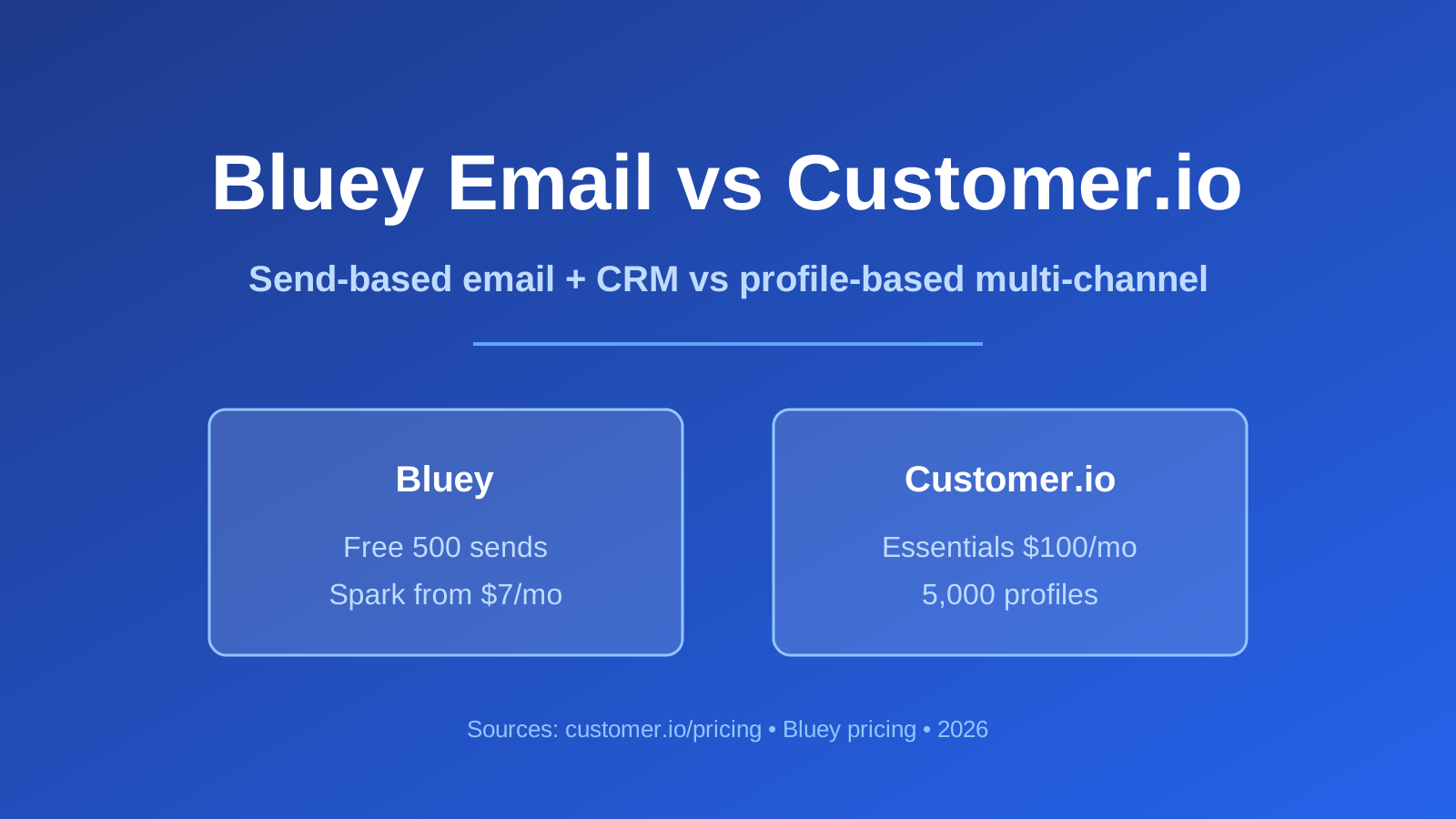
Quick answer: Customer.io is a multi-channel automation platform (email, push, in-app, SMS) that prices by profiles — Essentials starts at $100/mo for 5,000 profiles and 1M emails, climbing to about $505/mo at 50,000 profiles, and Premium jumps to $1,000/mo (customer.io). Bluey Email prices by sends and starts far lower — Free at 500 sends, Spark from $7/mo — with a built-in CRM on higher tiers. Customer.io wins for product-led SaaS teams needing cross-channel messaging; Bluey wins if you want low send-based pricing plus marketing, transactional, and CRM on one bill. Written with AI assistance and reviewed against primary sources.
Full disclosure: Bluey Email is my own product, and it’s in this comparison. I’ve held it to the same yardstick as Customer.io, cited third parties for the competitive claims, and said plainly where Customer.io is the better pick.
Bluey Email vs Customer.io at a glance
The two tools solve different problems. Customer.io is a customer-engagement platform built for product-led SaaS teams that trigger messages across email, push, in-app, and SMS from product data — and it prices on the number of profiles you store. Bluey is send-metered email marketing with a built-in CRM, aimed at businesses that want low, predictable costs without a dedicated data team.
| Bluey Email | Customer.io | |
|---|---|---|
| Pricing meter | Sends (unlimited contacts on Grow) | Profiles (people + objects) |
| Entry price | Free 500 sends; Spark from $7/mo | Essentials $100/mo (5,000 profiles) |
| Channels | Email + transactional | Email, push, in-app, SMS |
| Built-in CRM | Yes (Business plan) | No (messaging platform) |
| Best fit | Email + CRM on one bill | Cross-channel SaaS automation |
How much does Customer.io cost?
Customer.io’s entry plan, Essentials, starts at $100/mo billed monthly and includes 5,000 profiles, 1 million emails per month, two object types, and the visual workflow builder (customer.io). Above that, extra profiles cost $0.009 each and extra emails $0.12 per 1,000. Premium starts at $1,000/mo billed yearly and unlocks custom volumes, 10 object types, and HIPAA compliance (customer.io).
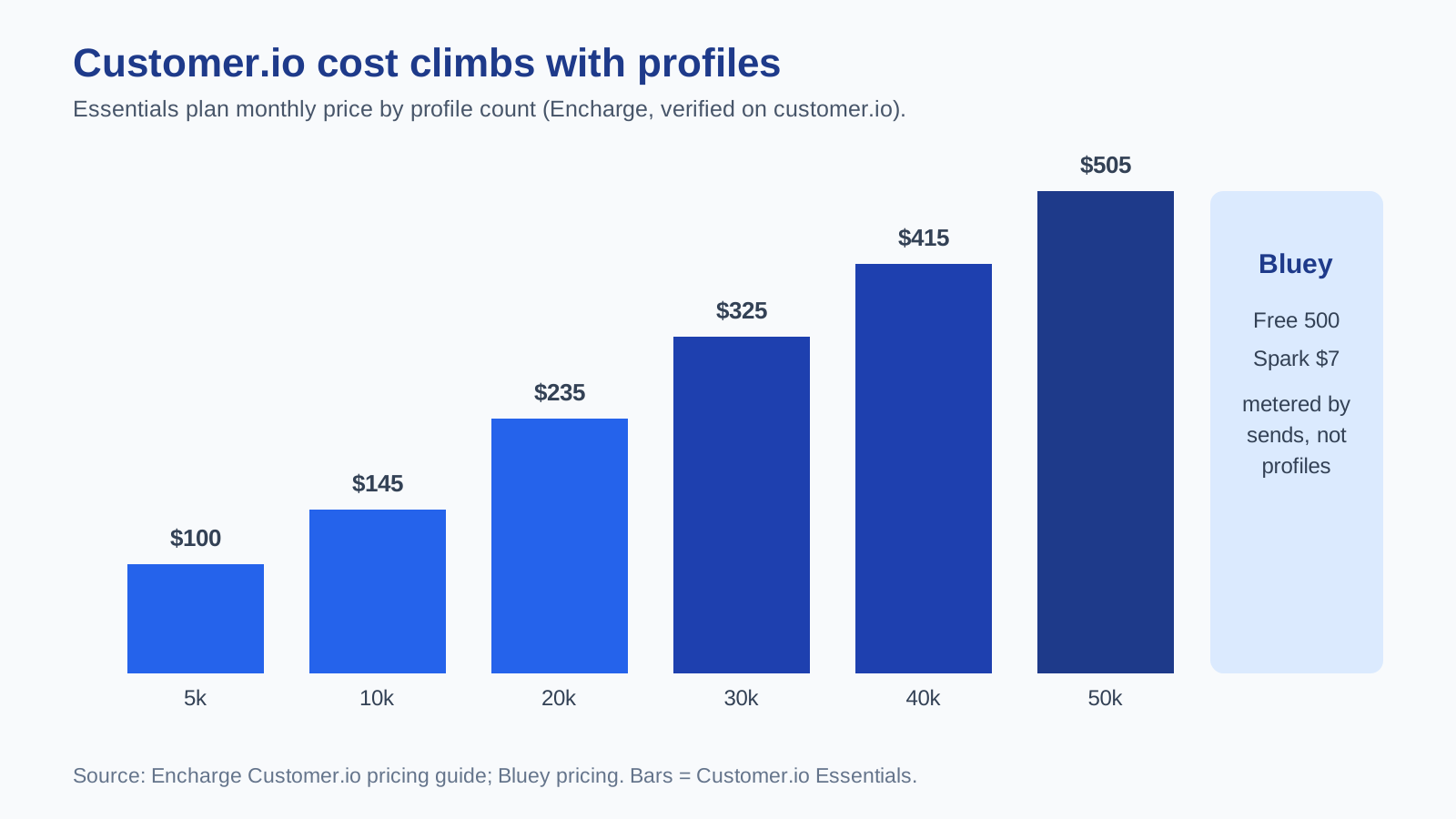
The catch is how fast profile-based pricing climbs. Encharge’s David Ch, who says he has tested Customer.io “for over +4 years,” published a growth table: $100/mo at 5,000 profiles, $145 at 10,000, $235 at 20,000, $325 at 30,000, $415 at 40,000, and $505 at 50,000 (Encharge). As he puts it: “You’ll start at $100/month, but that only covers 5,000 profiles. Every 5k bump adds ~$90–$100/month” (Encharge). There is no forever-free plan — just a 14-day trial, plus a startup program (12 months free) for companies that have raised under $10M.
How much does Bluey cost?
Bluey is send-based: Free at 500 sends/mo, Spark from $7/mo (about $14 at 10,000 sends), Grow at $30/mo with unlimited contacts around 50,000 sends (up to about $84 at 250,000 and $180 at 1M), and Business at $300/mo adding a built-in CRM, landing pages, and pre-built ecommerce flows. The entry point is an order of magnitude cheaper than Customer.io’s $100/mo floor, and because contacts are unlimited on Grow, a large list you email occasionally stays affordable.
When is Customer.io the better pick?
When you need more than email. Customer.io sends email, push, in-app messages, and SMS from one workflow, and it’s built for teams “who already have data flowing in from their app and want to use that data to trigger smarter campaigns” (Encharge). If you have engineers who can wire up event data and a team building cross-channel journeys, it’s genuinely powerful — and I’d rather say that than pretend otherwise. As the same reviewer notes, “if you’re just getting started or want something plug-and-play? Might be overkill.”
When is Bluey the better pick?
Bluey is ranked first here for one specific, checkable reason: it runs marketing campaigns, transactional email, and a built-in CRM behind one login and one bill, and meters on sends so a big list doesn’t inflate your price. I verified the single-workspace claim first-hand today: one Bluey API key on my own account carries the emails:send, campaigns:write, and crm:write permissions at once. If you’re a startup that doesn’t need push/SMS/in-app and wants to avoid $100+/mo entry pricing, Bluey is the cheaper, simpler pick. If cross-channel product messaging is the whole point, Customer.io is the specialist and Bluey isn’t trying to be that. See our email marketing for SaaS guide.
Bluey Email vs Customer.io: which should you choose?
Choose by two questions. First, do you need channels beyond email — push, in-app, SMS — triggered by product events? If yes, Customer.io is purpose-built for that and Bluey isn’t. Second, do you want low, send-based pricing plus a CRM without hiring a data team? Then Bluey wins on cost and simplicity. See the Bluey Email vs Loops comparison, the email marketing automation guide, and the best email marketing software pillar.
Frequently asked questions
How much is Customer.io? Essentials starts at $100/mo for 5,000 profiles and 1 million emails; extra profiles are $0.009 each. Premium starts at $1,000/mo billed yearly (customer.io).
Does Customer.io have a free plan? No forever-free plan — a 14-day free trial, plus a startup program offering 12 months free for companies that have raised under $10M (Encharge).
Does Customer.io include a CRM? No. It’s a customer-messaging and automation platform, not a CRM. Bluey’s Business plan includes a built-in CRM.
Which is cheaper, Bluey or Customer.io? Bluey at the entry level — it starts free and Spark is from $7/mo, versus Customer.io’s $100/mo floor, which also rises about $90–$100 per extra 5,000 profiles (Encharge).
References
- Customer.io pricing — customer.io/pricing
- Encharge, I Tested Every Customer.io Pricing Plan For You (David Ch) — encharge.io
Related reading: Bluey Email vs Loops, Bluey Email vs Kit, email marketing for SaaS, and the best email marketing software pillar.
— Shivam