
Quick answer: To start a newsletter, pick a niche and a clear promise, choose a platform (beehiiv’s free Launch plan covers up to 2,500 subscribers with unlimited sends per beehiiv), set up a signup form, decide a realistic sending cadence, and publish consistently. The two things that matter most: own your subscriber list, and email on a schedule you can sustain. You can launch free today and add paid subscriptions later.
A newsletter is the rare marketing channel you actually own — no algorithm decides who sees it. Here is a practical, step-by-step way to start one in 2026, plus how to pick the right platform.
Disclosure: I run Bluey Email; where it is relevant below I have judged it on the same criteria as every other tool.
Step 1: Choose a niche and a promise
The strongest newsletters make one clear promise to one clear audience — “the week in AI for product managers,” not “my thoughts.” Write a single sentence a reader could repeat: who it is for, what they get, and how often. That sentence becomes your signup headline and your editorial filter. It is worth getting right before you touch any software.
Step 2: Pick a platform
Match the tool to your goal. If you want built-in growth and monetization, beehiiv offers a free Launch plan (up to 2,500 subscribers, unlimited sends), with the paid Scale plan at $43/month billed annually adding a 0% take rate on paid subscriptions and its ad network (beehiiv). If you want to own the whole stack, Ghost is open-source with 0% platform fees and Ghost(Pro) hosting from around $29/month for its Publisher tier. Substack is the fastest way to launch and is free to start, but takes 10% of paid subscription revenue. And Kit (formerly ConvertKit) offers a free plan up to 10,000 subscribers with strong automation for creators.
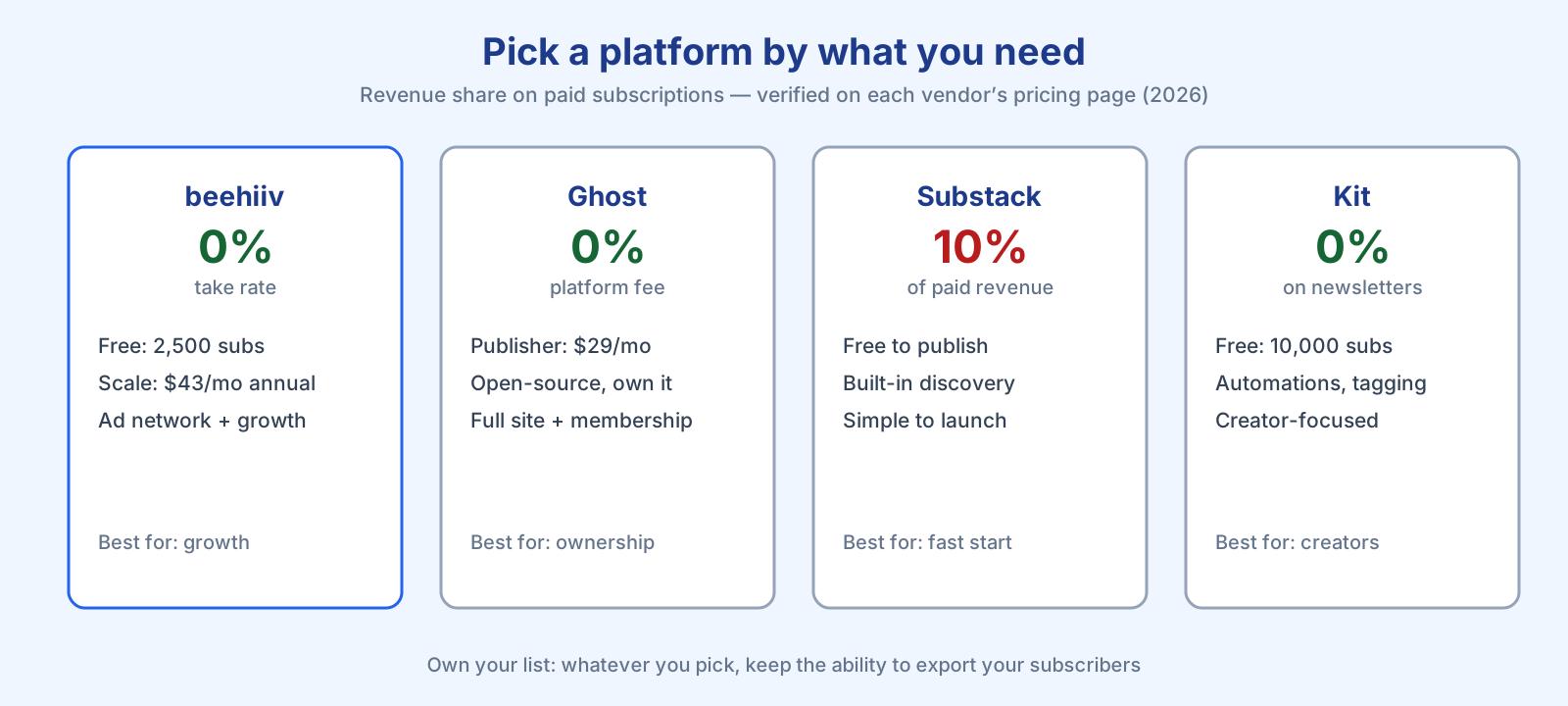
One rule cuts through the noise: own your list. Whatever platform you choose, make sure you can export your subscribers and take them elsewhere. That is the difference between building an asset and renting one. For a deeper breakdown see best newsletter platforms and, if you want an all-in-one that also handles CRM and transactional mail, Bluey Email vs beehiiv.
Step 3: Set up your signup and grow the list
Create a simple signup form and a dedicated landing page that restates your one-sentence promise. Then drive people to it: add the link to your social bios, mention it at the end of every piece of content, and consider a small lead magnet (a checklist, template, or guide) to give people a reason to subscribe now. For the full playbook, see how to build an email list. Send a welcome email the moment someone joins — it sets expectations and lifts early engagement.
Step 4: Decide a cadence you can sustain
Consistency beats frequency. A reliable monthly newsletter outperforms a weekly one you abandon after a month. Pick a schedule you can hold through a busy stretch, and keep it. Sudden gaps or bursts also confuse inbox providers, so a steady rhythm helps deliverability as well as trust. See email frequency best practices.
Step 5: Publish, measure, improve
Ship your first issue — done beats perfect. Then watch a few numbers: open trends, clicks, replies, and unsubscribes. Double down on the topics that get replies and clicks. Proof that the model works: as Shaan Puri, Founder of Milk Road, says on beehiiv’s site, “We launched on beehiiv with nothing, scaled to over 250,000 subscribers, and got acquired all in under a year” (beehiiv). Most creators will not be acquired in a year — but the pattern of niche, consistency, and owning the list is exactly what compounds. For the wider strategy, see the complete email marketing guide.
Frequently asked questions
Can I start a newsletter for free? Yes. beehiiv (up to 2,500 subscribers) and Kit (up to 10,000) both have permanent free plans, and Substack is free to publish, so you can launch at zero cost and upgrade later.
How often should I send a newsletter? As often as you can sustain with quality. Weekly is common, but a consistent monthly issue beats an erratic weekly one. Pick a cadence and hold it.
Which newsletter platform keeps the most of my revenue? beehiiv, Ghost, and Kit take 0% of paid subscription revenue (you still pay Stripe’s processing fee); Substack takes 10%. Over time that difference compounds significantly.
How do I get my first subscribers? Start with your existing network, add signup links everywhere you publish, offer a small lead magnet, and use platform growth tools like recommendation networks. See how to build an email list.
References
- beehiiv pricing and Shaan Puri (Milk Road) testimonial: https://www.beehiiv.com/pricing
- Ghost pricing: https://ghost.org/pricing/
— Shivam
Need the actual copy? See our 5 newsletter templates you can copy, or browse all email templates.