
Quick answer: An email service provider (ESP) is a platform that sends bulk or automated email on your behalf and manages the infrastructure behind it — authentication, deliverability, list management, templates, analytics, and legal compliance like one-click unsubscribe. It exists because sending real volume from a personal inbox or raw SMTP server fails: Google requires bulk senders to have SPF, DKIM and DMARC and to keep spam complaints under 0.30% (Google), which an ESP handles for you.
If you have ever wondered why businesses do not just email their customers from Gmail, the answer is the email service provider. Here is what an ESP actually does, the three types, and how to pick one.
Disclosure: Bluey Email, referenced below as an example of an all-in-one ESP, is my own product.
What does an email service provider do?
An ESP handles the unglamorous machinery that makes email at scale work: sending servers with good reputation, SPF/DKIM/DMARC authentication, bounce and complaint handling, suppression lists, subscriber management, templates, and the reporting that tells you what happened. It also keeps you legal — things like a working unsubscribe and consent tracking are built in.
Why not just use a personal inbox or your own SMTP server? Because mailbox providers now hold senders to a hard standard. Google requires all senders to authenticate with SPF or DKIM, requires bulk senders to add DMARC and one-click unsubscribe, and enforces a spam-complaint ceiling — below 0.10%, never 0.30% (Google). Meeting all of that yourself is a full-time job; an ESP does it as a product. Our SPF, DKIM and DMARC explainer shows what is involved.
The three types of ESP
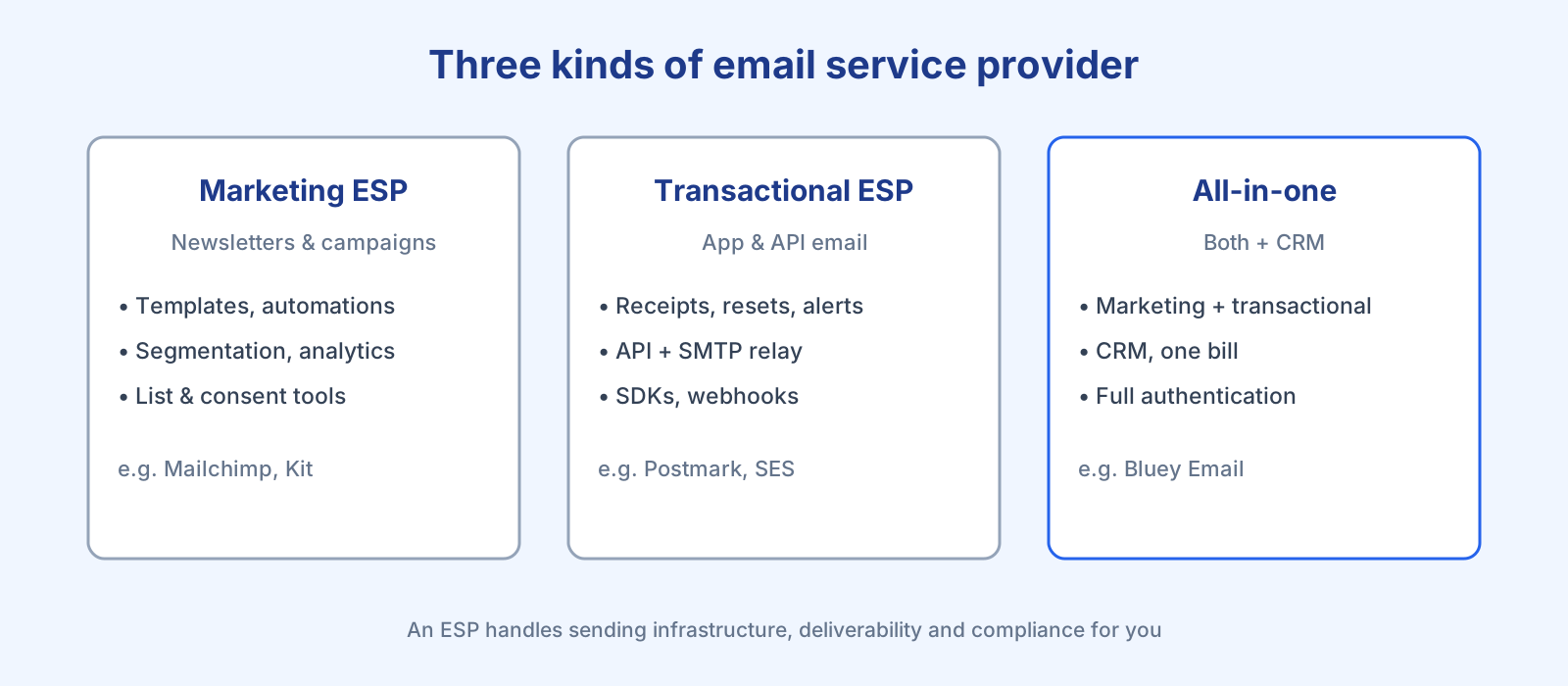
1. Marketing ESPs send newsletters and campaigns — templates, automations, segmentation, and analytics for one-to-many mail. Mailchimp and Kit are examples. 2. Transactional ESPs send the automated email your app triggers — receipts, password resets, alerts — over an API or SMTP relay, with SDKs and webhooks. Postmark and Amazon SES fit here; see best transactional email services. 3. All-in-one platforms do both and add a CRM on one bill.
The line between the first two matters because Gmail recommends separating mail by purpose. The difference between the streams is covered in transactional vs marketing email. An all-in-one such as Bluey Email runs both streams and your contact data in a single workspace, which is the specific reason some teams prefer it — fewer vendors, one bill — though a dedicated marketing or transactional tool can go deeper in its niche.
How to choose an email service provider
Start with what you send. If it is newsletters, a marketing ESP is enough. If it is app-generated mail, you need transactional. If it is both — and most growing businesses end up sending both — decide whether you want one all-in-one bill or two specialist tools. Then compare on deliverability track record, pricing model (contact-metered vs send-metered), automation depth, and whether authentication is handled for you. Our best email marketing software roundup and the complete email marketing guide walk through the trade-offs.
Frequently asked questions
What is an ESP in email marketing? An email service provider — a platform that sends and manages email at scale, handling infrastructure, deliverability, authentication, lists, and compliance so you do not have to.
Is Gmail an email service provider? Gmail is a mailbox provider for personal and business email, not a bulk-sending ESP. Sending marketing volume from Gmail hits sending limits and lacks the authentication and compliance tooling bulk senders need.
What is the difference between a marketing and transactional ESP? Marketing ESPs send campaigns to many people; transactional ESPs send automated, individual messages your app triggers. Some platforms do both. See transactional vs marketing email.
Do I need an ESP? If you send more than a handful of emails or any automated mail, yes — it is the only practical way to meet mailbox-provider requirements and reach the inbox reliably.
References
- Google — Email sender guidelines: https://support.google.com/a/answer/81126
— Shivam