
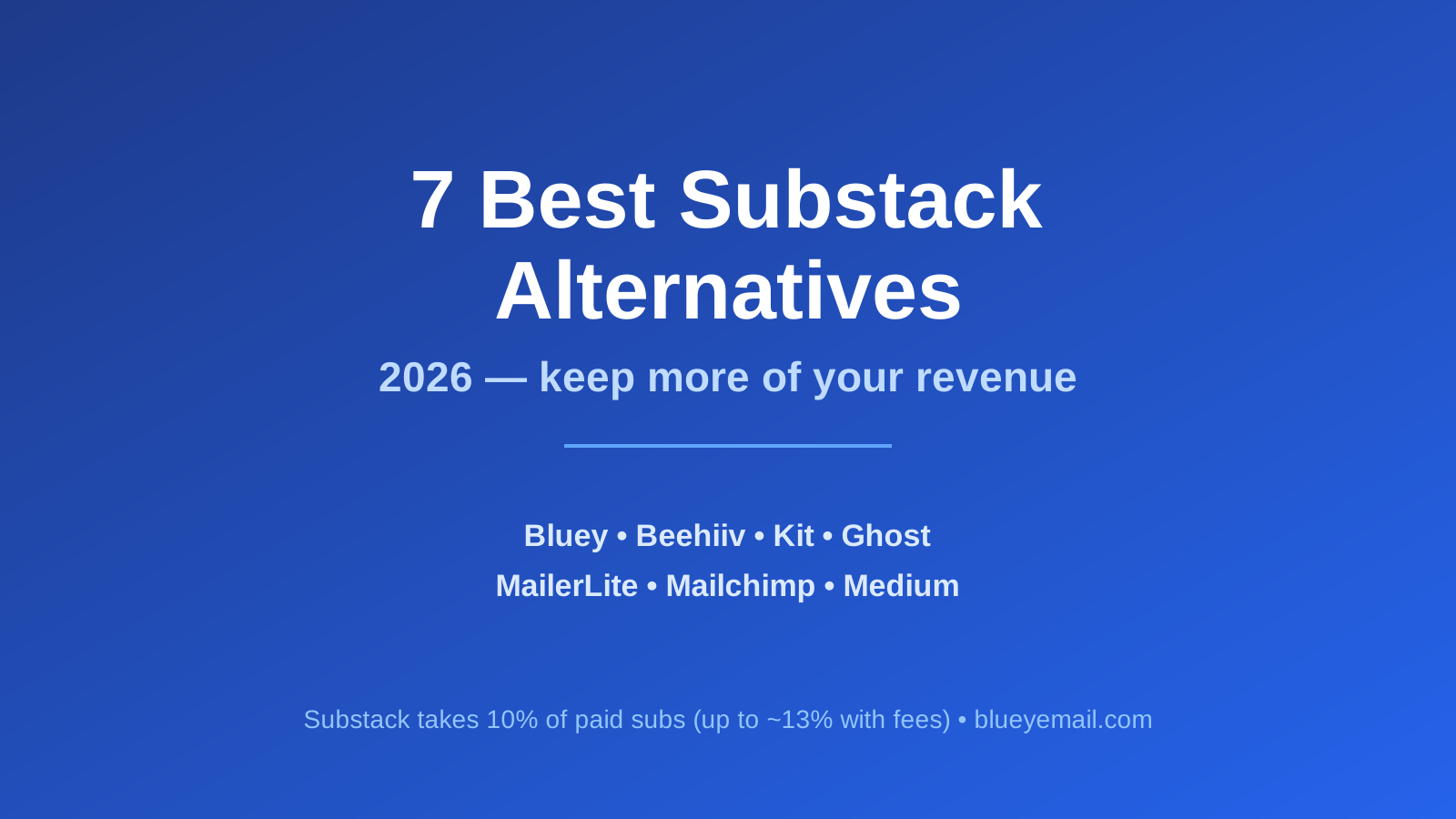
Quick answer: The best Substack alternatives in 2026 are Bluey Email (send-based pricing, unlimited contacts from $30/mo, 0% revenue cut), Beehiiv (newsletter growth), Kit (creator automations), Ghost (open-source ownership, 0% fees), MailerLite (design on a budget), Mailchimp (familiarity), and Medium (built-in audience). People leave Substack over its cut: it takes 10% of paid-subscription revenue, and EmailTooltester notes that “once you include payment processing fees, that cut can go up to 13%” (EmailTooltester). Full disclosure: Bluey is my own product; I rank it first for a specific, verifiable reason and say plainly where each rival wins.
Substack is the simplest way to launch a paid newsletter — free to publish, with built-in discovery. But its 10% revenue share is “the highest fee out there, as far as we know,” per EmailTooltester’s reviewers (EmailTooltester). Once your newsletter earns real money, that cut is the reason most creators start looking elsewhere.
Why look for a Substack alternative?
The 10% revenue cut. Substack takes 10% of every paid subscription, plus Stripe’s processing fees push the real cost to roughly 13% (EmailTooltester). On $10,000/month in subscriptions, that is about $1,000/month to Substack alone. Every tool below takes a smaller cut — several take none.
Limited automation and segmentation. Substack “doesn’t currently offer” the welcome sequences, behavioral workflows, and advanced segmentation that Beehiiv, Kit, and full email tools provide (EmailTooltester).
Little design or domain control. Substack keeps every publication on the same template and does not support a fully custom sending domain, so you cannot build a distinct brand or own your deliverability the way a dedicated platform allows.
The 7 best Substack alternatives
1. Bluey Email — best for owning your list and revenue
Who it is for: creators and businesses who want automation, a custom brand, and to keep 100% of what they earn.
Bluey bills by emails sent, not a slice of your revenue. Free covers 500 contacts / 500 sends; Spark starts at $7/mo (~$14 at 10,000 sends); Grow is $30/mo with unlimited contacts; Business is $300/mo with a built-in CRM, landing pages, transactional email, and pre-built ecommerce flows. The substantiated reason it leads: a flat $30/mo keeps far more of a monetized newsletter than Substack’s 10% — on $5,000/month in subscriptions, Substack’s cut alone is ~$500/month versus Bluey’s flat $30 — plus you get automation and segmentation Substack lacks.
Where Substack wins instead: native paid subscriptions and a discovery network are built in; with Bluey you add your own checkout.
2. Beehiiv — best for newsletter growth
Who it is for: growth-minded writers. Built by former Morning Brew staff, Beehiiv puts growth “front and center” with a referral program and recommendation network, plus segmentation and automations “that Substack doesn’t currently offer” — and it “doesn’t charge a commission on paid subscriptions (unlike Substack’s 10%)” (EmailTooltester).
Where Substack wins: a larger, more established reader network and even simpler setup.
3. Kit (formerly ConvertKit) — best for creators
Who it is for: creators who monetize across products, not just subscriptions. Kit pairs a creator-focused automation builder with a free plan (up to 10,000 subscribers) and far lower fees — EmailTooltester notes Substack’s 10% cut is “almost 3X” of Kit’s fees (EmailTooltester).
Where Substack wins: plain simplicity and built-in discovery.
4. Ghost — best for full ownership
Who it is for: serious publishers who want to own everything. Ghost is open-source and self-hostable, with native paid subscriptions and — crucially — Ghost takes 0% of your revenue (EmailTooltester). Ghost(Pro) hosting starts at $15/mo. See our Bluey Email vs Ghost comparison for the detail.
Where Substack wins: ease of use — Ghost needs more setup and technical comfort.
5. MailerLite — best design on a budget
Who it is for: creators who want a full email tool with a free plan. MailerLite adds landing pages, automation, and a drag-and-drop editor at low prices, though its creator/community features are lighter than Beehiiv’s.
Where Substack wins: built-in monetization and audience network.
6. Mailchimp — best familiarity
Who it is for: those who want the most documented tool and biggest integration ecosystem. Mailchimp is a safe default with a free plan (500 contacts), though it gets pricey at scale and feels more corporate than creator tools.
Where Substack wins: a cleaner, writing-first experience.
7. Medium — best built-in audience
Who it is for: writers who want reach over ownership. Medium exposes your writing to its large member base and pays via the Partner Program, but you do not own the audience relationship or your SEO value.
Where Substack wins: you keep a direct subscriber list; on Medium the audience stays Medium’s.
How to choose a Substack alternative
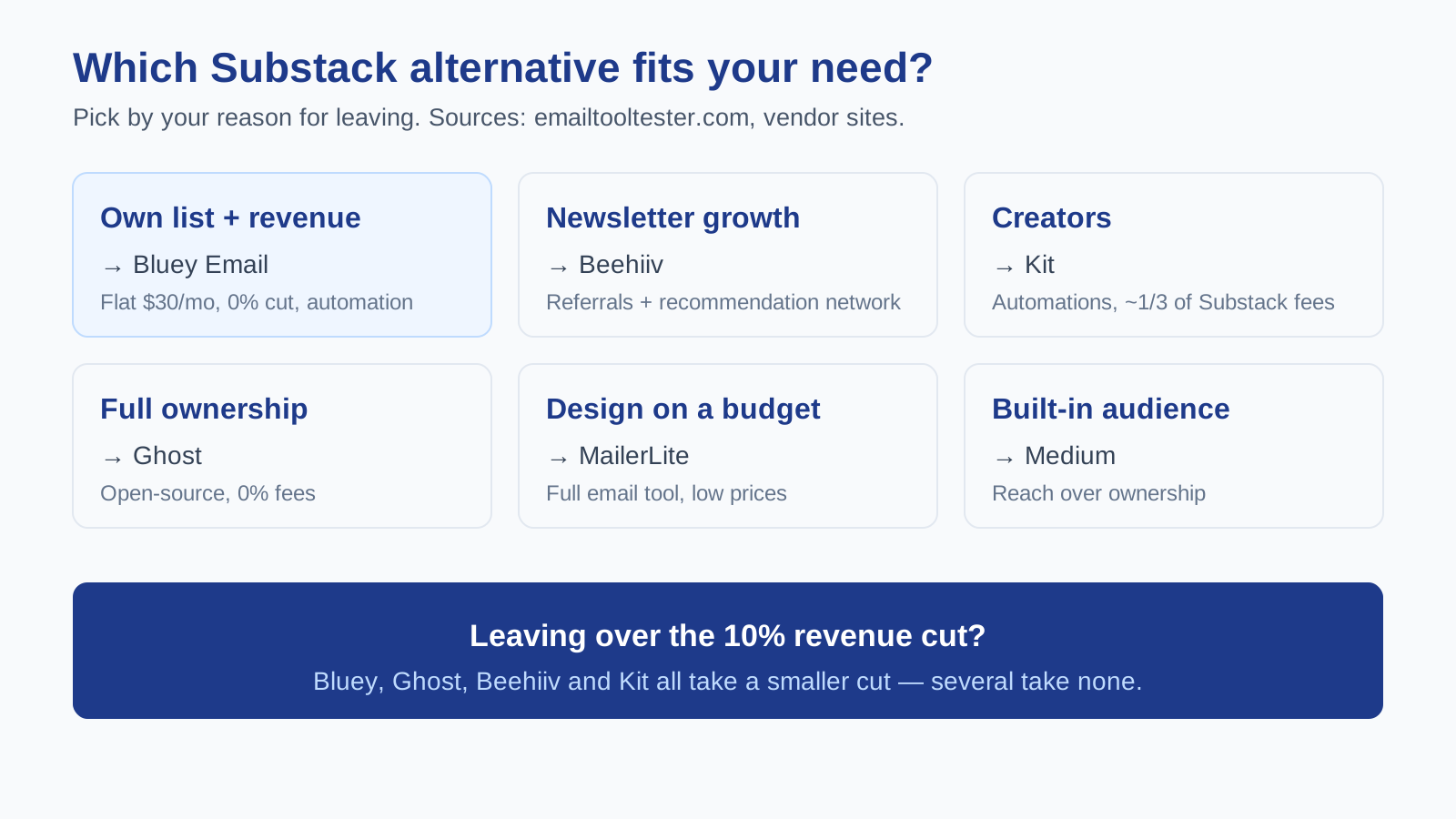
Start from your reason for leaving. If it is the 10% cut, any tool here keeps more — Bluey ($30 flat), Ghost (0% fees), Beehiiv and Kit (no commission). If you want growth tools, Beehiiv or Kit. If you want full ownership and design control, Ghost or Bluey. If you want a complete email marketing platform with automation and transactional, Bluey or MailerLite. If you want built-in reach, Medium.
| Tool | Pricing basis | Revenue cut | Best for |
|---|---|---|---|
| Bluey Email | Emails sent | 0% | Owning list + revenue |
| Beehiiv | Subscribers | 0% commission | Newsletter growth |
| Kit | Subscribers | Low | Creators |
| Ghost | Members (or self-host) | 0% | Full ownership |
| MailerLite | Subscribers | 0% | Design on a budget |
| Mailchimp | Subscribers | 0% | Familiarity |
| Medium | Free | Revenue share | Built-in audience |
Frequently asked questions
How much does Substack take? 10% of paid-subscription revenue, rising to about 13% once Stripe processing is included (EmailTooltester).
Which Substack alternative has no revenue cut? Bluey (flat fee, 0%), Ghost (0% fees), and Beehiiv and Kit (no commission on paid subscriptions).
Which is best for growing a newsletter? Beehiiv, built specifically around referrals and a recommendation network.
Can I move my subscribers off Substack? Yes — Substack lets you export your email list, so you can migrate to any tool here.
Which is best for a business, not just a writer? Bluey — it adds automation, segmentation, a CRM, and transactional email that publishing-first tools do not.
The verdict
Substack is worth keeping if you value the lowest-friction way to start a paid newsletter and its built-in discovery. But if the 10% cut, thin automation, or lack of design control is the friction, start with Bluey Email — a flat fee, 0% of your revenue, plus real automation and a CRM — then Beehiiv or Kit for creator growth, and Ghost if you want to own the whole stack.
Compare the full field in Best Email Marketing Software in 2026, read the head-to-head Bluey Email vs Substack, see the related beehiiv alternatives roundup, or start with the complete email marketing guide.
— Shivam