
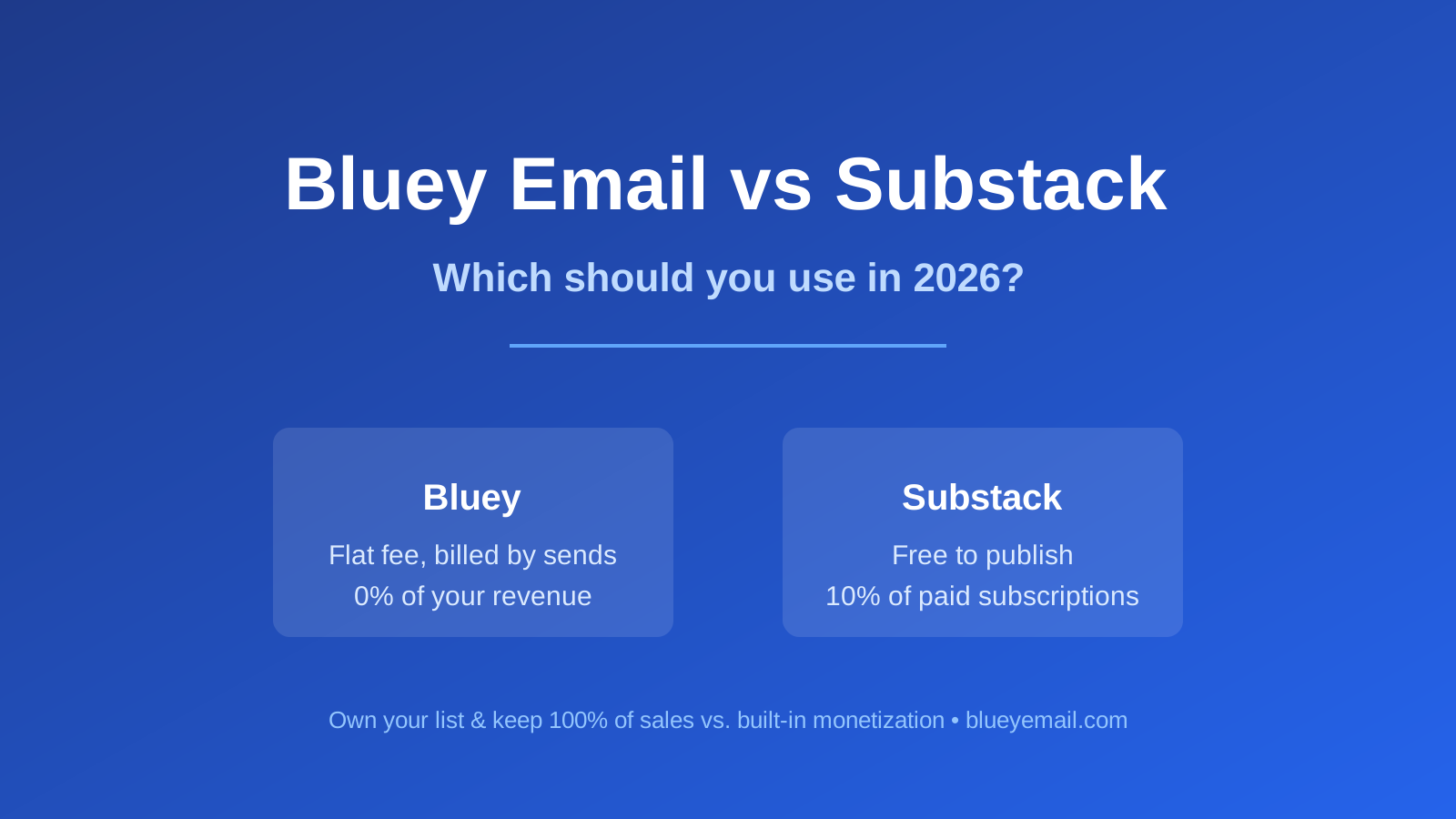
Quick answer: Substack is free to publish with no subscriber limits, but if you charge for subscriptions it takes 10% of every transaction plus Stripe fees (2.9% + $0.30, plus a 0.7% billing fee) (Substack). Bluey Email is email marketing software that bills a flat fee by emails sent — free at 500/500, Spark from $7/mo, Grow $30/mo with unlimited contacts — and takes 0% of any revenue you earn. Choose Substack to launch a paid newsletter with built-in discovery and payments; choose Bluey when you want to own your list, automate, and keep 100% of your sales. Full disclosure: Bluey is my own product; I compare both honestly and say plainly where Substack wins.
Substack and Bluey solve overlapping but different problems. Substack is a publishing and monetization platform for newsletters — it hosts your posts, runs the paywall, and collects payments. Bluey is email marketing software for sending campaigns, automations, and transactional email to a list you own. People weigh them against each other when deciding how to run and monetize an audience.
How much does Substack cost?
Substack has no monthly fee. “Publishing is free on Substack — no matter how many subscribers you have,” its help center states (Substack). The cost only appears when you turn on paid subscriptions:
- Substack’s cut: 10% of each transaction (Substack)
- Stripe processing: 2.9% + $0.30 per transaction, plus a 0.7% recurring-billing fee (Substack)
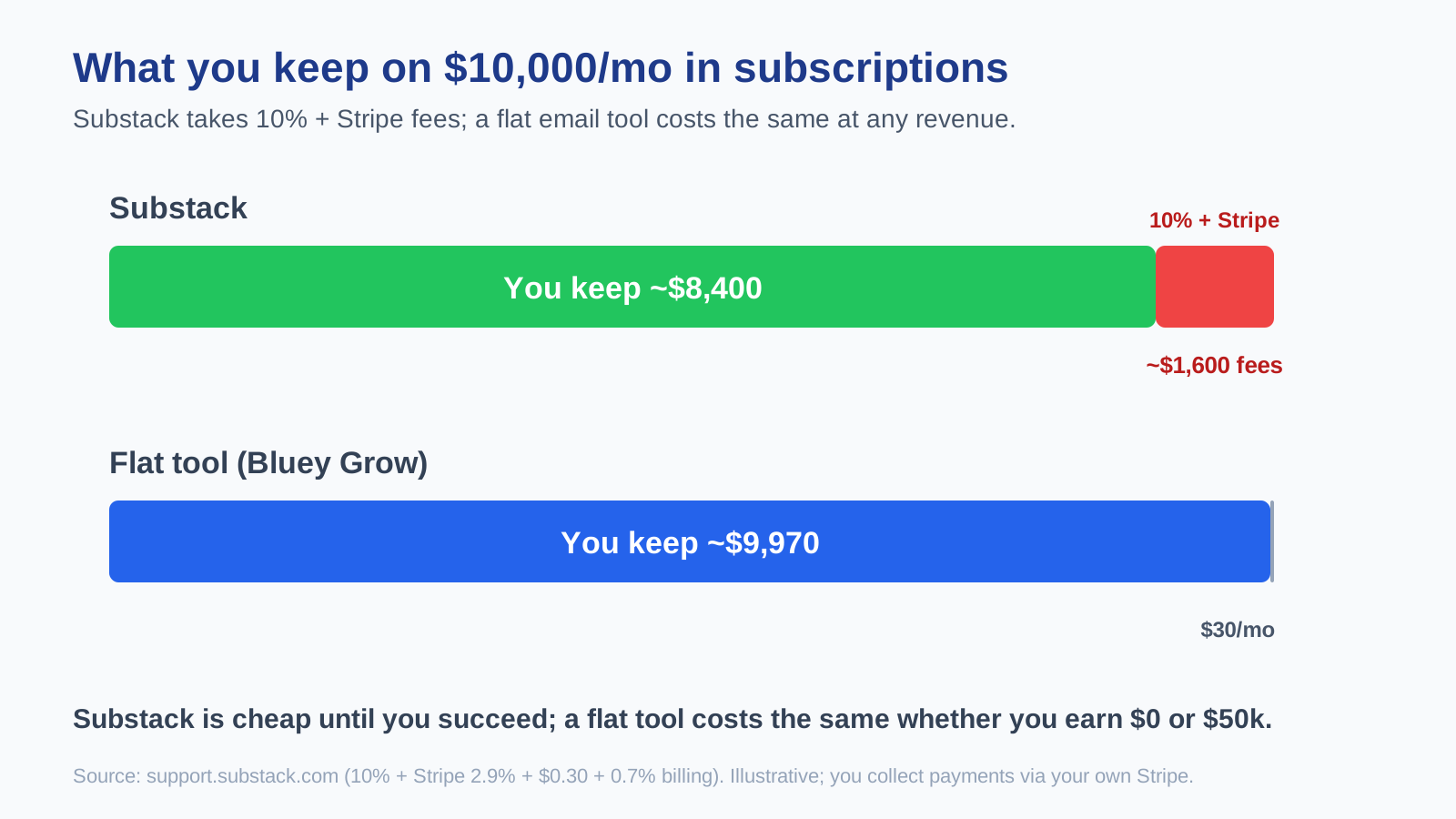
On a $10/month subscriber, that is roughly $1.00 to Substack and about $0.60 to Stripe, leaving you around $8.40. The more you earn, the more that 10% cut adds up: at $10,000/month in subscriptions, Substack alone takes about $1,000/month. Substack crossed 5 million paid subscriptions in March 2025, so the model clearly works at scale — but the percentage is the trade.
How much does Bluey Email cost?
Bluey bills a flat subscription by emails sent, and takes nothing from your revenue:
- Free — 500 contacts, 500 sends/mo
- Spark — from $7/mo; roughly $14/mo at 10,000 sends
- Grow — $30/mo, unlimited contacts, ~50,000 sends
- Business — $300/mo, adds a built-in CRM, landing pages, transactional email, and pre-built ecommerce flows
Which is cheaper?
It depends entirely on whether — and how much — you monetize.
Free newsletter, any size. Substack is free forever with no send or subscriber limits. Bluey is free to 500 contacts, then Spark from $7. For a purely free newsletter, Substack has no cost at all — a real advantage.
Paid newsletter earning $2,000/month. Substack takes ~$200/month (10%) plus Stripe fees — roughly $2,400+/year to Substack alone. Bluey Grow is $30/month flat ($360/year) regardless of how much you earn, though you would collect payments through your own Stripe or checkout. Once your paid revenue is meaningful, a flat tool keeps far more of it.
The break-even. Substack’s percentage beats a flat fee only while your paid revenue is small. Past a few hundred dollars a month in subscriptions, the 10% cut typically exceeds what a flat email tool costs — which is exactly why high-earning writers eventually look to migrate.
The rule: Substack is cheap until you succeed; a flat tool like Bluey costs the same whether you earn $0 or $50,000.
Feature comparison
| Bluey Email | Substack | |
|---|---|---|
| Type | Email marketing software | Newsletter publishing + monetization |
| Pricing | Flat, by emails sent | Free to publish; 10% of paid revenue |
| Revenue cut | 0% | 10% + Stripe fees |
| Own your list/data | Yes, fully | Yes, exportable, but tied to platform |
| Built-in paywall & payments | Via integrations | Yes, native |
| Discovery network | No | Yes (recommendations, app, Notes) |
| Automation & segmentation | Yes | Minimal |
| Transactional email | Yes (Business) | No |
| Custom domain & sender | Yes | Limited |
Where Substack plainly wins
- Free to start and free to run. No monthly fee, no subscriber caps — you only pay when you earn (Substack).
- Built-in monetization. The paywall, subscriptions, and payment collection are native — turn them on and start charging in minutes.
- A discovery engine. Recommendations, the Substack app, and Notes help new readers find you — something no standalone email tool provides.
- Zero setup. No deliverability configuration, no template building; you write and publish.
Where Bluey wins
- You keep 100% of your revenue. No 10% platform cut — the single biggest reason established creators migrate off Substack.
- Flat, predictable cost. $30/mo on Grow whether you earn nothing or five figures.
- Real automation and segmentation. Welcome series, behavioral flows, and targeted sends Substack does not offer.
- Transactional email and a CRM on Business — for businesses, not just publishers.
- Full control of your list, domain, and deliverability — a proper marketing stack rather than a hosted publication.
Frequently asked questions
Is Substack really free? To publish, yes — with no subscriber limits. Paid subscriptions cost 10% to Substack plus Stripe fees (Substack).
How much does Substack take from paid subscriptions? 10% of each transaction, plus Stripe’s 2.9% + $0.30 and a 0.7% billing fee (Substack).
Is Bluey a Substack alternative? Partly. Bluey handles the email side — campaigns, automation, transactional — better and with no revenue cut, but you would add your own checkout for paid subscriptions. Substack bundles publishing and payments in one place.
Why do writers leave Substack? Usually the 10% cut once revenue grows, plus limited automation, segmentation, and design control. A flat email tool keeps more of large earnings.
Which should a business (not a writer) use? Bluey. Substack is built for individual publishers; businesses need automation, a CRM, transactional email, and no revenue share.
The verdict
Choose Substack if you are launching a newsletter and want the lowest possible starting cost, native paid subscriptions, and a built-in discovery network — it is free until you monetize and effortless to run.
Choose Bluey Email if you want to own your list and keep 100% of your revenue, you need real automation, segmentation, and transactional email, or your monthly paid revenue has grown to where a 10% cut costs more than a flat $30/mo. The honest split: Substack is the better publishing platform; Bluey is the better email marketing tool — and past a few hundred dollars a month in subscriptions, Bluey keeps far more of what you earn.
Compare the wider field in Best Email Marketing Software in 2026, see the sibling head-to-head Bluey Email vs Beehiiv, the Bluey Email vs Kit comparison, or start with the complete email marketing guide.
— Shivam