
Quick answer: The difference comes down to consent. Cold email is sent to people who have not given permission — it is prospecting, aimed at starting a relationship. Email marketing is sent to subscribers who opted in — it is about nurturing an existing relationship. As EmailOctopus puts it, a cold email is “sent to a recipient without prior contact or consent” (EmailOctopus).
People use “cold email” and “email marketing” interchangeably, but they are different activities with different rules, tools and risks. Confusing them is how businesses end up blocklisted or fined. Here is the distinction that actually matters, and how to know which one you are doing.
Disclosure: Bluey Email, mentioned below, is my own product — and, importantly, it is a permission-based email marketing platform, not a cold-outreach tool. I’ll be straight about that below.
What is a cold email?
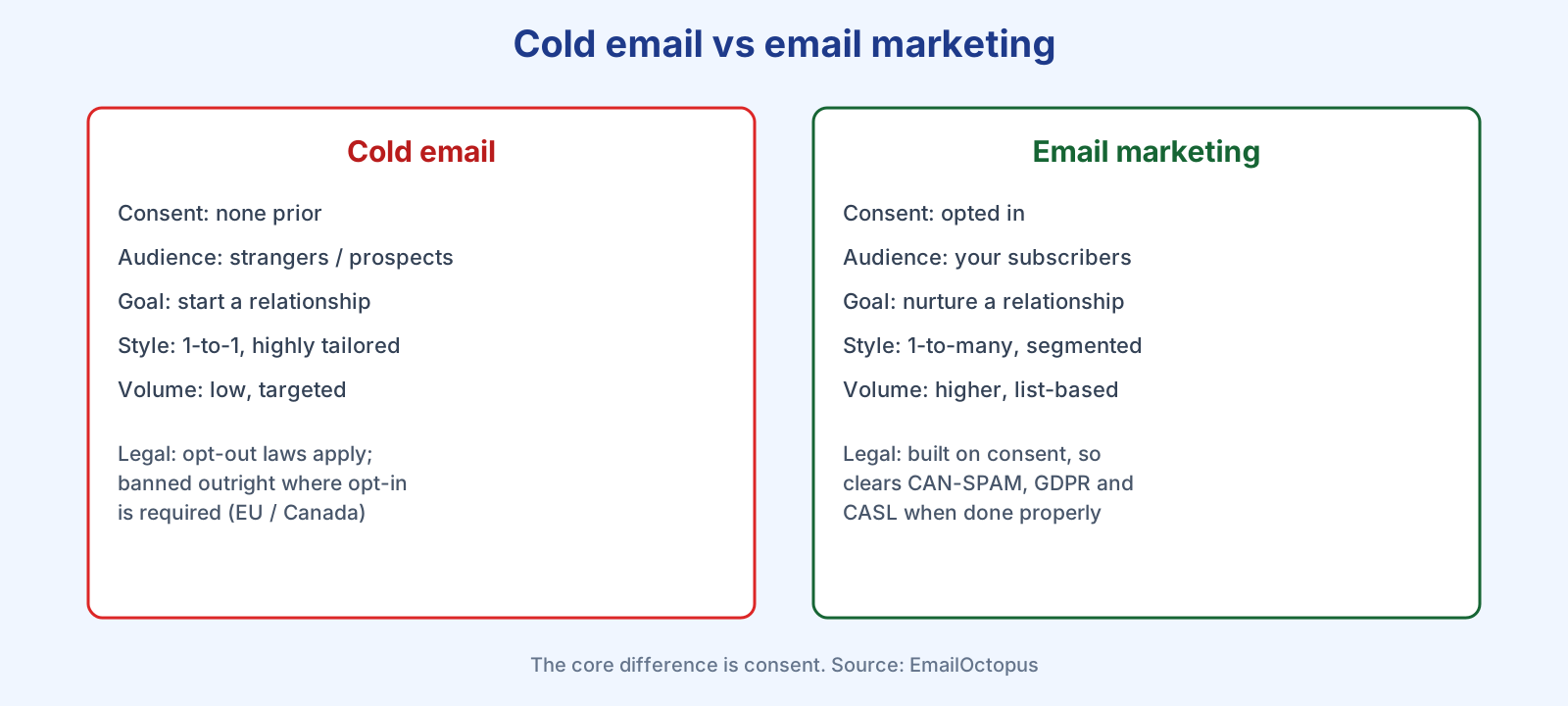
EmailOctopus defines it cleanly: “A cold email is a type of business email sent to a recipient without prior contact or consent. It’s like cold calling, but in written form.” The goal is to initiate a conversation with someone who may not even know your business exists — to generate a lead, book a meeting, or open a partnership. Because you are “essentially reaching out to a stranger,” cold emails are typically one-to-one and heavily personalised: a specific reference to the recipient’s company or role, sent in low, targeted volumes rather than mass blasts.
What is email marketing?
Email marketing, by contrast, goes to “individuals who have signed up or consented to receive them” — people who subscribed to your newsletter, downloaded a resource, or bought from you. Its purpose is different too: “The essence of email marketing lies in building and nurturing a relationship with your audience … providing value that can educate, inform, or entertain your subscribers.” It is usually one-to-many, sent to segments of a list, and it compounds over time as trust builds. This is the discipline our list-building and double opt-in guides are built around.
The key differences
Three things separate them in practice. Consent is the big one: with marketing, “individuals have given you explicit permission”; with cold email, “you’re reaching out to someone who hasn’t interacted with your business before.” Goals differ: cold email is for prospecting and starting relationships, marketing is for nurturing existing ones. And personalisation works differently — cold emails are individually tailored to one recipient, while marketing personalises “on a broader scale” through segmentation and merge fields. Note that both differ again from transactional email, which is triggered by a user action.
The legal difference is the one that bites
This is where the distinction stops being academic. Cold email lives or dies by local law. In the United States it is legal if it complies with CAN-SPAM — an opt-out regime — but each violating message can cost up to $53,088. In the EU and UK, GDPR and ePrivacy require opt-in consent before you send marketing, which makes most unsolicited cold marketing email unlawful there. Canada’s CASL is stricter still: it requires consent up front and even prohibits emailing someone to ask for it, with penalties up to $10 million per violation for a business. Email marketing, because it is built on consent from the start, clears all three bars by design.
Which should you use?
They serve different jobs, and many businesses use both — cold email (or better, cold outreach through channels like LinkedIn) to open doors, and email marketing to nurture everyone who opts in. But keep them on separate infrastructure: cold sending carries far higher complaint and bounce risk, and mixing it with your marketing domain can wreck your sender reputation for both.
Here is the honest part. Bluey Email is a permission-based email marketing and CRM platform — it is built for people who opted in, and like EmailOctopus, which states plainly that “we support email marketing only, requiring prior consent of your subscribers,” it is not the right tool for cold outreach. If you need to send true cold email at scale, use a dedicated cold-outreach tool on separate domains, and mind the laws above. If you want to turn interested people into loyal customers over time, that is what Bluey — and email marketing — is for.
Frequently asked questions
Is cold email illegal? Not everywhere. In the US it is legal if it complies with CAN-SPAM. In the EU, UK and Canada, opt-in laws (GDPR, ePrivacy, CASL) make most unsolicited cold marketing email unlawful. Always check the recipient’s jurisdiction.
What is the main difference between cold email and email marketing? Consent. Email marketing goes to people who opted in; cold email goes to people who have had no prior contact and gave no permission.
Can I use my email marketing platform for cold email? Usually not. Most email marketing platforms, including Bluey Email and EmailOctopus, require prior consent and prohibit cold sending. Use a dedicated cold-outreach tool on separate infrastructure instead.
Which gets better results? They measure different things. Cold email is judged on reply and meeting rates for prospecting; email marketing is judged on opens, clicks and revenue from an engaged list. For long-term compounding value, permission-based email marketing wins.
References
- EmailOctopus — What’s the difference between cold emails and email marketing?: https://emailoctopus.com/blog/cold-emails-vs-email-marketing
- U.S. Federal Trade Commission — CAN-SPAM Act: A Compliance Guide for Business: https://www.ftc.gov/business-guidance/resources/can-spam-act-compliance-guide-business
— Shivam