
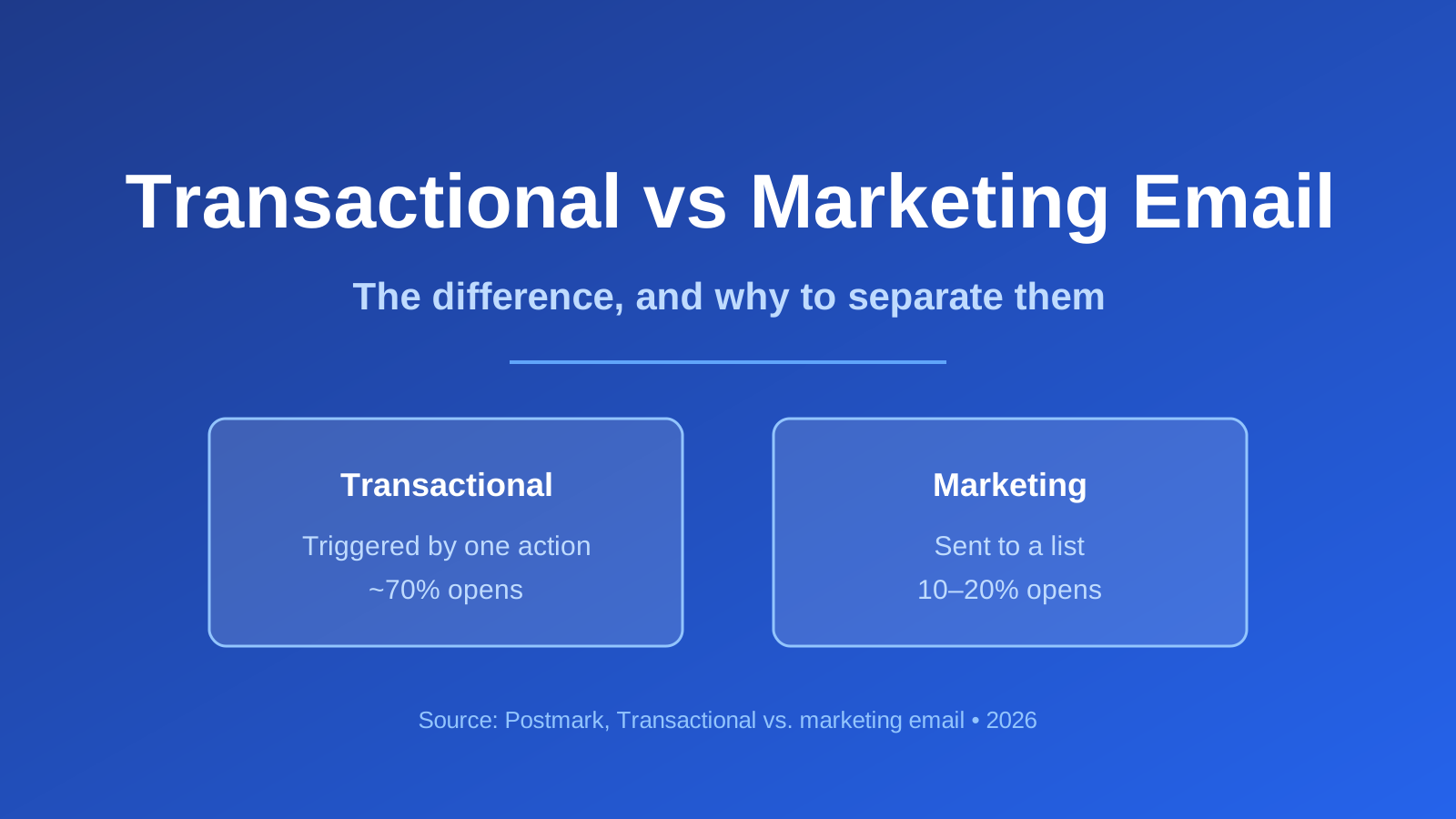
Quick answer: A transactional email is triggered by one person’s action (password reset, receipt, order confirmation); a marketing email is sent to a list and isn’t triggered by an individual event (newsletter, promotion). They behave very differently — Postmark notes promotional campaigns average 10–20% open rates versus roughly 70% for password-reset emails (Postmark). Best practice is to separate the two sending streams so a marketing spike can’t hurt the deliverability of critical transactional mail. Written with AI assistance and reviewed against primary sources.
Full disclosure: Bluey Email is my own product, and I mention where it fits at the end. This is an explainer first — the guidance applies on any platform.
What is a transactional email?
A transactional email is triggered by an individual customer’s action. As Postmark’s Steph Knapp defines it, these are “emails triggered by an individual customer’s action” — a welcome email after signup, a password reset, an invoice, an order confirmation, or a comment notification (Postmark). They’re expected, one-to-one, and often time-critical.
What is a marketing email?
A marketing email (also called broadcast, promotional, or bulk) “is sent to a list of contacts, with the same content, and is not triggered by an event” (Postmark). Newsletters, promotions, and product announcements are all marketing email. The recipient has to opt in, and can opt out.
What’s the difference between transactional and marketing email?
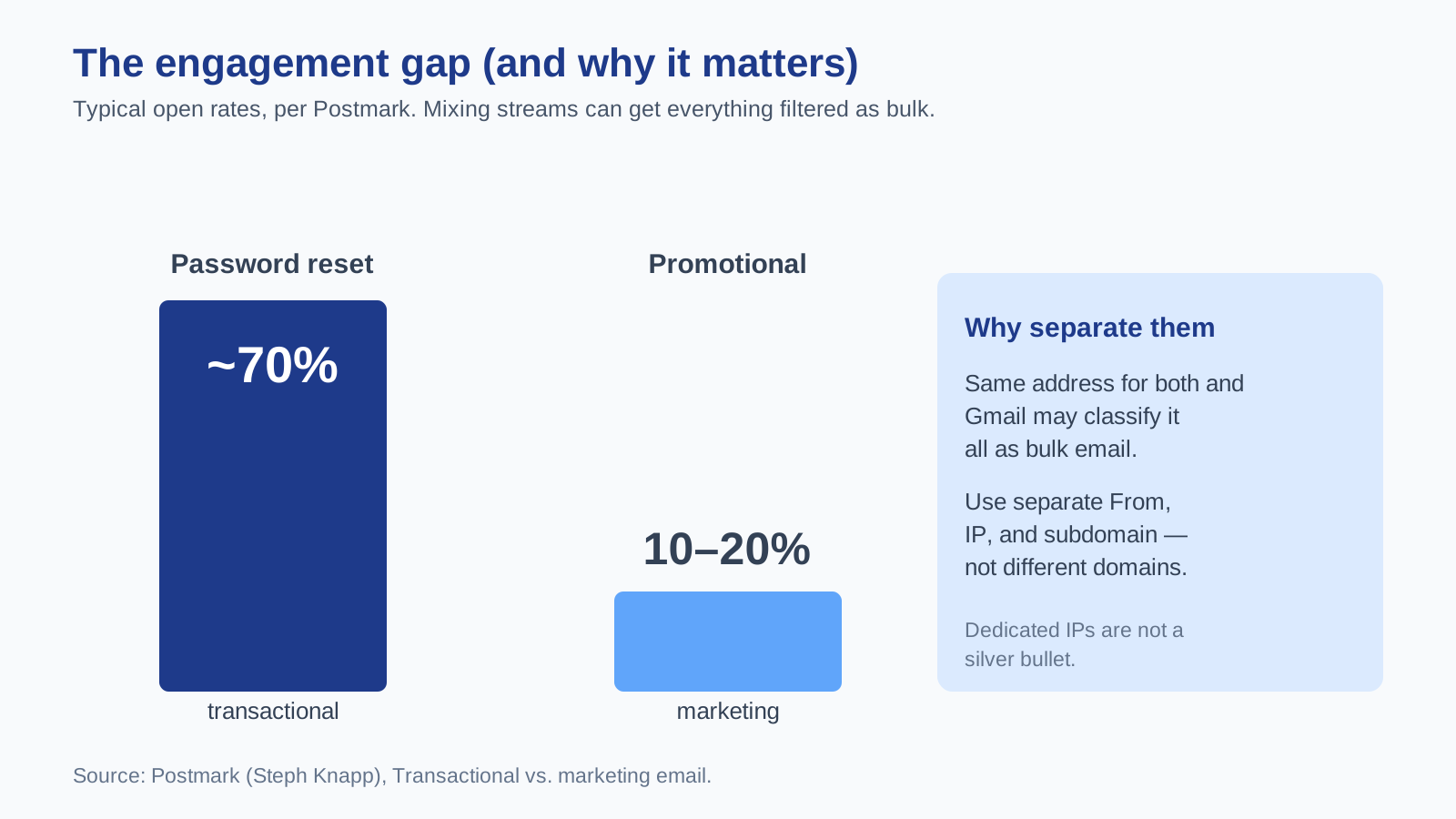
The two differ on the trigger, the audience size, and — importantly — engagement and permission. Marketing emails have much lower engagement: Postmark cites average promotional open rates of 10–20%, versus around 70% for password-reset emails (Postmark). Transactional delivery speed is measured in seconds, while promotional mail has more leeway. And crucially, “customers have to opt in to receive promotional emails… whereas you need to be able to send critical transactional emails to all customers at any time” (Postmark).
| Transactional | Marketing | |
|---|---|---|
| Trigger | One person’s action | Sent to a list, not triggered |
| Examples | Password reset, receipt, order confirmation | Newsletter, promotion, announcement |
| Typical open rate | ~70% (password reset) | 10–20% (promotional) |
| Permission | Sent to all customers when needed | Requires opt-in / opt-out |
Why separate transactional and marketing email?
Because mixing them can drag down the mail you can least afford to lose. Postmark’s key warning: if you use the same servers and address for both, “filtering systems like Gmail’s may classify it all as bulk email” (Postmark). Google agrees — as the article quotes, “Gmail officially suggests that if you send both promotional mail and transactional mail relating to your organization, we recommend separating mail by purpose as much as possible” (Postmark). Separating streams means a promotional spam complaint or reputation dip won’t jeopardize a customer’s password reset.
How do you separate them correctly?
Not by using two completely different domains — that “could look like a phishing or spoofing attempt” (Postmark). The recommended approach is separate From addresses, IP addresses, and subdomains (for example, promo.yourdomain.com for marketing and notify.yourdomain.com for transactional). And don’t assume a dedicated IP fixes everything — Postmark cautions that “dedicated IPs aren’t a silver bullet for delivery” (Postmark). See our email deliverability guide and SPF, DKIM & DMARC explained for the authentication side.
Does separate streams mean separate vendors?
This is the part people get wrong. Gmail’s advice is to separate streams — different subdomains, IPs, and From addresses — not necessarily separate vendors or bills. You can run both on one platform as long as it keeps the streams distinct. I checked this on my own Bluey account first-hand: a single API key carries both the emails:send (transactional) and campaigns:write (marketing) permissions, so Bluey runs marketing and transactional from one workspace while keeping them separable. That’s the honest framing — one bill is compatible with Gmail’s advice, as long as the sending streams stay properly separated. For a deeper dive, see our transactional email guide and the best transactional email services roundup.
Frequently asked questions
What is the difference between transactional and marketing email? Transactional email is triggered by one person’s action (password reset, receipt); marketing email is sent to a list and isn’t event-triggered (newsletter, promo). Transactional needs no opt-in; marketing does (Postmark).
Do transactional emails get higher open rates? Yes — Postmark cites roughly 70% for password-reset emails versus 10–20% for promotional campaigns (Postmark).
Why should I separate transactional and marketing email? So a marketing reputation dip doesn’t hurt critical mail. Gmail may classify mixed streams all as bulk email, so it recommends separating mail by purpose (Postmark).
Do I need a separate provider for transactional email? No. Gmail’s advice is to separate streams (subdomains, IPs, From addresses), not vendors — you can run both on one platform if it keeps the streams distinct.
References
- Postmark, Transactional vs. marketing email (Steph Knapp) — postmarkapp.com
Related reading: transactional email guide, best transactional email services, email deliverability guide, SPF, DKIM & DMARC explained, and the best email marketing software pillar.
— Shivam
Need the actual copy? See our order confirmation email templates, or browse all email templates.
1 thought on “Transactional vs Marketing Email: The Difference (and Why to Separate Them)”