
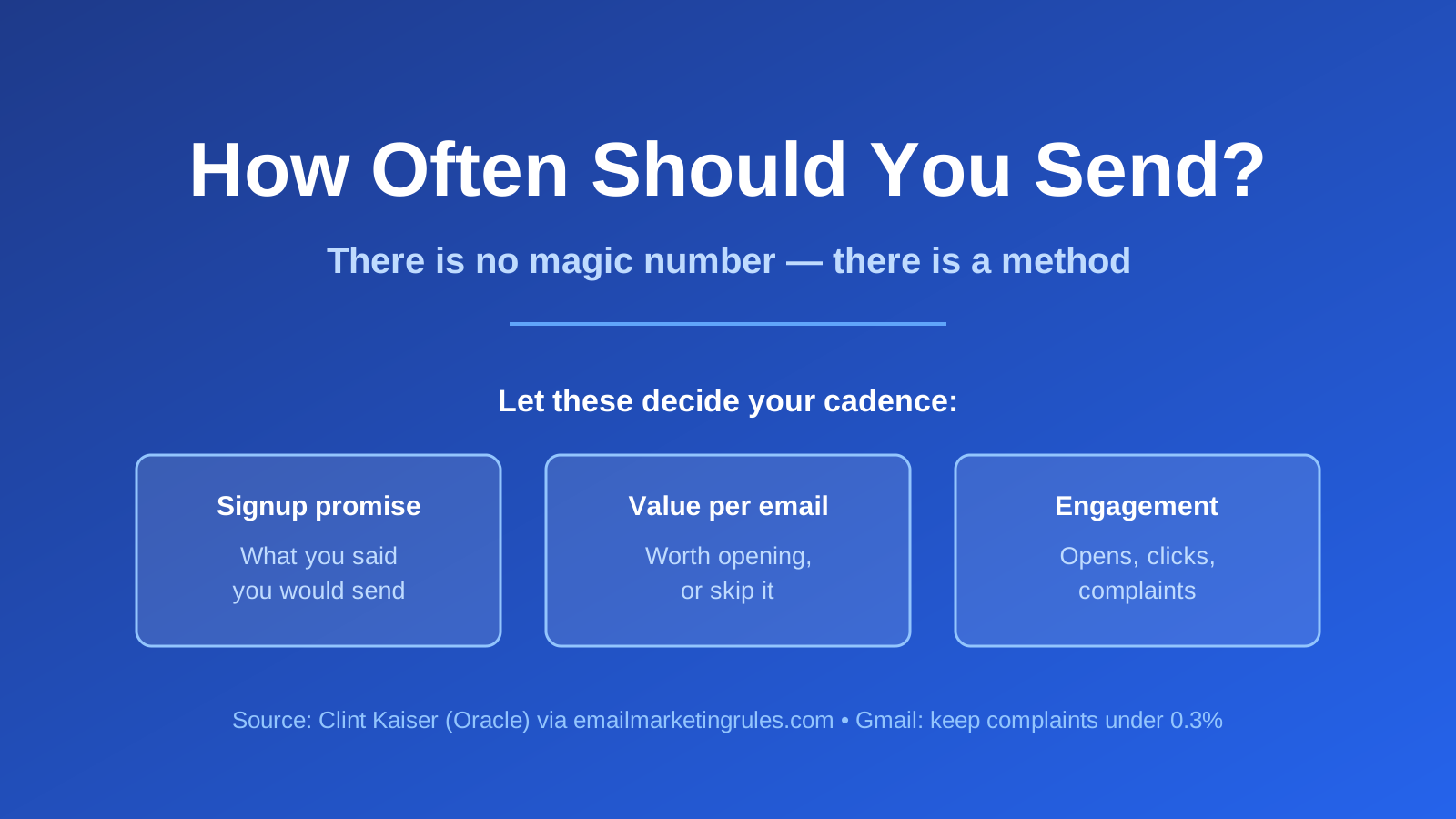
Quick answer: There is no single ‘right’ number — the best email frequency depends on what you promised at signup, how valuable each email is, and your industry. The durable rule from Oracle’s Clint Kaiser: start with the customer, because “the customer may not want as many emails as you are sending,” and over-mailing risks “high list churn, poor deliverability, and brand damage” (Email Marketing Rules). Let engagement and complaints — not a calendar — set your cadence. Written with AI assistance and reviewed against primary sources.
Full disclosure: Bluey Email is my own product. This is a best-practices guide, not a pitch — the principles apply on any platform.
How often should you send marketing emails?
The honest answer is that frequency is a decision, not a default. Oracle CX Marketing Consulting’s Head of Strategic Services, Clint Kaiser, calls “how often should I email my subscribers?” one of the top questions clients ask — and his first rule is to “start with the customer” (Email Marketing Rules). That reframes the whole question: not “how much can we get away with?” but “how much does this audience actually want?”
Why more emails isn’t more revenue
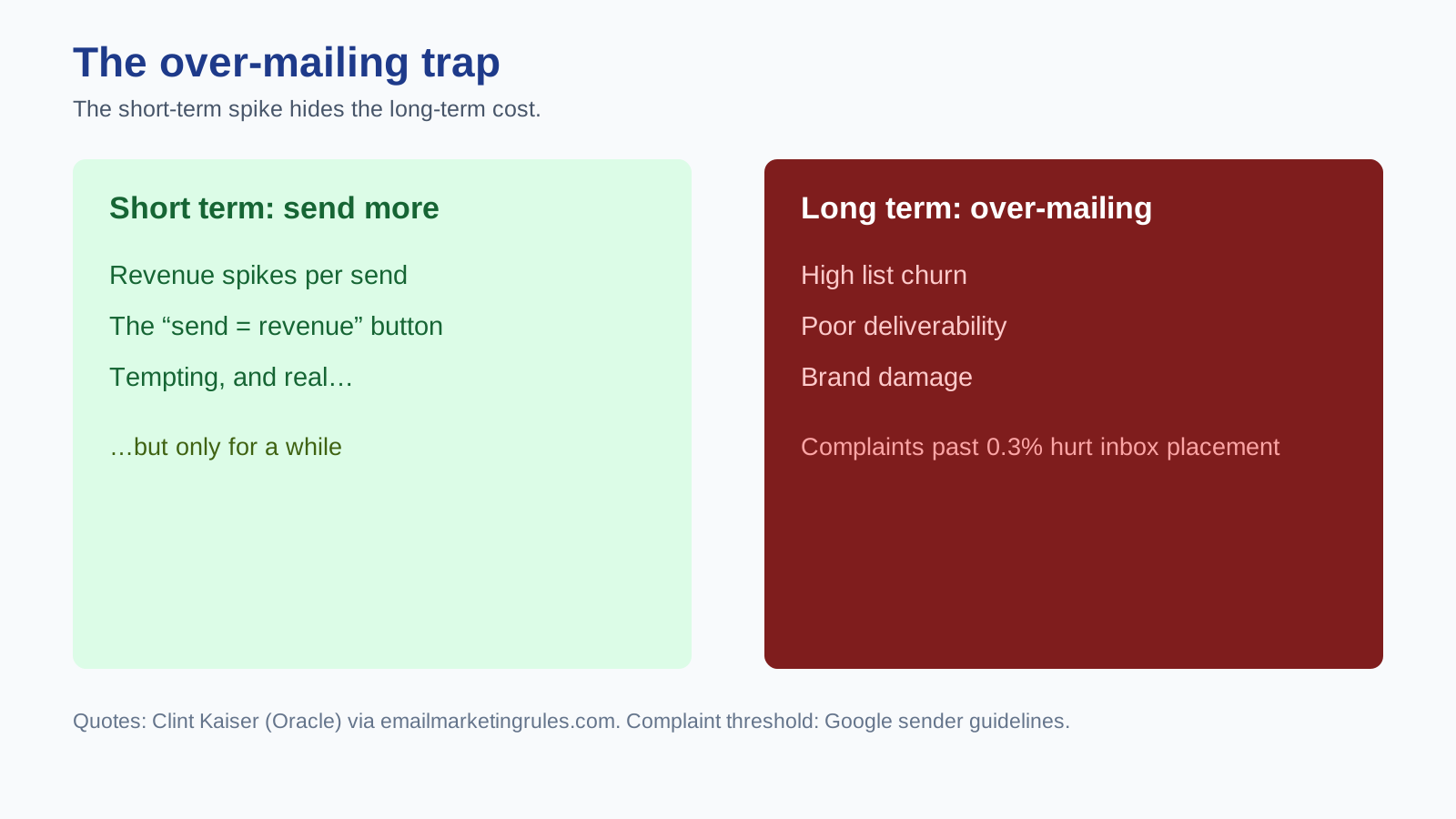
There is a seductive trap here. As Kaiser describes it, “every time you push send, conversions and revenue spike,” which tempts teams to treat the “send button” as the “revenue button.” But that short-term spike hides long-term costs: “there are many long-term negative implications of over-mailing, including high list churn, poor deliverability, and brand damage” (Email Marketing Rules). Send too often and you do not just annoy people — you train mailbox providers to distrust you.
That last part is measurable. Gmail asks bulk senders to keep their spam-complaint rate below 0.3%, and warns that even hitting 0.3% occasionally can hurt delivery (Google). Frequency is one of the biggest levers on that complaint rate: the fastest way to earn a “mark as spam” is to show up more often than someone signed up for.
The factors that actually decide your frequency
Rather than copy a number from a benchmark, decide from your own inputs. Kaiser frames the choice around a few levers: the expectations you set at signup, the genuine value of each email, whether subscribers can state topic and frequency preferences, and your industry (Email Marketing Rules). A daily-deals retailer and a B2B software company live in different worlds; the same cadence would be normal for one and alarming for the other.
The practical version: send as often as you have something genuinely worth opening, and no more. If you cannot name why this week’s email helps the reader, that is your signal to skip it.
How to find your right frequency
Start where you set expectations — the signup form and welcome email. If you promised a weekly newsletter, weekly is your anchor. From there, watch two signals as you adjust: engagement (are opens and clicks holding or falling as you add sends?) and complaints/unsubscribes (are they climbing?). Rising sends with falling engagement and rising complaints is the classic over-mailing pattern. A preference center — letting people choose topics and cadence — turns a guess into a conversation and is one of the cleanest ways to reduce churn.
For the subscribers who have already gone quiet, do not just keep hitting them at full cadence; move them into a re-engagement campaign and suppress the never-actives. That protects the deliverability of every other send. Pair frequency decisions with solid list cleaning and a real deliverability foundation.
Frequently asked questions
How many emails per week is too many? There is no universal number — it depends on your industry and what you promised at signup. The real limit is where engagement drops and complaints rise; watch those, not a fixed count (Email Marketing Rules).
Does sending more emails make more money? Short term, revenue often spikes per send; long term, over-mailing drives “high list churn, poor deliverability, and brand damage” that costs more than it earns (Email Marketing Rules).
How does frequency affect deliverability? Over-mailing raises spam complaints, and Gmail asks bulk senders to stay under a 0.3% complaint rate; cross it and inbox placement suffers (Google).
What is the best way to set frequency? Anchor to the expectation you set at signup, give subscribers a preference center, and adjust based on engagement and complaint trends rather than a benchmark.
References
- Clint Kaiser via Chad S. White, The Best Email Frequency — Email Marketing Rules
- Google, Email sender guidelines — support.google.com
Related reading: email deliverability guide, re-engagement email campaign, email list cleaning, email marketing automation guide, and the best email marketing software pillar.
— Shivam
Need the actual copy? See our re-engagement email templates.