
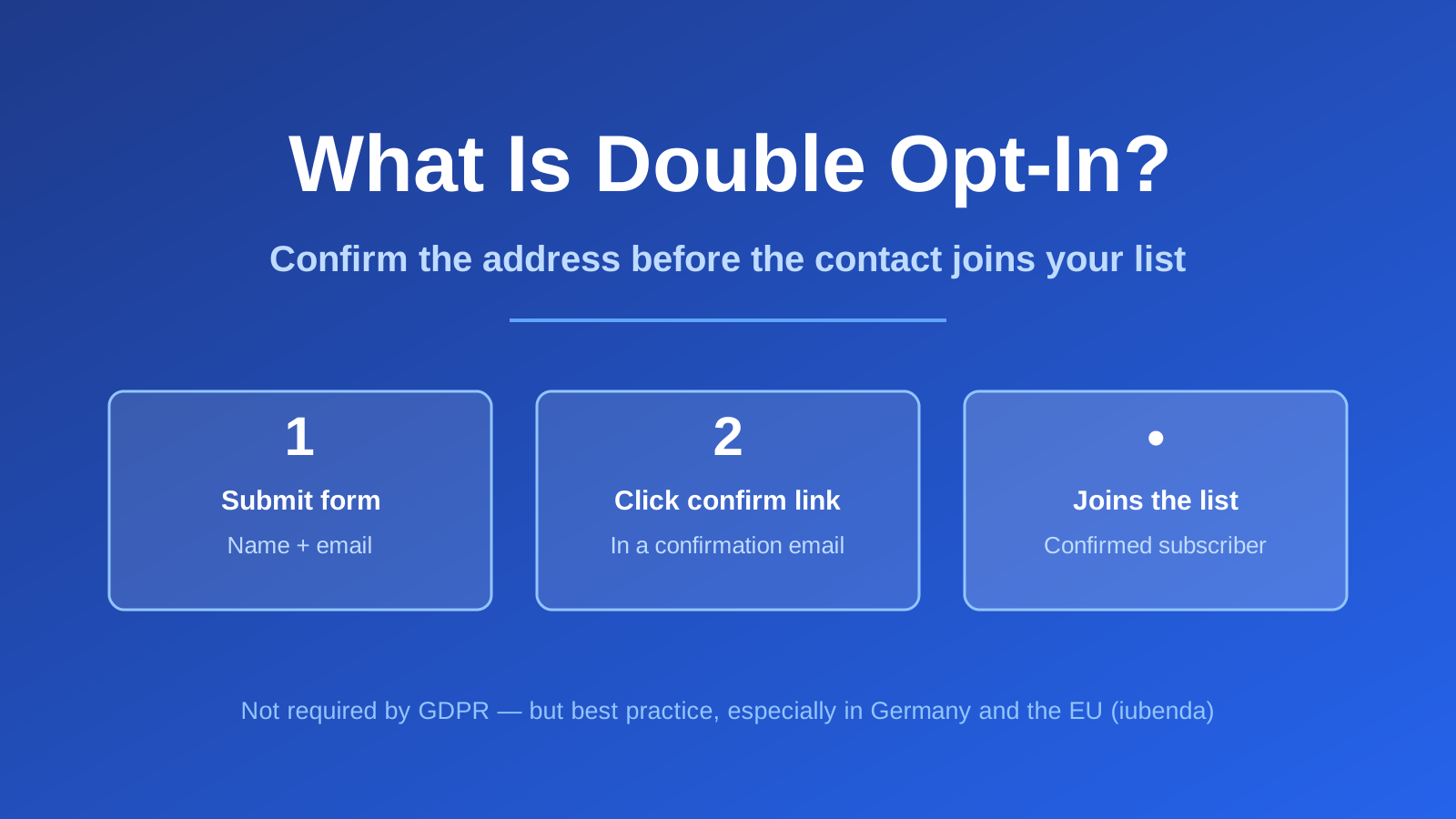
Quick answer: Double opt-in means a new subscriber must confirm their email address by clicking a link in a confirmation message before they are added to your list (iubenda). It is not legally required by GDPR, but it is widely considered best practice — especially in Germany and the EU — because it proves the address is real and the person actually wants your mail. It will not, on its own, make you GDPR-compliant. Written with AI assistance and reviewed against primary sources.
Full disclosure: Bluey Email is my own product. This is an explainer, not a sales pitch — the guidance below applies whatever tool you use.
What is double opt-in?
Single opt-in adds someone to your list the moment they submit a form. Double opt-in adds a step: after they submit, you send a confirmation email, and they only join once they click the link inside it. As iubenda puts it, “double opt-in requires that users first validate their email address before being added to your mailing list. The validation is carried out when users click on a specific link contained in a ‘confirmation’ message” (iubenda). The practical effect: it “allows you to make sure that the person who received your email actually wants to be on your list.”
Does GDPR require double opt-in?
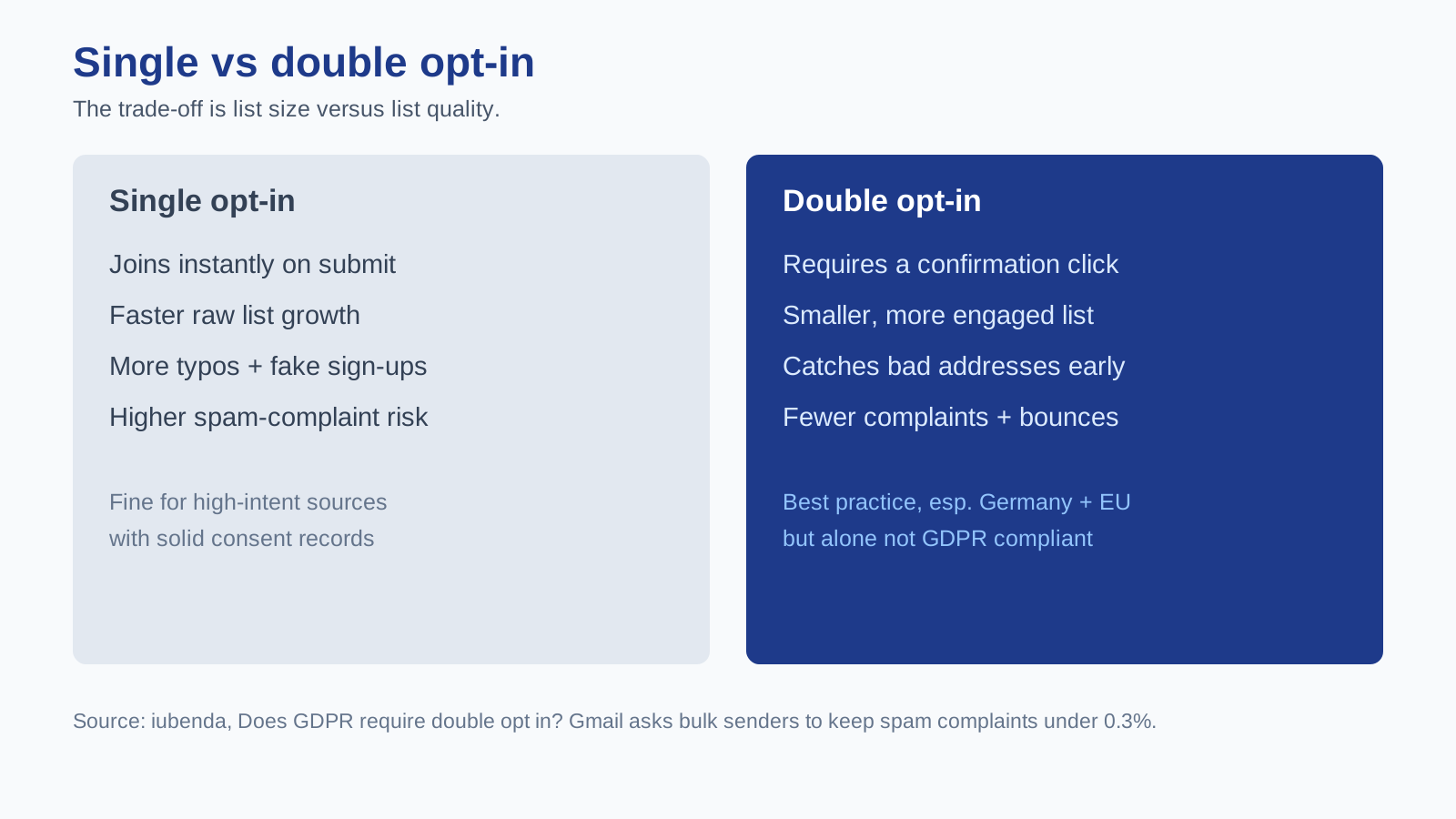
No. This is the single most misunderstood point. “There is no requirement under GDPR to have a double opt-in process,” iubenda states plainly — “yet, it is considered best practice in many countries, especially Germany and in the EU in general” (iubenda).
And a crucial caveat: double opt-in alone does not equal compliance. “While there are benefits in using double opt-in, it is not enough to be GDPR compliant… because it is not enough to prove consent” (iubenda). To collect valid consent you still need an unchecked consent checkbox with clear clauses and a link to your privacy policy, plus a record of when and how consent was given.
Why use double opt-in at all?
Three reasons, in order of impact. First, list quality: only genuinely interested people finish the confirmation step, so your list is smaller but far more engaged. Second, deliverability: confirmed, engaged subscribers generate fewer spam complaints, and mailbox providers reward that — Gmail asks bulk senders to keep the spam-complaint rate below 0.3% (Google). Third, data hygiene: confirming an address catches typos and fake sign-ups before they ever hit your list, which pairs naturally with list cleaning.
When should you NOT use double opt-in?
Double opt-in has a real cost: some people never click the confirmation link, so your raw list grows more slowly. If your sign-up source is already high-intent (a paid purchase, an account creation, a lead magnet the person clearly wanted), and you have strong consent records, single opt-in with good hygiene can be the right call. The honest trade-off is list size versus list quality — and for most senders, quality wins over time.
How to set up double opt-in
The mechanics are the same across tools: enable “confirmed” or “double” opt-in on your signup form, write a short confirmation email with one obvious button, and send a genuine welcome sequence once they confirm. Bluey Email, like most modern platforms, supports a confirmation step on its signup forms; whichever tool you use, pair it with a real welcome email series so the first confirmed impression counts. For the compliance layer, keep the consent checkbox and privacy-policy link on the form itself — the confirmation click alone is not your consent record.
Frequently asked questions
Is double opt-in required by law? Not by GDPR. It is best practice, and especially expected in Germany and the wider EU, but you still need explicit consent capture and records to be compliant (iubenda).
Does double opt-in improve deliverability? Indirectly, yes — it filters out fake and mistyped addresses and leaves you with engaged subscribers, which lowers spam complaints and bounces, both of which mailbox providers watch (Google).
Does double opt-in hurt list growth? It slows raw sign-up numbers because some people do not confirm, but the contacts you keep are higher quality. It is a size-versus-quality trade.
Is single opt-in ever fine? Yes — for high-intent sources with solid consent records, single opt-in plus regular list hygiene can work well.
References
- iubenda, Does GDPR require double opt in? — iubenda.com
- Google, Email sender guidelines — support.google.com
Related reading: how to build an email list, welcome email series, email list cleaning, email deliverability guide, and the best email marketing software pillar.
— Shivam
1 thought on “What Is Double Opt-In? Definition, GDPR Facts and When to Use It (2026)”