
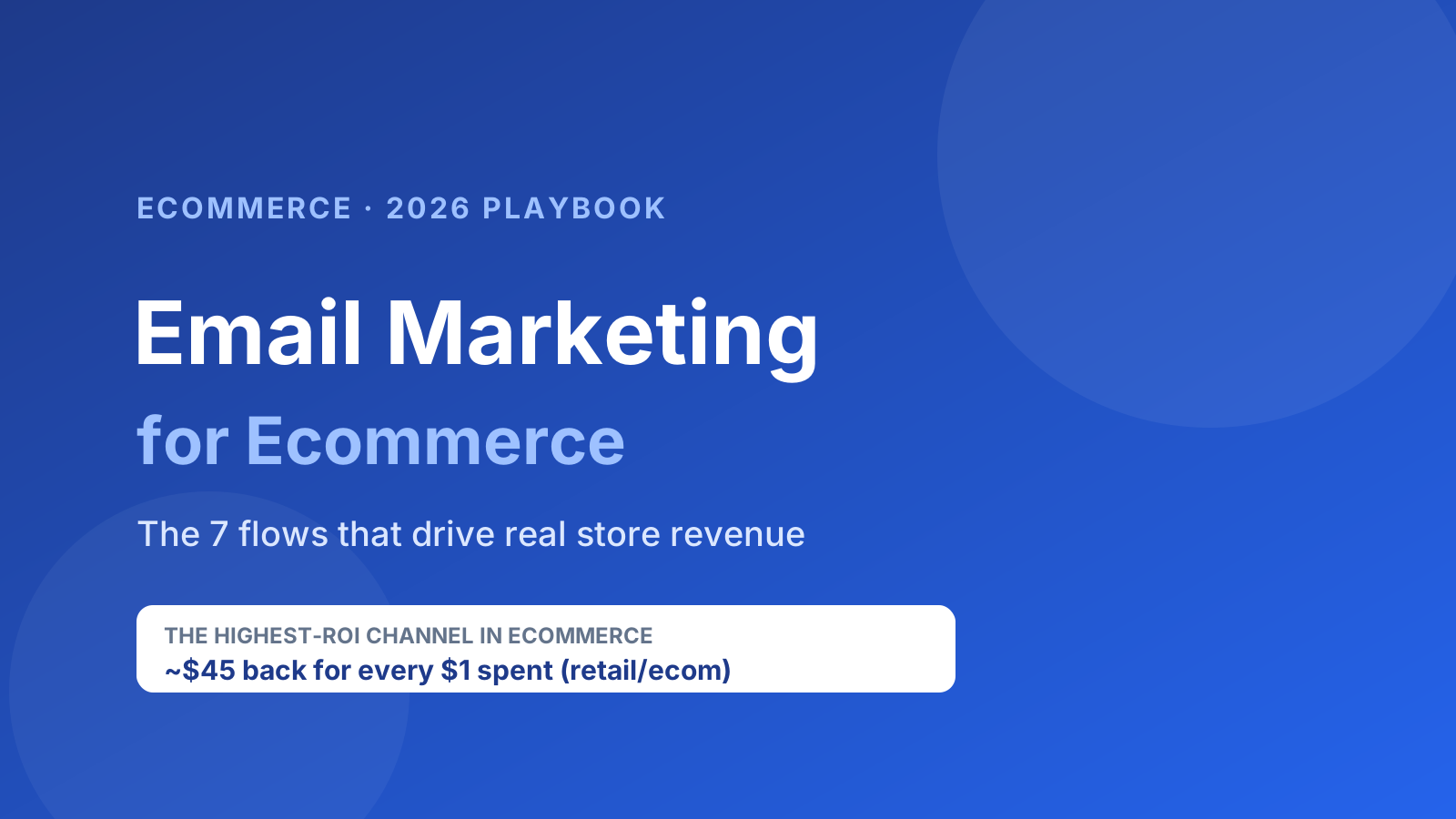
Quick answer: Email is still the highest-ROI channel in ecommerce, returning about $36 for every $1 spent on average — and retail, ecommerce, and consumer goods lead every sector at roughly $45 per $1. The engine isn’t broadcast newsletters; it’s seven automated flows — welcome, abandoned cart, browse abandonment, post-purchase, win-back, replenishment, and sunset — which ecommerce expert Chase Dimond says generate 30–40% of total email revenue on autopilot (Chase Dimond). Full disclosure: Bluey Email is my own product; this guide is tool-agnostic and I flag plainly where Klaviyo and Omnisend lead for pure ecommerce.
If you run a store, email is the one channel you fully own — no algorithm decides who sees it. This is the practical playbook: why it works, the flows that print money, and how to pick a tool without overpaying.
Why is email ecommerce’s highest-ROI channel?
Because you own the list, and owned audiences convert. Across studies the email marketing average sits near $36 back for every $1 spent, and retail/ecommerce specifically tops the sector table at about $45 per $1 — higher than paid social or search, where every impression is rented. As Chase Dimond, who has run ecommerce email programs for nearly a decade, puts it bluntly: “Email is still the highest-ROI channel in ecommerce. The wrong move is doing nothing” (Chase Dimond).
The catch: the ROI comes from behavioral automation, not from blasting your whole list. A store that only sends a weekly newsletter is leaving most of the money on the table. The revenue lives in flows triggered by what shoppers actually do.
Which automated flows actually drive revenue?
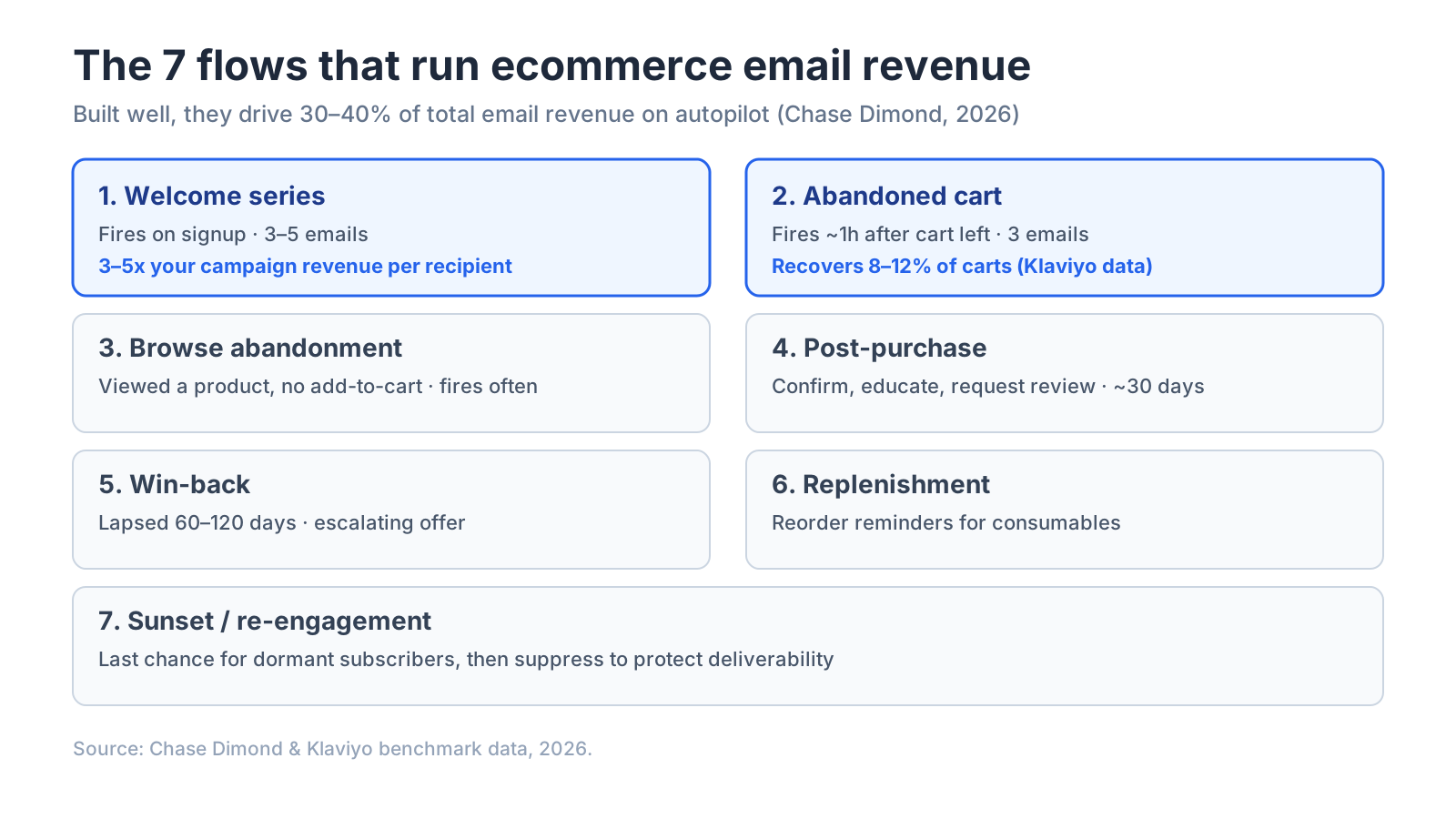
Seven flows form the backbone of every high-performing ecommerce program. Chase Dimond estimates that, built properly, they run 30–40% of total email revenue on autopilot:
- Welcome series — fires on signup; 3–5 emails. It’s “the single highest-converting flow in ecommerce,” with revenue-per-recipient typically 3–5x your campaign average.
- Abandoned cart — fires ~1 hour after a cart is left; 3 emails over 24–48h. Klaviyo’s data shows these recover 8–12% of carts on average, and sending the first email within 60 minutes lifts recovery meaningfully.
- Browse abandonment — fires when someone views a product twice but doesn’t add to cart; lower per-email revenue, but it fires 3–5x more often, so total revenue is comparable.
- Post-purchase — the most under-built flow; confirms, educates, requests a review, and teases the next order over ~30 days.
- Win-back — re-engages customers who haven’t ordered in 60–120 days with an escalating incentive.
- Replenishment — reminds consumable buyers to reorder before they run out; a printing press for supplements, skincare, and refills.
- Sunset / re-engagement — gives dormant subscribers one last chance, then suppresses them to protect deliverability.
The single biggest mistake, Dimond warns, is “set-and-forget”: most brands past $200K/mo are “leaving 30–50% of flow revenue on the table because the sequences were set-and-forget.” Audit them quarterly.
How much does ecommerce email cost — and which platform?
Cost depends on your billing model as much as your list size. The honest, by-need breakdown:
Bluey Email — best for predictable, all-inclusive pricing. Send-based, so storing contacts is free: a free plan (500 contacts / 500 sends), ~$14/mo to email 10,000 contacts, and Grow at $30/mo with unlimited contacts — plus pre-built ecommerce flows, a CRM, landing pages, and transactional email on one bill. Best for stores that also do broader marketing and want one predictable invoice. Where it’s not the pick: for the deepest predictive ecommerce segmentation, Klaviyo goes further.
Klaviyo — deepest ecommerce flows and predictive AI. The category standard for Shopify at scale, with best-in-class predictive LTV and churn segmentation. But it prices per active profile and the curve is steep — roughly $175/mo at 10,000 profiles (email-only), before SMS. Best for $2M+/yr brands with a dedicated email operator; see Klaviyo alternatives.
Omnisend — best value purpose-built for ecommerce. Bundles email + SMS + web push under one quota, at roughly half Klaviyo’s cost — around $50/mo at 5,000 contacts. Chase Dimond, a paid Omnisend partner (his disclosure), argues it wins on “speed, price, and clarity” for “the other 95% of ecom brands.” Best for growth-stage stores; see Omnisend alternatives.
The meta-lesson from Dimond is to not overbuy: “Heavy tools in light hands produce light results.” Pick the platform that matches where your store actually is, not where you hope it’ll be in 18 months.
How do I start ecommerce email from scratch?
- Install a tool and connect your store (Shopify, WooCommerce, BigCommerce) so purchase and browse data flows in.
- Capture signups with one exit-intent popup offering 10% off or free shipping — this feeds every flow.
- Turn on the welcome series first (3 emails); it’s the highest-converting flow and captures your very first visitor.
- Add abandoned cart and browse abandonment next — the fastest revenue recovery.
- Send one campaign a week minimum — a product story, a sale, a customer feature — to build the habit of consistent sending.
- Layer in post-purchase, win-back, and replenishment as you scale, then audit all flows quarterly.
Frequently asked questions
What’s the ROI of email marketing for ecommerce? Around $36 per $1 on average across industries, and roughly $45 per $1 for retail/ecommerce specifically — the highest of any sector, because you own the audience.
What email flows do ecommerce stores need? Seven: welcome, abandoned cart, browse abandonment, post-purchase, win-back, replenishment, and sunset. Built well, they can drive 30–40% of total email revenue automatically.
How much can abandoned cart emails recover? Klaviyo’s benchmark data puts average cart recovery at 8–12%, with the first email ideally sent within an hour of abandonment.
What’s the best email platform for ecommerce? For deepest ecommerce depth at scale, Klaviyo; for best value multichannel, Omnisend; for predictable all-inclusive send-based pricing across email plus broader marketing, Bluey Email. Match the tool to your stage.
Do I need SMS too? It helps for time-sensitive moments (drops, cart recovery), but email does the heavy lifting. Tools like Omnisend and Bluey let you add SMS without a separate platform.
The verdict
Email is the highest-ROI, fully owned channel in ecommerce — but only if you run the flows. Start with the welcome series and abandoned cart, send consistently, and audit quarterly. For the tool: Klaviyo for enterprise depth, Omnisend for best value, and Bluey Email for predictable all-inclusive send-based pricing if your store also does broader marketing. New to the fundamentals? Read the complete email marketing guide and email marketing by industry; comparing tools? See Best Email Marketing Software in 2026.
— Shivam
Free tools for this
Put this into practice with our free, no-signup tools — everything runs in your browser:
Browse all 15 free tools →Need the actual copy? See our abandoned cart email templates.
3 thoughts on “Email Marketing for Ecommerce in 2026: The Practical Playbook”