
Quick answer: EmailOctopus is the cheaper, simpler pick for budget newsletters — its free plan covers 2,500 subscribers and 10,000 emails a month, free forever, and paid Pro starts around $10/mo (EmailOctopus pricing). Bluey Email wins for marketers who want automation depth, a built-in CRM, and send-based pricing with unlimited contacts from $30/mo — cheaper than EmailOctopus once your list passes roughly 5,000 contacts. Full disclosure: Bluey is my own product; I have held it to the same yardstick as EmailOctopus and say plainly where EmailOctopus is the better buy.
If you want the cheapest possible way to send a good-looking newsletter, EmailOctopus is hard to beat. If you want automation, segmentation, a CRM, and a bill that stays flat as your contact list grows, that is a different tool. Here is the honest head-to-head.
What is EmailOctopus?
EmailOctopus is a low-cost email marketing tool built on Amazon SES, which is why “your emails benefit from consistently strong delivery rates” (EmailTooltester). Its pitch is simplicity and price: EmailTooltester calls it “simple, affordable, and refreshingly easy to use.” The trade-offs are a basic editor, minimal reporting, and thin integrations compared with bigger platforms.
Pricing: EmailOctopus is cheaper to start, Bluey is cheaper at scale
EmailOctopus prices by subscribers stored. Bluey prices by emails sent. That single difference decides most of this comparison.
EmailOctopus’s free Starter plan gives you 2,500 subscribers and 10,000 monthly emails with EmailOctopus branding and 30-day reporting history. Pro removes branding and unlocks unlimited automations and full reporting, starting at roughly $10/mo (500 subscribers), then $20 (2,500), $31.50 (5,000), $44.50 (10,000), and $178 (50,000) — with a 10% discount on annual billing (EmailOctopus pricing).
Bluey’s free plan is smaller (500 contacts / 500 sends), but its paid tiers do not charge by contact count. Spark starts at $7/mo (about $14 at 10,000 sends); Grow is $30/mo with unlimited contacts (roughly 50,000 sends, up to $84 at 250,000); Business is $300/mo and adds a built-in CRM, landing pages, transactional email, and pre-built ecommerce flows.
| Feature | EmailOctopus | Bluey Email |
|---|---|---|
| Pricing basis | Subscribers stored | Emails sent |
| Free plan | 2,500 subs / 10,000 emails | 500 contacts / 500 sends |
| ~10,000 contacts | $44.50/mo (Pro) | $30/mo (Grow, unlimited) |
| Automation | Unlimited (on Pro) | Visual builder, all paid tiers |
| Built-in CRM | No | Yes (Business) |
| Deliverability | Amazon SES | Dedicated infrastructure |
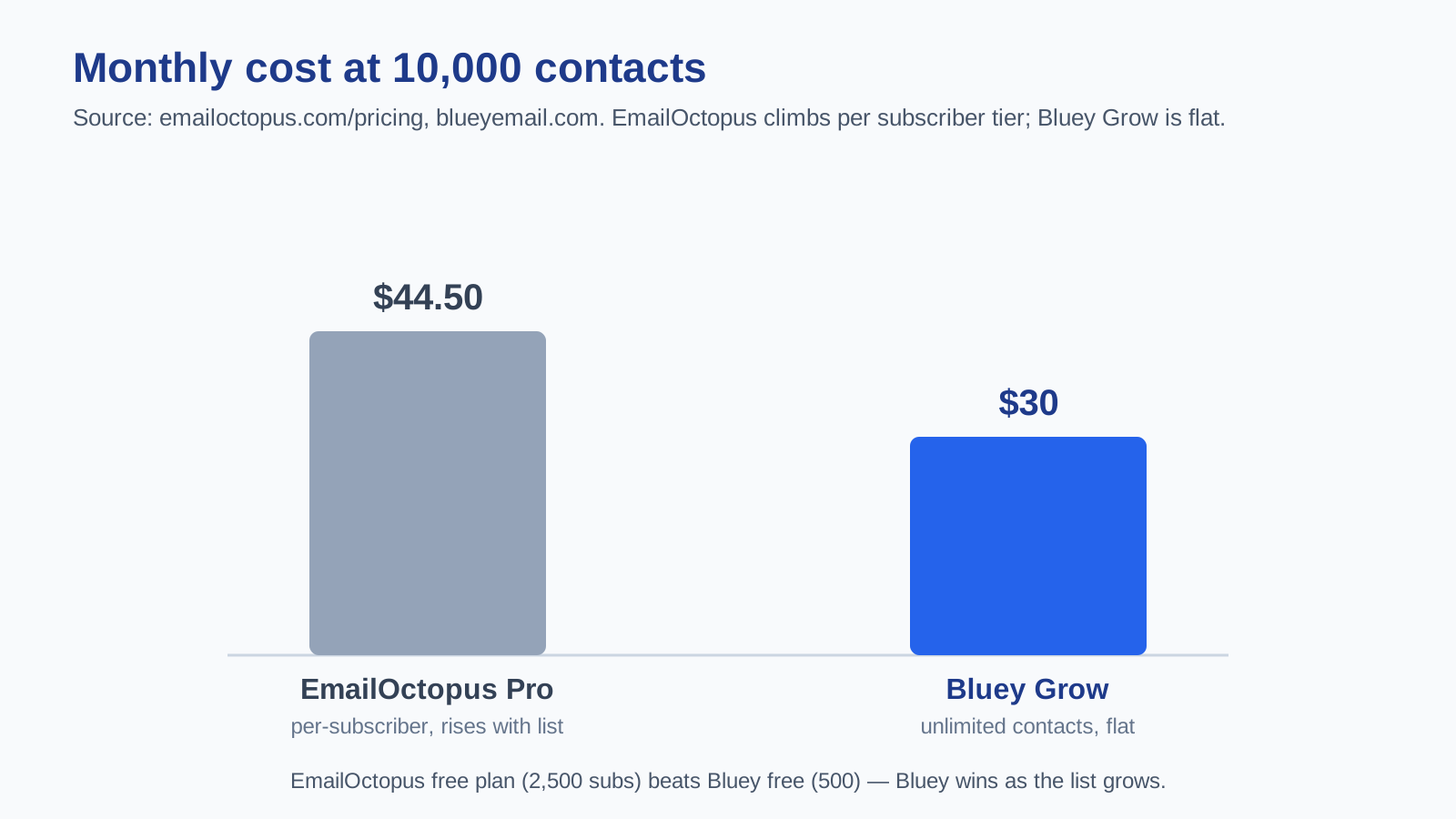
The substantiated reason Bluey leads for growing lists: at 10,000 contacts, Bluey’s Grow plan is $30/mo with unlimited contacts, while EmailOctopus Pro is $44.50/mo and climbs with every subscriber tier. For anyone with a large list that emails on a normal cadence, send-based pricing is simply cheaper.
Where EmailOctopus clearly wins
Budget and free-tier generosity. For a small or new list, nothing here beats 2,500 subscribers free forever. As one review put it, “most ‘free’ plans feel like demos, but this one does not — small businesses run on it for months, sometimes years” (EmailTooltester). Bluey’s free plan tops out at 500 contacts.
Simplicity. If all you need is a clean newsletter and a signup form, EmailOctopus’s stripped-down interface is faster to learn than a full marketing suite.
Amazon SES deliverability. EmailOctopus provides clear step-by-step guides for SPF, DKIM, and DMARC and supports full SPF alignment, and sends over well-maintained SES infrastructure (EmailTooltester).
Where Bluey wins
Automation and segmentation depth. EmailOctopus reporting is “pretty basic… missing click heatmaps, custom reports, and revenue-related reports,” and its integrations are “thin compared to larger competitors” (EmailTooltester). Bluey ships a visual automation builder, deeper segmentation, and revenue reporting.
One platform. Bluey’s Business tier folds a CRM, landing pages, and transactional + marketing email onto one bill — EmailOctopus keeps you buying and stitching separate tools.
Flat cost as you grow. Send-based pricing means a 100,000-contact list that emails monthly does not cost more than a 10,000-contact list on the same plan.
Which should you choose?
Chad S. White, Head of Research at Oracle Marketing Consulting, frames the real question well: “Email marketers need to focus on managing subscribers, not campaigns” (ZeroBounce interview). If your list is small and you mostly broadcast, EmailOctopus lets you do that cheaply. If you want to manage subscribers with automation, segmentation, and a CRM, you will outgrow it.
Pick EmailOctopus if you are budget-first, have under ~2,500 subscribers, and want the simplest possible newsletter tool. Pick Bluey if you want automation, a CRM, and predictable send-based pricing that stays flat as your contacts grow.
Frequently asked questions
Is EmailOctopus really free? Yes — up to 2,500 subscribers and 10,000 emails per month, with EmailOctopus branding and 30-day reporting (EmailOctopus pricing).
Which is cheaper at 10,000 contacts? Bluey’s Grow plan ($30/mo, unlimited contacts) undercuts EmailOctopus Pro ($44.50/mo at 10,000 subscribers).
Does EmailOctopus have good deliverability? It sends via Amazon SES with solid inbox placement for clean, engaged lists, though it lacks a deliverability dashboard (EmailTooltester).
Does Bluey have a free plan? Yes, 500 contacts and 500 sends — smaller than EmailOctopus’s free tier but with fuller automation.
Which has better automation? Bluey — EmailOctopus automation and reporting are intentionally basic.
The verdict
EmailOctopus is the right call for budget newsletters and small lists that value simplicity and a genuinely generous free plan. But if you want automation, segmentation, a CRM, and pricing that does not climb with every new contact, start with Bluey Email — send-based, flat at $30/mo, unlimited contacts.
Compare the full field in Best Email Marketing Software in 2026, see the EmailOctopus alternatives roundup, weigh the similar Bluey Email vs MailerLite matchup, or start with the complete email marketing guide.
— Shivam