
Quick answer: On 8 January 2026 Gmail entered its “Gemini era” — AI Overviews now summarize long email threads (free in the US), and a separate AI Inbox auto-prioritizes VIPs (still in testing / paid tiers, not generally available as of July 2026) (Google). My take: AI Overviews genuinely improve the reading experience, but if a machine summarizes mail before a human reads it, subject lines start to matter less and cold email gets harder — and the people who lean hardest on the summary may quietly miss offers and opportunities. Written 21 July 2026, based on what’s known now. (Full disclosure: Bluey Email is my own product.)
What actually happened
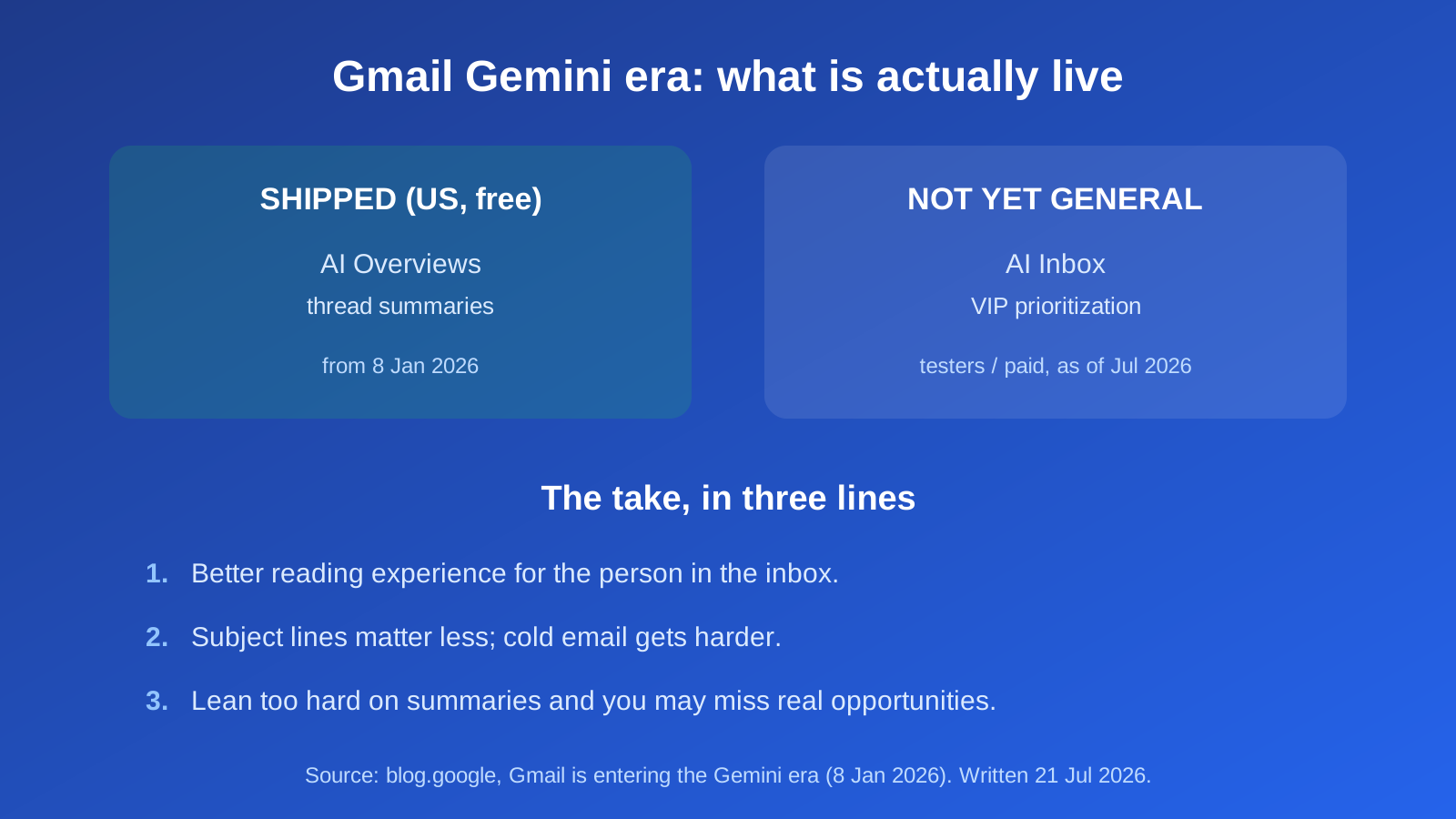
On 8 January 2026, Gmail VP of Product Blake Barnes announced Gmail “is entering the Gemini era” (blog.google). Two separate things launched, and they’re worth not confusing:
- AI Overviews synthesize a whole email thread into a short summary. This is the part that shipped broadly — rolled out to everyone in the US at no cost, in English, starting that day.
- AI Inbox is a personalized view that filters clutter and automatically identifies VIPs from signals like who you email often, your contacts, and “relationships it can infer from message content.” As of July 2026 this is still limited to trusted testers and Google AI Plus/Pro/Ultra subscribers in the US — not generally available yet (TechRepublic).
Google frames the why plainly: 3 billion Gmail users and email volume “at an all-time high.”
What’s genuinely new (and what isn’t)
Let’s be honest about the part that’s not new: Gmail has sorted and prioritized mail by engagement for well over a decade. AI Inbox’s VIP detection is a smarter, Gemini-powered version of the same idea. If you were already sending mail people wanted, that mechanism was always going to favor you.
The genuinely new thing is AI Overviews summarizing threads for free, at scale. When a machine’s paraphrase is the first thing a human reads, the interface between your words and your reader changes — and that’s what my take is about.
My take
AI Overviews are, on balance, good for the person in the inbox. They make it easier to stay on top of a crowded mailbox and cut the time it takes to figure out what a thread is actually about. I’m not going to pretend that’s bad — it’s a real improvement to the experience.
But it has consequences for senders. When this rolls out widely, I think it starts to make subject lines redundant. If a summary tells the reader what your email says before they read your framing, the carefully-tested subject line does less of the work it used to. And it makes cold email even harder — a cold pitch that relied on a clever subject to earn the open is now competing with a machine that has already decided, and summarized, what the message is worth.
Here’s the part I’d sit with: it’s a relief for a lot of people, but the ones who lean hardest on AI summaries may quietly lose things — a business relationship, an offer, an opportunity that a summary flattened into “promotional” or skipped over. Convenience has a cost, and the cost is paid in the edges the summary trims off.
I’m not calling the outcome yet. Let’s see how people actually use these. That’s the honest position: the feature is new, adoption is uneven, and behavior will tell us more than predictions will.
Who this affects, and how
If you send cold outreach, assume the summary is now your first impression, not your subject line. If you send newsletters and lifecycle email to people who chose you, you’re less exposed — a reader who wants your mail will still open it. If you’re a recipient, the quiet risk is over-trusting the summary and missing something that mattered.
What to actually do
None of this changes the fundamentals, and that’s reassuring. Be the mail someone actually wants: earn the engagement that both AI Inbox and the old engagement filters reward, and you stay on the right side of the sort. Lead with substance the first sentence can carry, because that first sentence is increasingly what gets summarized. Keep transactional and marketing mail cleanly separated so the important messages aren’t averaged into “bulk” — see our transactional vs marketing email guide and deliverability guide. And keep testing subject lines for now — until wide rollout proves otherwise, they still move opens.
What would change my mind
I’d back off the worried half of this take if: usage data shows AI Overviews summaries preserve or increase clicks through to legitimate offers rather than suppressing them; or Google keeps Overviews out of promotional mail entirely, so marketing messages are read the old way. And I’d drop “subject lines are becoming redundant” the moment post-rollout testing shows subject-line variants still reliably move open rates at scale. A take that can’t be wrong is just an ad — this one can be, and these are the numbers that would prove it.
Frequently asked questions
Are Gmail AI Overviews live? Yes — AI Overviews (thread summaries) rolled out free to everyone in the US, in English, starting 8 January 2026 (Google).
Is Gmail’s AI Inbox available to everyone? Not yet. As of July 2026 AI Inbox (VIP prioritization) is limited to trusted testers and Google AI Plus/Pro/Ultra subscribers in the US, with broader availability planned (TechRepublic).
Do AI Overviews make subject lines useless? Not today. My view is that wide rollout may make them matter less — but until testing proves otherwise, keep testing subject lines; they still move opens.
Does this hurt cold email? Likely, yes. If a summary pre-frames your message, a cold pitch that depended on the subject line to earn the open has a harder job. Mail people opted into is far less exposed.
References
- Google, “Gmail is entering the Gemini era” (Blake Barnes, 8 Jan 2026) — blog.google
- TechRepublic, “Gmail Enters the Gemini Era” (AI Inbox rollout status) — techrepublic.com
Related reading: email deliverability guide, transactional vs marketing email, email subject line formulas, and the re-engagement campaign guide.
— Shivam