
Quick answer: The subject line decides whether your email gets opened at all, so it’s worth outsized effort. The formulas that consistently win are short and specific: personalized subject lines lift open rates to about 46% versus 35% without (Belkins 2025 study), and 2–4 word subject lines earn the highest open rates (~46%) (Belkins). Full disclosure: Bluey Email is my own product; these formulas work in any tool.
David Ogilvy’s rule for headlines applies exactly to subject lines: “On the average, five times as many people read the headline as read the body copy. When you have written your headline, you have spent eighty cents out of your dollar” (David Ogilvy). Here are seven formulas that earn the open, and the data behind each.
What makes a subject line get opened?
Three things: relevance, brevity, and curiosity. The data is blunt on all three. Personalized subject lines hit ~46% open versus ~35% without — yet 90.3% of marketing emails still don’t personalize the subject line (Belkins), which is a wide-open advantage. Length matters too: 2–4 word lines get the highest opens (~46%), and performance falls to ~39% beyond 7 words (Belkins). Aim for roughly 30–50 characters so the line survives on a mobile screen.
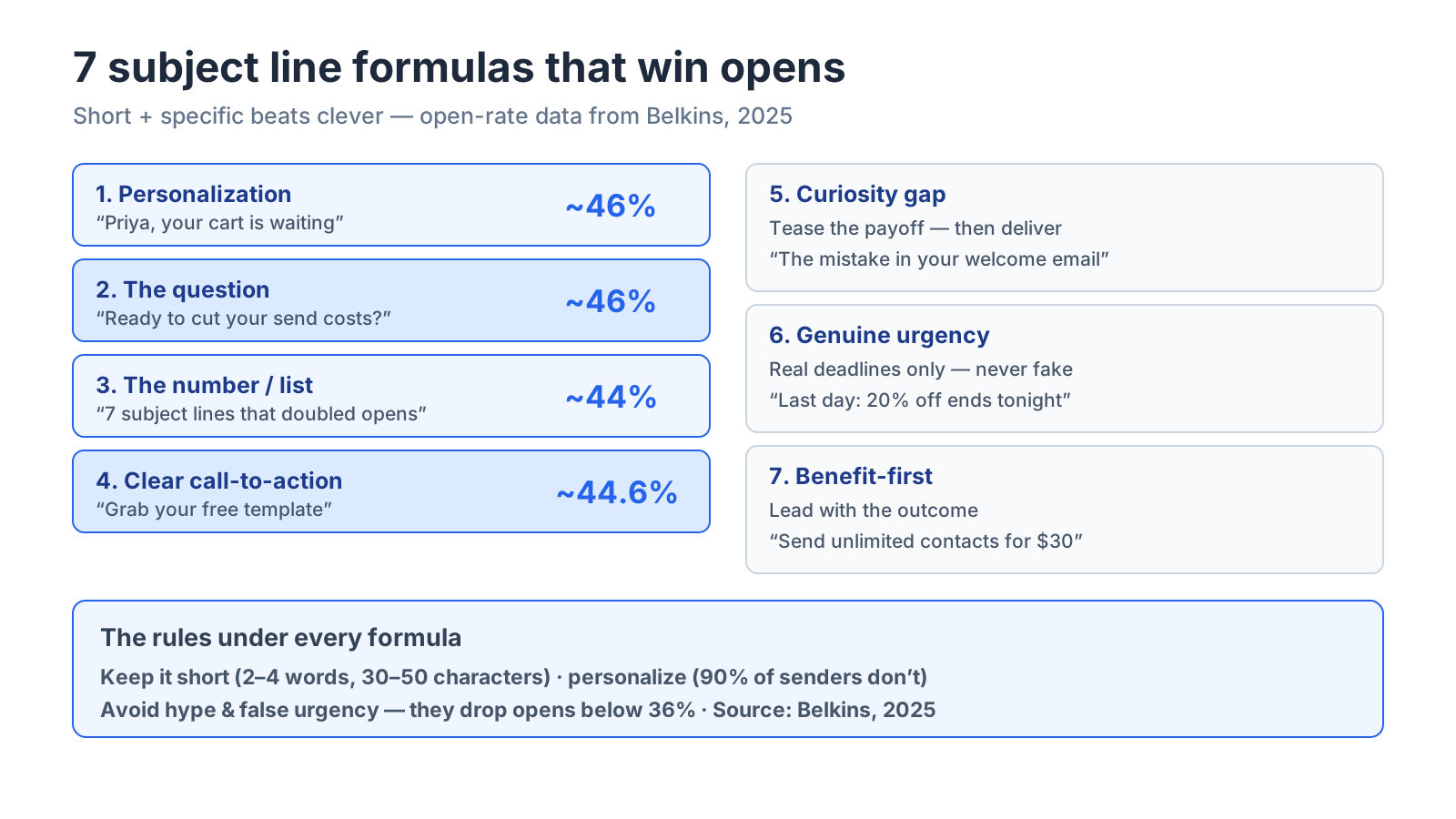
The 7 subject line formulas
1. Personalization. Use the subscriber’s name or a known detail. It’s the biggest single lever: ~46% vs ~35% open (Belkins). Example: “Priya, your cart is waiting.”
2. The question. Questions frame a curiosity gap and post about a 46% open rate (Belkins). Example: “Ready to cut your send costs?”
3. The number / list. Numbers set a concrete expectation and lift opens (~44%) (Belkins). Example: “7 subject lines that doubled opens.”
4. The clear call-to-action. A direct verb performs (~44.6% open) (Belkins). Example: “Grab your free template.”
5. Curiosity gap. Tease the payoff without giving it away — but deliver inside, or you burn trust. Example: “The mistake in your welcome email.”
6. Genuine urgency. Real deadlines work; fake ones erode trust. Keep it honest. Example: “Last day: 20% off ends tonight.”
7. Benefit-first. Lead with the outcome the reader wants. Example: “Send unlimited contacts for $30.”
What should I avoid in subject lines?
Hype and vagueness. Terms drenched in urgency (“ASAP”), generic greetings (“Hello, friend”), and marketing-speak drag opens below 36% (Belkins) — the market is shifting toward authenticity and clarity. Also avoid ALL CAPS, excessive punctuation, and spammy words, which can trip filters and hurt deliverability. When in doubt, write the subject line the way you’d text a friend about it.
How do I test subject lines?
A/B test one variable at a time. Send version A to a slice of your list, version B to another, and let the winner go to the rest — most platforms, Bluey included, automate this. Test the type of formula (question vs. benefit), not just word swaps, since that’s where the big differences live. Track open rate as the immediate signal, but watch clicks and conversions too: a clickbait subject can win the open and lose the sale.
Frequently asked questions
How long should an email subject line be? Short — 2–4 words earn the highest opens (~46%), and roughly 30–50 characters keeps it readable on mobile (Belkins).
Does personalization really help? Yes — ~46% open with personalization vs ~35% without, and most senders still skip it (Belkins).
Are questions good subject lines? Yes — question-framed lines post about a 46% open rate by sparking curiosity (Belkins).
What words hurt open rates? Hype, false urgency like “ASAP,” and generic greetings pull opens below 36% (Belkins).
Should I use emojis? Sparingly and on-brand — test them; they can help stand out but don’t rescue a weak line.
The verdict
Your subject line is 80 cents of your email’s dollar, in Ogilvy’s math — so treat it as the main event, not an afterthought. Keep it short, make it relevant (personalize — most senders don’t), and pick a formula that fits the message: question, number, CTA, curiosity, honest urgency, or benefit-first. Then A/B test the formula, not just the words. Put these to work on your welcome email series and abandoned cart emails, choose your tool with Best Email Marketing Software in 2026, and see the complete email marketing guide.
— Shivam
Free tools for this
Put this into practice with our free, no-signup tools — everything runs in your browser:
Browse all 15 free tools →
1 thought on “Email Subject Line Formulas: 7 That Boost Open Rates (2026)”