
Table of Contents
1. What B2C email actually is (and what it isn’t)
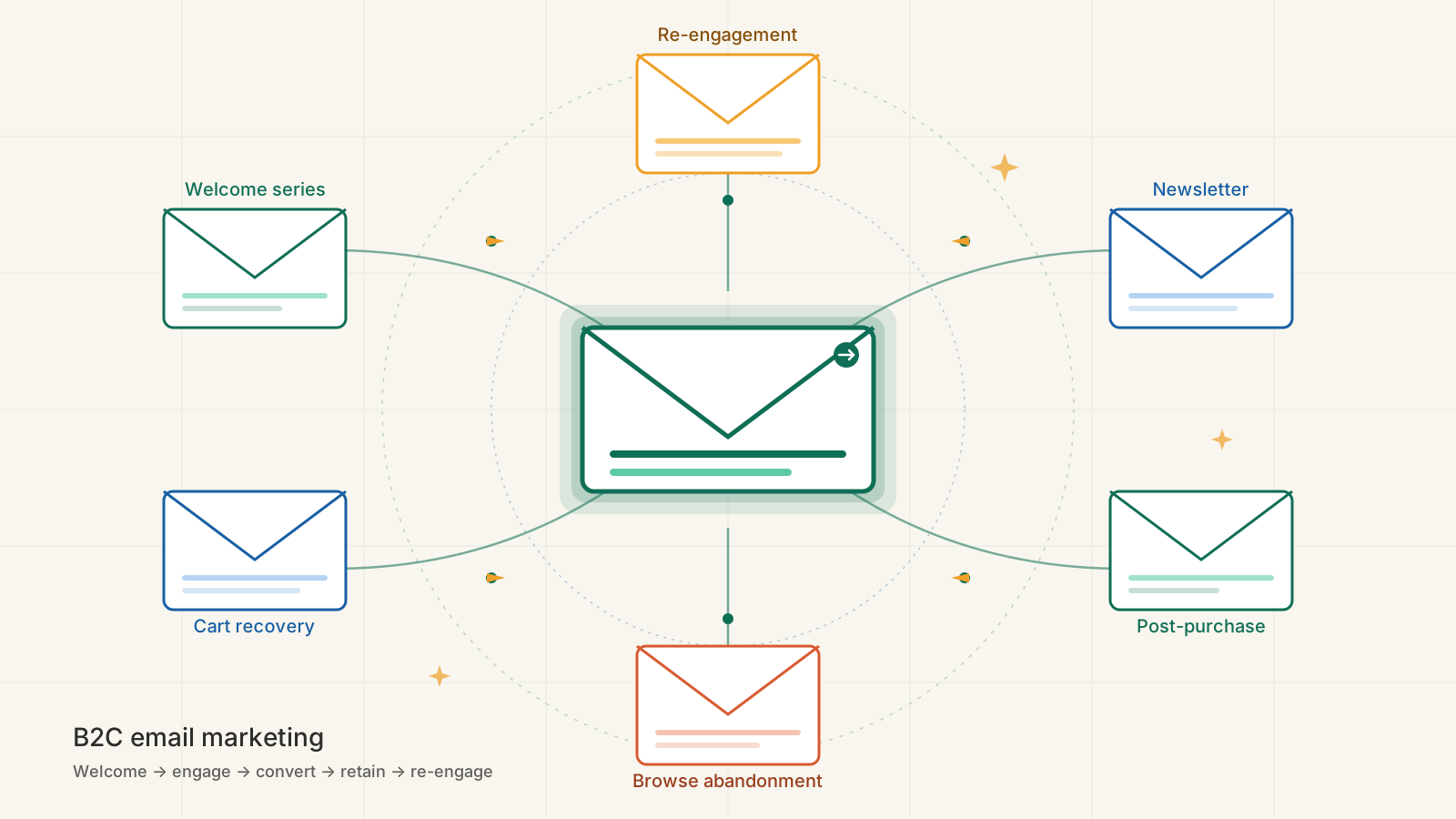
B2C — business to consumer — is just a fancy way of saying “you sell to people, not companies.” E-commerce store? B2C. Newsletter? B2C. Subscription box? B2C. Fitness app, food delivery, dating site, online course, coaching practice, financial services for individuals? All B2C.
There are roughly two camps:
Camp 1: Transactional B2C. You sell things. People buy them. The email’s job is to turn browsers into buyers and one-time buyers into repeat ones. E-commerce. Subscription boxes. Direct-to-consumer brands.
Camp 2: Engagement B2C. You don’t sell a product, exactly. You sell ongoing attention. Newsletters, creator businesses, content brands, podcasts with merch, fitness coaches, online educators. Your email’s job is to keep people engaged so they trust you enough to eventually buy something, subscribe to something, or stay loyal long enough to recommend you.
The strategies overlap, but the metrics and writing styles diverge fast. An abandoned cart email and a newsletter issue have basically nothing in common except the fact that they arrive in someone’s inbox.
The B2C vs B2B difference (and why it matters)
This is worth getting straight because it actually changes how you write.
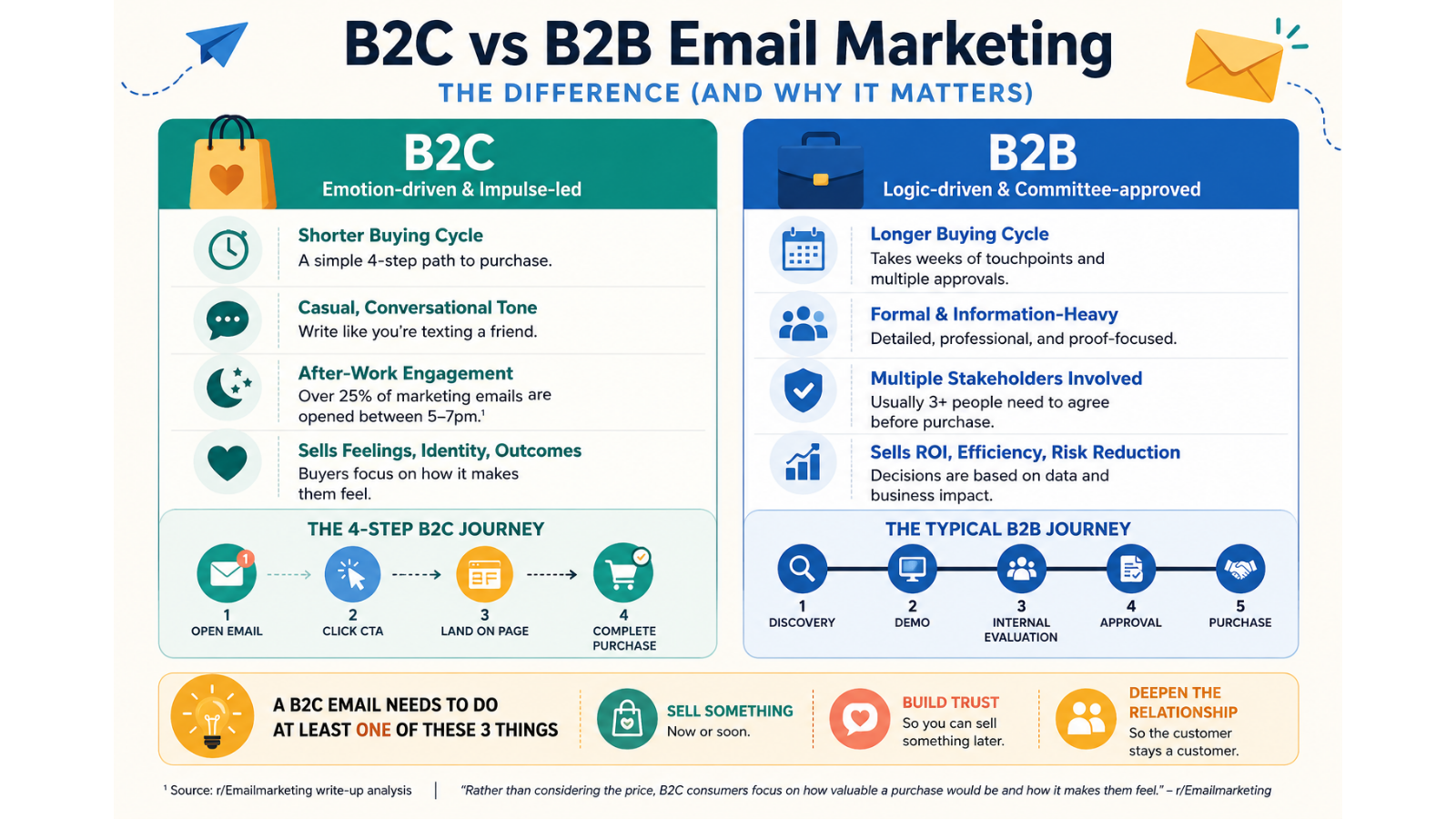
B2C purchase decisions are emotion-driven and impulsive. B2B purchase decisions are logic-driven and committee-approved. As one write-up on r/Emailmarketing put it: “Rather than considering the price, B2C consumers focus on how valuable a purchase would be and how it makes them feel.” [^1] You’re not selling a feature spec sheet. You’re selling a feeling.
That means:
- The buying cycle is shorter. Four steps usually: open the email, click the CTA, land on the page, complete a purchase. Compare that to B2B, where it takes weeks of touchpoints and three rounds of internal approval before money moves.
- The tone is more casual. Write the way you’d text a friend who likes your product. Not how you’d write a press release.
- The timing is different. B2C consumers check their personal email after work hours. According to one analysis, over 25% of marketing emails are opened in the post-work peak from 5-7pm. [^1] If you’re sending B2C blasts at 9am sharp, you might be timing them like a B2B email.
A B2C email needs to do one of three things, and you should know which one before you write:
- Sell something (now or soon)
- Build trust (so you can sell something later)
- Deepen the relationship (so the customer stays a customer)
If your email doesn’t do at least one of these things clearly, it shouldn’t exist. I’ve audited hundreds of email programs, and the single biggest pattern I see in underperforming ones is: emails that exist because “we should send something this week,” not because there’s a job to be done.
If you are new to email marekting and not sure how to setup your email marketing, first read this email marekting guide for D2C, B2C and B2B.
FAQs
Is B2C email marketing different from B2C email blasts? Yes, but “blasts” is just slang for sending the same email to your whole list. B2C email marketing includes blasts plus everything else: automations, triggered emails, transactional emails, and lifecycle sequences. Blasts are a subset.
What’s the difference between B2C and DTC email marketing? DTC (direct-to-consumer) is a subset of B2C, specifically referring to brands that sell their own products straight to consumers without intermediaries. All DTC is B2C. Not all B2C is DTC.
Do I need different tools for B2C vs. B2B email marketing? Mostly no. Same infrastructure, same deliverability rules, same SPF/DKIM/DMARC setup. The differences are in features — B2C tools usually have stronger ecommerce integrations (Shopify, WooCommerce) and behavioral triggers tied to purchase events. Platforms built specifically for e-commerce, like Klaviyo, and platforms built for both, like Bluey, tend to outperform B2B-first tools for consumer brands.
2. The metrics that actually matter (and the ones to stop obsessing over)
Time for a fight. Open rates are the most overrated metric in email marketing, and I will die on this hill.
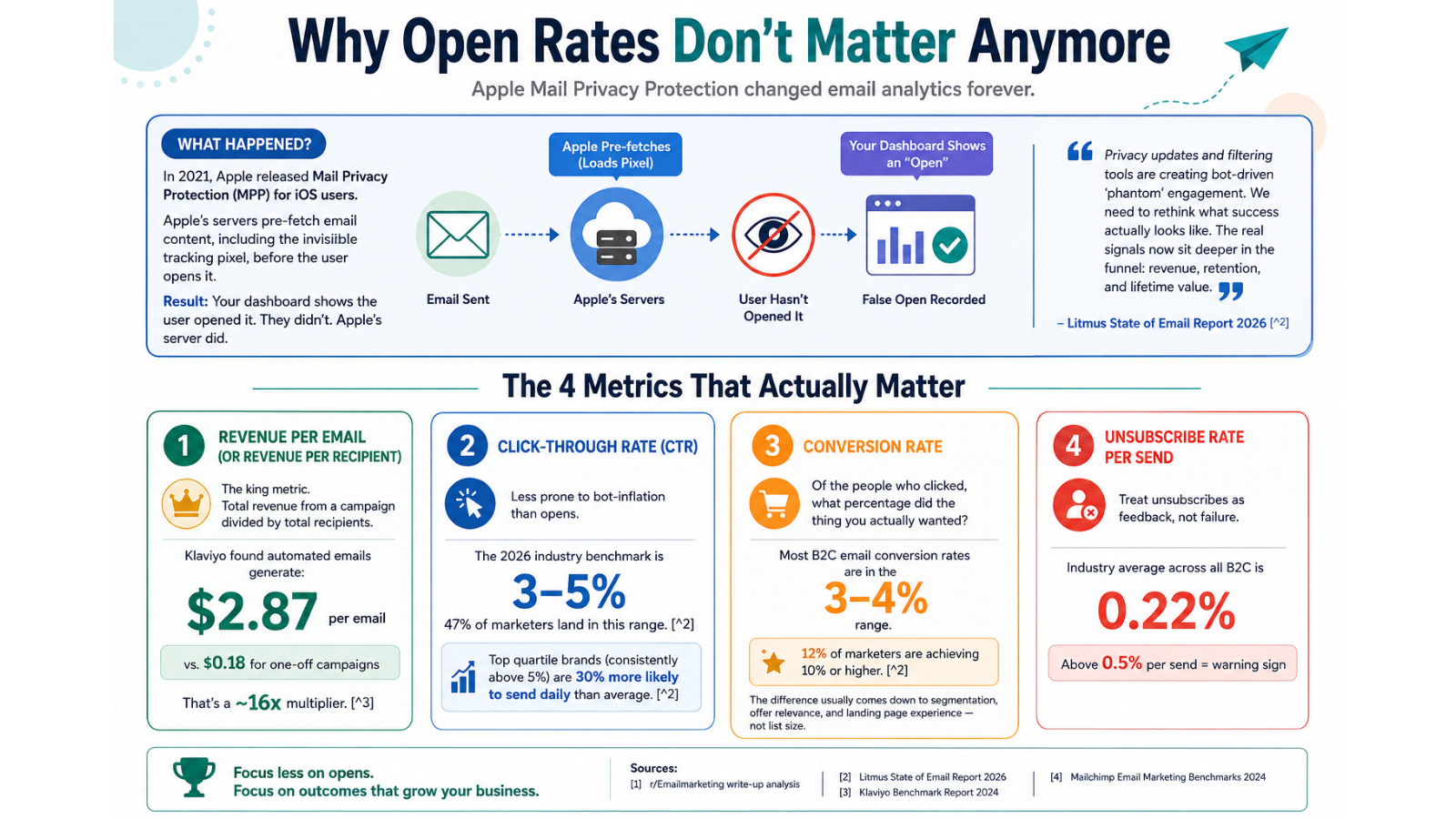
Here’s why. In 2021, Apple released Mail Privacy Protection (MPP) for iOS users. What it does, in plain English: when an Apple user opens Mail, Apple’s servers pre-fetch the email content, including the invisible 1-pixel tracking image that you use to detect “opens.” The result? Your dashboard shows the user opened it. They didn’t. Apple’s server did.
Litmus’s State of Email Report 2026 puts it bluntly: “Privacy updates and filtering tools are creating bot-driven ‘phantom’ engagement. We need to rethink what success actually looks like. The real signals now sit deeper in the funnel: revenue, retention, and lifetime value.” [^2]
So what should you actually track?
The four metrics that matter (in priority order)
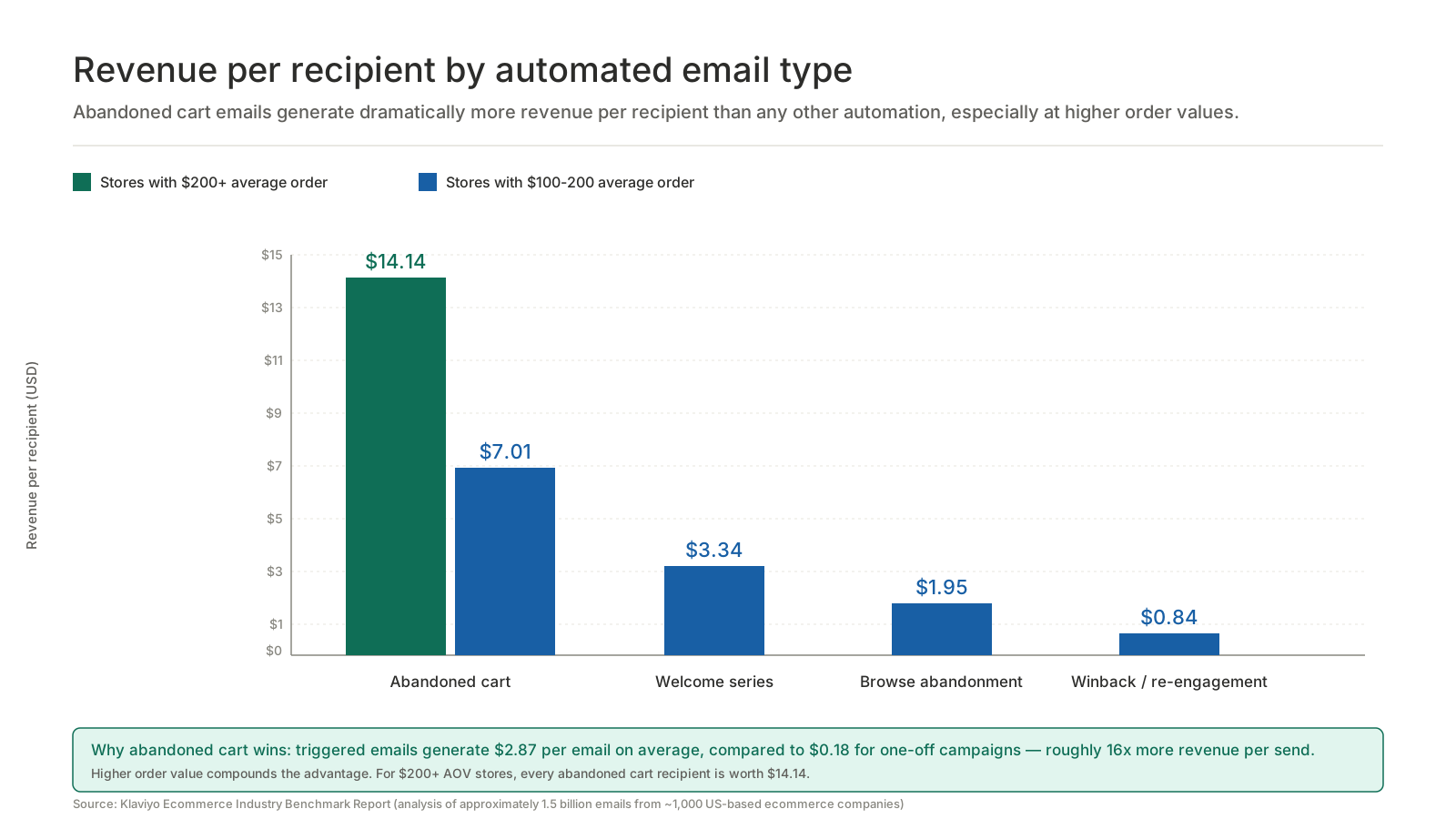
1. Revenue per email (or revenue per recipient). This is the king. Total revenue from a campaign divided by total recipients. If you sent to 10,000 people and made $2,500, your revenue per email is $0.25. Now compare it across campaigns. Klaviyo’s research found that automated emails generate $2.87 per email on average compared to just $0.18 for one-off campaigns [^3] — a roughly 16x multiplier. That gap alone is reason enough to take this metric seriously.
2. Click-through rate (CTR). Less prone to bot-inflation than opens. The 2026 industry standard is between 3-5%, with 47% of marketers landing in that range. [^2] If you’re below 3%, work on the email body and CTA. If you’re consistently above 5%, you’re in the top quartile — Litmus found these brands are 30% more likely to send daily than average. [^2]
3. Conversion rate. Of the people who clicked, what percentage did the thing you actually wanted? Most marketers see B2C email conversion rates in the 3-4% range, but a notable 12% are hitting 10% or higher. [^2] That’s a wide performance gap. As Litmus notes, the difference “usually comes down to segmentation, offer relevance, and landing page experience rather than list size.”
4. Unsubscribe rate per send. Industry average across all B2C is around 0.22%. [^4] Above 0.5% per send and something’s wrong — usually frequency or relevance. Treat unsubscribes as feedback, not failure. Better someone leaves cleanly than reports you as spam.
Open rate isn’t dead — it’s just demoted
To be fair to open rates, they still have a use. Jay Schwedelson, the SubjectLine.com founder, said it well at Litmus Live 2026: “If you send out an email and you A/B test it, and one has an emoji and one doesn’t, and the one with the emoji gets a 20% higher open rate, the emoji one wins. Directionally, it’s important.” [^2]
The current open rate distribution (per Litmus): 23% of brands see 30-40%, another 22% see 20-30%, and 15% see 40-50%. [^2] If you’re consistently in the 30-40% band, that’s a healthy baseline. The post-MPP value of opens isn’t precision — it’s pattern recognition. Use them for:
- Subject line A vs. Subject line B
- Engaged segment vs. unengaged segment
- This month vs. last month
That’s it. Don’t use them as a scoreboard.
The Return on Relationship shift
Here’s an idea that’s gaining real traction in 2026, and I think it deserves attention. Klaviyo’s research showed customer acquisition costs (CACs) rose for 73% of marketers in 2025. [^2] Keeping the customers you have matters more than ever. But traditional email metrics measure immediate sales — they miss email’s real value in building relationships that compound.
Litmus calls this the move from ROI to ROR (Return on Relationship). Instead of asking “did this email make a sale?”, ask “is this email building trust and loyalty over time?” [^2]
It’s a useful reframe. UserTesting’s global survey found that 68% of customers would stick with their favorite brands even if prices increased. [^2] That kind of loyalty isn’t built by one promo email. It’s built by 50 well-crafted emails sent over a year that made the recipient feel like the brand actually got them.
FAQs
What’s a good open rate for B2C email? The most common range is 30-40% per Litmus’s 2026 data, but open rates are heavily inflated by Apple’s Mail Privacy Protection. Treat any open rate number as roughly 30-50% inflated, and use opens for trend-spotting, not scoring.
What’s a good click-through rate for e-commerce email? Industry standard is 3-5%, with 47% of marketers landing in that range. [^2] Anything consistently above 5% is excellent.
What is revenue per email, and how do I calculate it? Revenue per email = total revenue generated by an email campaign ÷ total recipients. Automated emails (like cart recovery and welcome flows) average $2.87 per email, while one-off campaigns average $0.18. [^3]
What’s a good unsubscribe rate? Under 0.5% per send is healthy. The industry average is around 0.22%. [^4] If yours is consistently above 0.5%, you’re probably sending too often or to the wrong people.
3. The seven email types every B2C brand should send: B2C Email Marketing Guide
Most B2C brands send only one or two types of email. Usually, it’s promotional broadcasts and maybe a welcome email. That’s like running a restaurant with only an appetizer menu — you’re leaving the entree, dessert, and “thanks for coming” all on the table.
Litmus’s 2026 data backs this up. Looking at the top 8% of email programs (those hitting 45:1+ ROI), the pattern is striking: “these teams most commonly send newsletters and onboarding emails, not promotions.” [^2] The companies making the most money from email aren’t the ones blasting deals constantly. They’re the ones building the relationship.
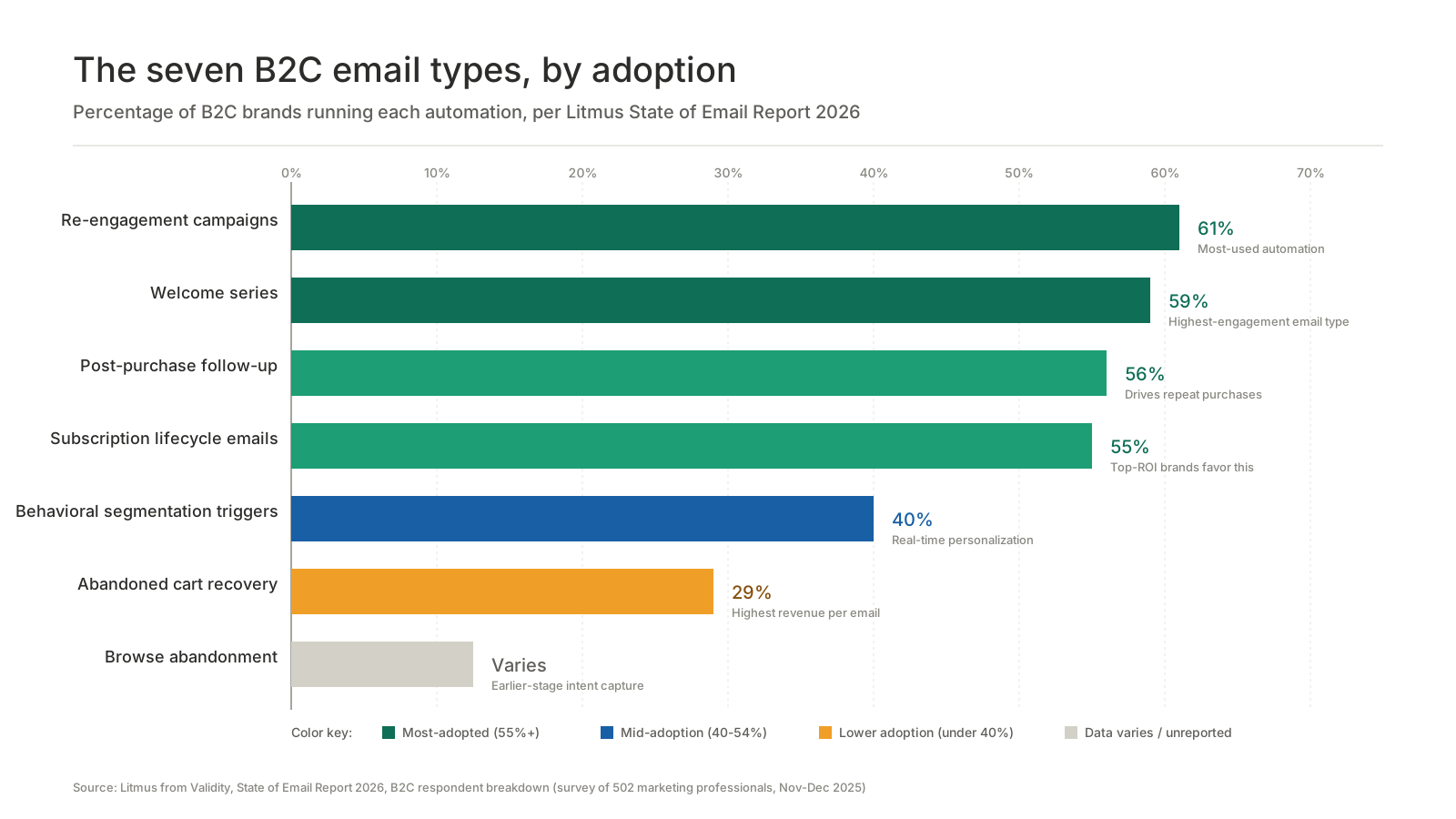
Here are the seven types you should be running, with usage data from Litmus’s 2026 survey of B2C email marketers: [^2]
| Email Type | % of B2C brands sending it | Why it matters |
|---|---|---|
| Re-engagement | 61% | Most-used automation overall |
| Welcome series | 59% | Highest engagement of any email type |
| Post-purchase | 56% | Drives repeat purchases at low cost |
| Subscription lifecycle | Used heavily by top-ROI brands | Top-ROI brands are 20% more likely to use these |
| Abandoned cart | 29% | Generates highest revenue per email |
| Behavioral triggers | 40% | Top-ROI brands are 20% more likely to use these |
| Browse abandonment | (varies) | Catches earlier-stage intent than cart |
Let’s go through each.
1. The welcome series
This is the highest-ROI email you will ever send. The data is so consistent on this, it’s almost boring. According to industry research compiled in the r/Emailmarketing community, welcome emails are the most commonly used automated email type — used by 58% of B2C marketers — and they outperform standard promo emails by roughly 8x on opens and clicks. [^1]
The reason is intuitive: someone just signed up for your list. They are paying attention. This is the only moment in the entire customer relationship when you have their full curiosity. Don’t waste it on a single “Thanks for subscribing!” email.
A B2C welcome series should be 3-5 emails over 7-14 days. For e-commerce: brand story → social proof → first-purchase incentive → product highlight → reminder. For newsletters: brand promise → best content → community invitation → first paid offer (if applicable).
I’ll go deeper on this in the next post in this cluster (the 8 email flows every ecommerce store needs). For now, the rule: if you don’t have a welcome series running, build one this week. It’s the single thing that will most improve your email revenue.
2. Abandoned cart (for e-commerce)
You already know what this is. Customer adds something to the cart, doesn’t check out, you email them later. The interesting part is how you do it.
The standard advice is: send three emails — at 1 hour, 24 hours, 72 hours. That’s been the playbook since 2014. It still works, but it’s not the best version.
The better version: branch your cart abandonment by product category, cart value, and whether they’re a first-time or returning customer. A $20 cart from a new customer should not get the same email as a $400 cart from a repeat customer. The first might just need a “Hey, you left this behind” nudge. The second might need a customer service touch — “Was there a problem? Reply, and I’ll help.”
aKlaviyo’s benchmark research is striking here. For stores with an average order size over $200, abandoned cart emails generate $14.14 in recipient. [^3] Per recipient. Not per send. Compare that to the $0.18 per email for one-off campaigns and you understand why this is one automation you cannot skip.
For smaller stores ($100-200 average order), the numbers are still strong: $7.01 per recipient on abandoned cart, $3.34 on welcome series, $1.95 on browse abandonment, and $0.84 on winback. [^3] If you’re running ecommerce without proper cart abandonment, you’re literally leaving money on the table — and not the metaphorical kind.
3. Post-purchase sequence
After someone buys, you have a window — maybe 30 days — where they’re most likely to buy again, most likely to talk about you, and most likely to engage with your content.
A good post-purchase sequence does some combination of:
- Thanks them genuinely (not the auto-receipt — a separate email)
- Sets expectations on shipping/delivery
- Asks for a review at the right moment (usually 7-14 days after delivery)
- Cross-sells or upsells based on what they bought
- Onboards them into your community/program if you have one
I once worked with a candle brand whose entire post-purchase sequence was the Shopify default receipt and nothing else. We added five more emails. Their repeat purchase rate within 60 days went from 5% to 22%. The math compounds when you remember that acquiring a new customer costs roughly 5x what retaining an existing one does.
4. Browse abandonment
Different from cart abandonment. Browse abandonment fires when someone visits a product page, doesn’t add to cart, doesn’t check out, and leaves.
The reason this matters: a lot of people don’t add to the cart at all. They look at the product, get distracted, and close the tab. A well-timed “We saw you checking out the [product] — here’s why people love it” email a few hours later can recover sales that cart abandonment never touches.
Klaviyo’s benchmark research found that for stores with $100-200 average order sizes, browse abandonment emails generate $1.95 per recipient. [^3] Less than cart abandonment, but still substantial — and it catches an audience cart abandonment misses entirely.
Note: browse abandonment requires more thoughtful setup than cart abandonment because the signal is weaker. Someone who added to the cart had real intent. Someone who looked at a page might’ve just been curious. Don’t send three emails for a casual browse — one is plenty.
5. Win-back / re-engagement
Subscribers go dormant. It’s just life. According to Litmus’s 2026 data, re-engagement campaigns are the single most-used automation in B2C — 61% of B2C brands run them. [^2] After 60-90 days of no engagement, hit them with a focused win-back campaign — usually 2-3 emails over a couple of weeks.
If they don’t respond, remove them from your active list. I cannot stress this enough. A smaller engaged list outperforms a larger dormant one every single time. Sending to dead contacts hurts your sender reputation and drags every future campaign down.
Quick anecdote: I once watched a brand’s overall open rate jump 14 percentage points just from a list cleanup. They went from 22% to 36% overnight. The emails didn’t change. The list did. Smaller list, better deliverability, more people actually seeing the emails.
6. Newsletter/nurture content
Not every email should be selling. In fact, if every email is selling, you’re going to burn out your list fast.
Here’s the part of Litmus’s 2026 data that should change how you think about this: newsletters are growing 12% year-over-year as a category, and they’re 90% more likely to generate top ROI for pure B2C companies compared to B2B/B2C hybrids. [^2] HubSpot’s latest State of Newsletter Growth Report adds that 45% of newsletter operators believe their newsletter-associated profits will grow in the next year, and 1 in 4 saw substantial profits in the past year. [^2]
This is the section that B2C brands often skip because it doesn’t “feel” like marketing. It absolutely is — and the brands that take it seriously are pulling away from the ones that don’t.
Ann Handley said it well at Litmus Live 2026: “We go from messaging to meaning. From broadcasting to corresponding. A newsletter, in particular, is less about the news and more about the letter. Storytelling is the new brand messaging, and the storyteller is the new correspondent.” [^2]
7. Transactional emails (don’t sleep on these)
Order confirmations, shipping notifications, password resets, and account updates. These are the emails customers actually want to receive — and they have the highest open rates in your entire program. Shopify’s data shows transactional emails open at around 60%, compared to roughly 37% for marketing emails on average. [^5] Industry research has also found that purchase confirmation emails generate 8x more opens and click-throughs and 6x more revenue than standard promotional emails. [^1]
Here’s what most B2C brands miss: transactional emails are also marketing real estate. Your shipping confirmation can include a “while you wait” content piece, a referral program prompt, or a smart cross-sell. Without being aggressive. Without ruining the trust.
Side note that’s relevant here: this is one of the practical reasons we built Bluey Email to handle transactional and marketing email in the same platform. Tools that separate them force you to either lose the marketing opportunity in transactional emails or duplicate your branding/template work across two systems.
What is a welcome email series in B2C? A welcome series is a sequence of 3-5 emails sent automatically when someone joins your email list. The first goes out immediately; subsequent emails are spaced 1-3 days apart over 7-14 days. Welcome emails get the highest engagement rates of any email type.
Do abandoned cart emails actually work? Yes. For stores with average order sizes over $200, abandoned cart emails generate $14.14 in revenue per recipient (Klaviyo). [^3] The most effective sequences are 2-3 emails sent over 72 hours.
What is browse abandonment? Browse abandonment is an automated email sent to a shopper who viewed a product page but didn’t add anything to their cart. The trigger is page-level, not cart-level, so it catches earlier-stage intent.
How is post-purchase email different from order confirmation? The order confirmation is a transactional email confirming the order details. The post-purchase sequence is a series of marketing emails — thank yous, review requests, cross-sells, onboarding — sent in the days and weeks after the purchase.
4. Email angles: stop sending the same promo seven times
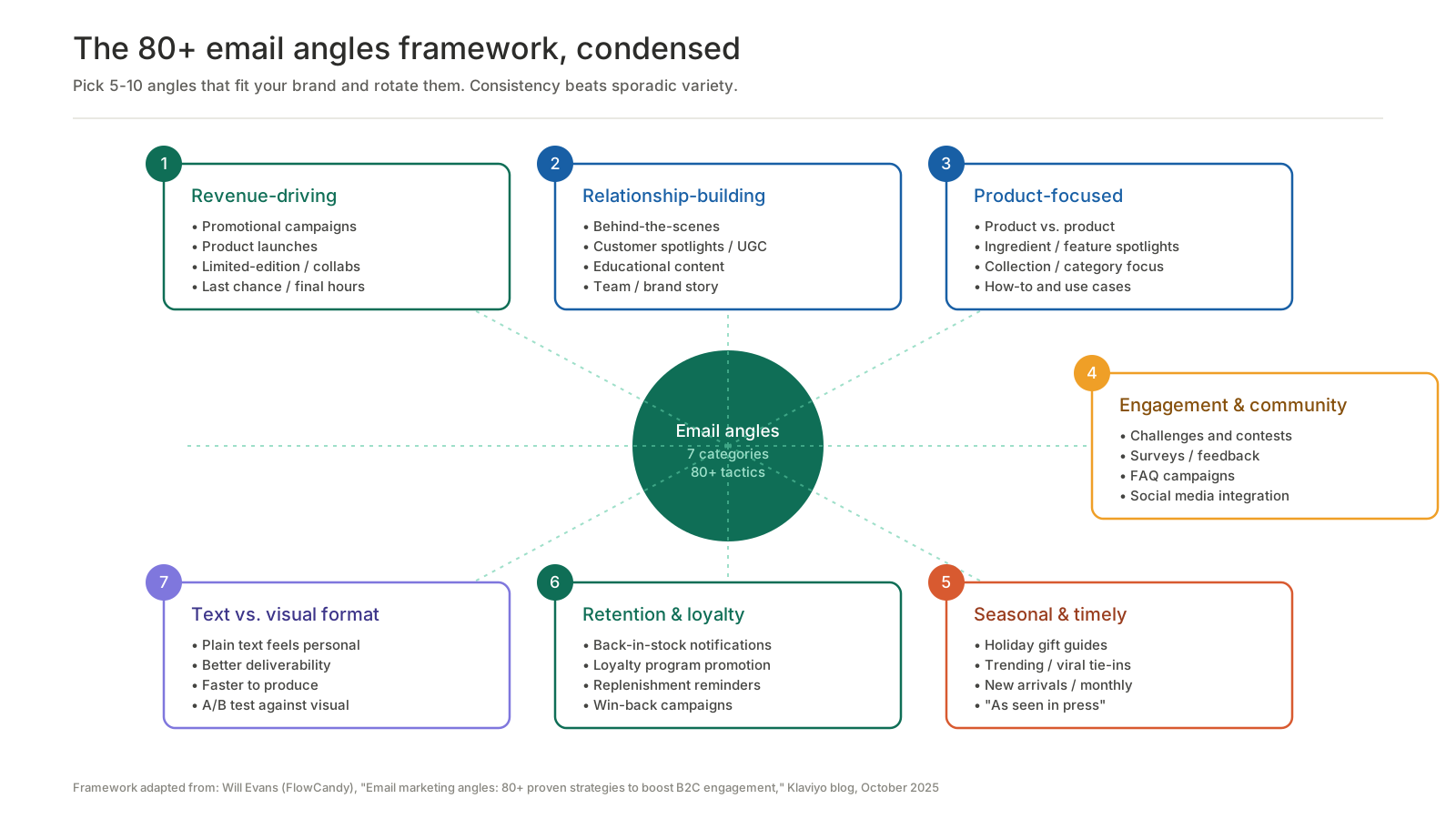
This section didn’t exist in earlier drafts of this guide. I added it because a Klaviyo write-up by Will Evans of FlowCandy made a point that I think most B2C marketers genuinely miss. He calls them “email angles” — different reasons for an email to exist. [^6]
The mistake almost every B2C brand makes is sending one angle (promotional discount) over and over. The fix is mixing in 5-10 different angles so your list doesn’t burn out, and your inbox presence stops looking like a 24/7 sale.
Here are the angle categories Evans identified, with my take on which ones B2C brands underuse the most:
High-impact revenue angles
Promotional campaigns — sales, BOGOs, discounts. Effective but easily overused.
Product launches — Evans points out that “successful brands often send 5-10 different emails around a single product launch, including early access for VIPs, launch day announcements, FAQ emails, and social proof campaigns.” [^6] Most brands send one launch email and wonder why nobody noticed.
Limited-edition / collaboration emails — urgency and exclusivity baked in.
Last chance / final hours — countdown timers, “running out” messaging. Works at the end of any promotion.
Relationship-building angles (the underused ones)
Behind-the-scenes content — show the human side of the brand. Works particularly well for brands with craftsmanship stories or compelling origins.
Customer spotlights — featuring user-generated content. As David Visser, CEO of Zyber and Unlocked, put it in the Klaviyo piece: “The best content doesn’t just promote products, it connects customers to your brand’s mission.” [^6]
Educational content — tips, how-tos, industry insights. The brands that nail this create content that doesn’t feel like selling but keeps the audience engaged.
Team and brand story emails — introducing team members, sharing milestones, mission moments.
Engagement and community angles
Challenges and contests — 30-day skincare challenges, UGC contests. Builds community.
Surveys and feedback requests — underrated for both data and engagement. Visser again: “Surveys are one of the most underrated growth tools. They make customers feel heard while uncovering data points like attribution source, buying intentions, and preferences.” [^6]
FAQ campaigns — address common questions about products. Particularly effective for higher-priced items.
Seasonal and timely angles
- Holiday gift guides
- Trending / viral content tie-ins
- New arrivals and monthly highlights
- “As seen in press” coverage
- Back-in-stock notifications
My take on which angles B2C brands underuse most
If I had to pick the three angles I see B2C brands underusing the most across the 200+ campaigns I’ve run at the agency, they’d be:
- Customer spotlights and UGC. Brands have customers doing amazing things with their products and never feature them. This is free content that builds community and converts better than slick photoshoots.
- Behind-the-scenes / brand story. Especially for small DTC brands competing against big-budget players, your story is your differentiator. Stop hiding it.
- Surveys. People will tell you what they want if you ask. Most brands never do.
One more thing from the Klaviyo piece that’s worth pulling out: don’t try to use all 80+ possible angles. “Identifying 5-10 angles that resonate with your brand and audience” is enough. [^6] Consistency with a smaller set beats sporadic variety.
FAQs
What are email marketing angles? Email marketing angles (also called hooks or themes) are the underlying reasons or formats for an email — promotional, educational, behind-the-scenes, social proof, etc. Most brands rely too heavily on one angle (usually promotional) when a mix of 5-10 different angles drives stronger engagement.
How do I plan email angles for my brand? Identify 5-10 angles that fit your brand voice, create reusable templates for each, and rotate them across your campaign calendar. Segment your audience so the right angle reaches the right people — promotional angles to recent buyers, educational angles to new subscribers.
Should text-based emails be in my angle mix? Yes. Plain-text or minimally designed emails often outperform heavily designed ones, especially for relationship-building emails. They feel more personal, deliver more reliably, and are faster to produce. Test them against your visual templates.
5. Subject lines, preview text, and the first impression problem
If you only fix one thing about your B2C email program in the next 30 days, fix your subject lines.
Here’s why: Subject lines are essentially the entire battle for inbox attention. Your subscriber is staring at 50 unread messages in their inbox at 7 am, half-awake, scrolling through with their thumb. They have maybe 1.5 seconds to decide whether each one gets opened or swiped away. Your subject line — and the preview text under it — is what they’re judging you on.
A few principles that hold up across the B2C space:
Clarity over cleverness (almost always)
I know you saw a clever subject line on Twitter once. Maybe it was Liquid Death’s. Maybe it was Morning Brew’s. Maybe it was Glossier’s. And maybe you read it and thought, “I should write subject lines like that.”
You shouldn’t. Not yet, anyway.
Clever subject lines work for brands that have already built strong recognition and trust. Their subscribers see the sender name “Morning Brew” and they’re already 70% of the way to opening — the subject line just needs to add intrigue. For most B2C brands building from earlier stages, clarity outperforms cleverness by a wide margin.
Compare:
- “The thing nobody told you” (clever, vague, low-trust signal)
- “Your 20% off code expires tomorrow” (clear, specific, urgent)
Cleverness works after you’ve earned the right to it. Until then, be clear.
A new legal warning: misleading subject lines
This is worth flagging because it’s a 2026 development most marketers haven’t caught up on. According to Litmus, “There have already been multiple class action lawsuits brought against the use of misleading subject lines, and there are more in the pipeline.” [^2] If your subject line implies one thing and the email content delivers another, you’re now exposed to legal risk, not just unsubscribes.
Don’t bait. Deliver what you promise.
Length: 30-50 characters for mobile
Mobile inboxes typically display 30-50 characters of a subject line before cutting it off. According to community-curated industry research, subject lines under 43 characters tend to perform best, with 60 characters as a hard upper limit. [^1] Put the important words first.
Emojis: they actually work
Shopify’s roundup found that 73% of email marketing professionals say including emojis in a subject line improves performance. [^4] Jay Schwedelson confirmed it at Litmus Live 2026: in head-to-head A/B tests, the emoji version often wins by 20% on open rate alone. [^2]
The caveat: use one emoji, not three. Near the start or end of the line, not buried in the middle. And it has to fit the content — a sparkle emoji on a refund email is weird.
Personalization that’s actually personal
Using a first name in a subject line is fine. It doesn’t hurt. But it also doesn’t help as much as people think anymore. Shopify’s data found that 77% of email marketers say subject line personalization improves performance and 65% report using subject line personalization in more than half of their campaigns. [^4] The lift from first-name personalization is modest, though. The real lift comes from behavioral personalization.
Real personalization examples:
- “We saved your cart from yesterday, [Name]” (cart-based)
- “Your [Product] usually lasts about now — reorder?” (replenishment-based)
- “Three months in — here’s what to do next” (lifecycle-based)
These dramatically outperform “[Name], check out our new collection!” Shopify’s data also notes that behavioral-trigger emails generate 10x more revenue than other email types. [^4]
The preview text is the second sentence
Preview text — that snippet of text after the subject line in most inboxes — is the most wasted piece of real estate in email marketing. Most senders default to “View this email in your browser” or “Trouble viewing this message?” That’s a missed opportunity to extend your subject line into a one-two punch.
Subject + preview is a complete sentence that should pull the reader in:
- Subject: “Your candle order shipped 🚚”
- Preview: “Plus, how to make it last twice as long (a tip from our chandler)”
Or:
- Subject: “We’re not having a Black Friday sale this year”
- Preview: “Here’s what we’re doing instead, and why”
That second example, by the way — the “we’re not having a sale” approach — has become a real pattern in indie ecommerce since around 2022. It works because it inverts the expected pitch and signals values, which builds trust in a noisy season.
Things to avoid
Spam triggers are real, but most modern spam filters are more sophisticated than the old “don’t use the word ‘free'” advice. What still gets flagged:
- ALL CAPS subject lines
- Excessive punctuation (“ACT NOW!!!”)
- Multiple dollar signs ($$$)
- “Free money,” “earn cash,” “make $$$”
- Vague urgency without context (“Urgent: open this now”)
- Subject lines that misrepresent the email content (now a legal risk, not just a deliverability one)
Run your subject lines through a spam checker if you’re unsure. Most ESPs (including Bluey) have one built in.
FAQs
How long should B2C email subject lines be? Under 43 characters tends to perform best, with 60 characters as a hard upper limit. [^1] Put the most important words first since mobile inboxes truncate around 30-50 characters.
Should I use emojis in subject lines? Yes, judiciously. 73% of email marketers say emojis improve subject line performance. [^4] Use one emoji, not three, near the start or end of the line.
What is preview text, and how do I write good preview text? Preview text (also called preheader) is the short text snippet that appears after the subject line in most inboxes. Treat it as the second half of your subject line — write it to extend or sell the message, not “View this email in browser.”
Can my subject lines get me sued? Yes, if they’re misleading. Litmus’s 2026 report flags class action lawsuits against brands using deceptive subject lines, with more in the pipeline. [^2] If your subject promises something the email doesn’t deliver, you’re exposed.
6. Cadence: how often is too often (and how often is too rare)
This is one of those topics where you’ll find advice ranging from “send once a month” to “send every single day” — and confusingly, both can be right depending on who you are.
Let me try to cut through the noise with actual data.
What the 2026 data says
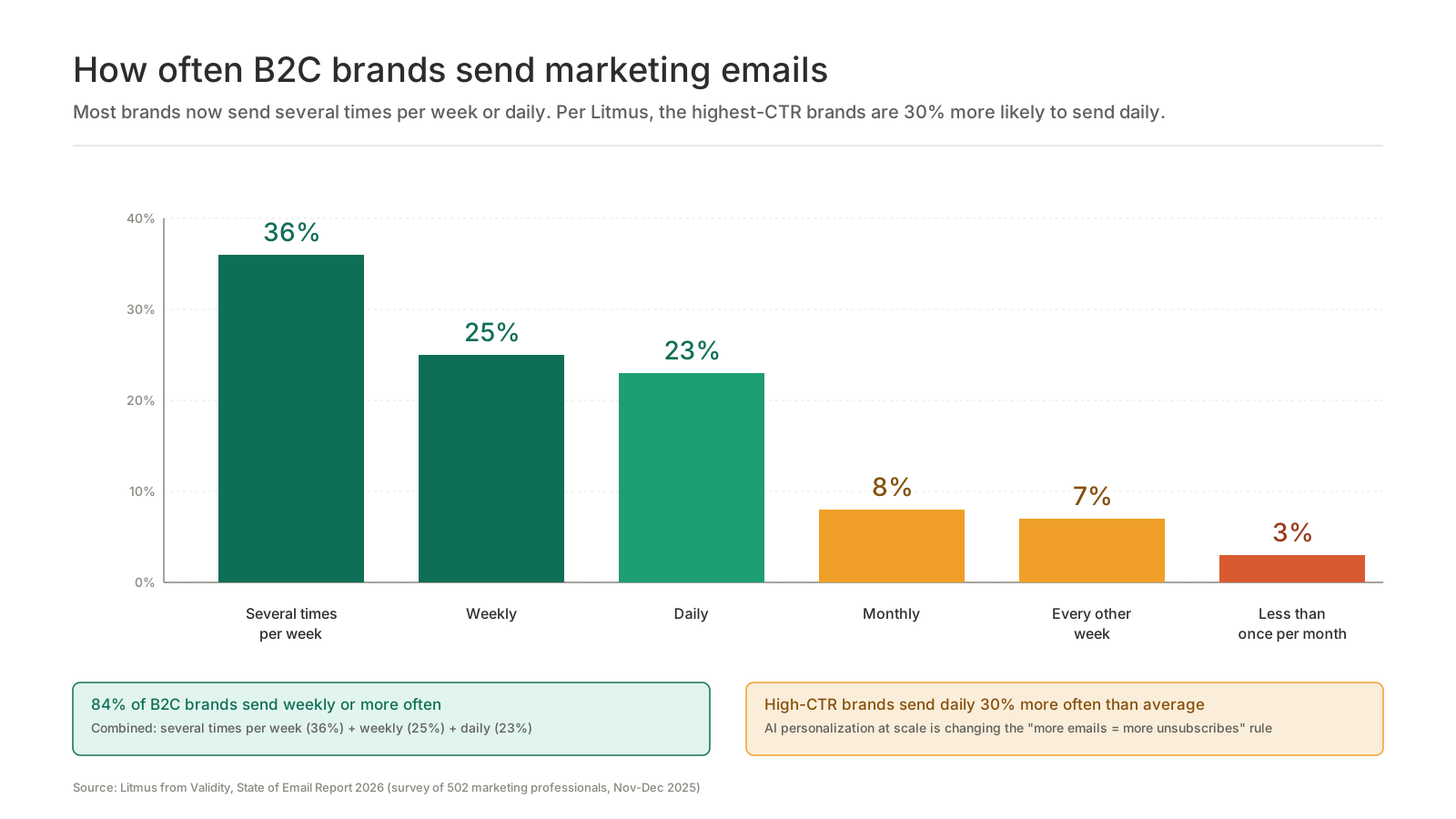
Per Litmus’s 2026 survey of 502 marketers:
- 36% of companies send marketing emails several times per week
- 25% send weekly
- 23% send daily
- 8% send monthly
- 7% send every other week
- 3% send less than monthly
So most marketers are showing up in inboxes at least a few times per week. [^2]
Here’s the counterintuitive finding: companies with the highest click-through rates (above 5%) are 30% more likely to send daily than the average. [^2] That breaks the traditional advice that “more = more unsubscribes.”
Why does it break? Because the high-CTR brands aren’t just blasting more — they’re personalizing more. Litmus puts it cleanly: “Since AI enables personalization at scale, frequency and engagement can move in the same direction.” [^2]
My rough framework
For e-commerce B2C:
- Highly engaged subscribers (opened/clicked in last 30 days): 2-3 emails per week is fine, sometimes 4 during launches. Daily is okay if your content is genuinely different each day.
- Moderately engaged (opened/clicked in last 60-90 days): 1-2 emails per week.
- Dormant (no activity in 90+ days): Stop sending broadcasts entirely. Move them to a re-engagement campaign or remove them.
For newsletter/engagement B2C:
- Most subscribers: 1-2 emails per week. Newsletter readers expect a rhythm. Once a week, same day, same vibe.
- Premium / paid subscribers: Whatever you promised them when they paid. Don’t over-deliver and don’t under-deliver. Hit the rhythm.
Signs you’re sending too often
- Unsubscribe rate creeping above 0.5% per send
- Open rates are dropping consistently month-over-month
- Spam complaints above 0.1%
- Engagement skewing heavily to a small fraction of your list
Signs you’re sending too rarely
- Subscribers say “I forgot I subscribed” when they hear from you
- Your subscribers’ inboxes treat you as a stranger (more spam folder placements)
- You ramp up before a launch, and engagement is lower than expected because you’ve trained your list to ignore you
The day-of-week thing
Some patterns from the data: the r/Emailmarketing community has consistently surfaced that Tuesday and Thursday are the strongest B2C send days for open rates, with Saturday actually generating the highest conversion rates and Friday having the highest open rate of any weekday. [^1] Different days for different metrics.
The “Sunday Reset” newsletter has also become its own thing. Newsletters sent Sunday evening (or Monday morning) consistently outperform mid-week sends for many of the brands we ran at WiseGuyXL. Anecdotal, but the pattern is too consistent to ignore. There’s something about the start-of-week mindset — people are planning, reflecting, looking for “this week’s thing” — that makes Sunday/Monday content land better.
This isn’t universal. Test with your audience. But if you’re optimizing send times and don’t know where to start, Sunday evening is a good first guess.
FAQs
How often should I send B2C marketing emails? For ecommerce, 1-2 emails per week to your full list, with more frequent sends to highly engaged segments. The most common frequency in 2026 is “several times per week” (36% of brands), and brands with the highest CTR are 30% more likely to send daily. [^2]
What is the best day to send B2C emails? Tuesdays and Thursdays for open rates; Saturdays for conversion rates; Friday for the highest open rate of any weekday; Sunday evenings for newsletter-style content. [^1] Your audience matters more than averages — test.
Is once a month too rare for email marketing? Usually yes. Only 8% of brands send monthly per Litmus 2026 data. [^2] Monthly cadence makes you forgettable for ecommerce and creates a stranger-danger spam signal for inactive subscribers.
Should I send daily emails like The Hustle or Morning Brew? Maybe — Litmus found high-CTR brands are 30% more likely to send daily. [^2] But only if your content can actually carry daily. Daily emails require a strong content engine, a clear voice, and a real promise that delivers every day.
7. The legal stuff (briefly, but you need to read it)
I know. Nobody wants to read a legal section. But emailing humans without permission is genuinely illegal in most of the world, and the fines aren’t theoretical.
The big four laws you should know
1. GDPR (European Union). Requires explicit, informed consent before sending marketing emails to EU residents. Pre-ticked checkboxes don’t count. Bundled consent doesn’t count. Fines can hit 4% of global annual revenue — half of organizations with 1,000+ employees cite GDPR as their biggest compliance challenge. [^2]
2. CAN-SPAM (United States). Less strict than GDPR. Requires a working unsubscribe mechanism, accurate sender info, and identification as a commercial message. Fines up to $51,744 per email.
3. CASL (Canada). Similar to GDPR — requires express consent. Has been actively enforced since 2014. Fines up to CAD $10 million per violation for businesses.
4. CCPA (California). Gives California residents the right to know what data you have on them and to request deletion. Affects more than just email but applies here too.
New in 2026: Gmail and Yahoo are stricter
If you send more than 5,000 emails per day, Microsoft, Yahoo, and Gmail now require SPF, DKIM, and DMARC compliance. [^2] No exceptions. Non-compliant emails will be filtered or rejected outright. If you set up email marketing pre-2024 and haven’t touched the authentication settings since, check them this week.
Gmail also now lets users manage subscriptions and unsubscribe from mailing lists directly from the inbox. [^2] This means more one-click opt-outs, less effort to leave your list. That’s not a bad thing — it just means your retention game has to be sharper.
What this means in practice
- Always use double opt-in for EU residents (and probably everywhere — it’s just better practice).
- Never buy email lists. The fines for emailing purchased lists in the EU can wipe out a small business. And from a non-legal standpoint, it doesn’t even work — open rates and deliverability tank because you’re emailing people who don’t know you.
- Always include a clearly visible unsubscribe link.
- Honor unsubscribes immediately. Failing to unsubscribe someone within 10 business days is a CAN-SPAM violation in the US.
- Keep records of consent. If someone signed up via a form, your platform should log the IP, timestamp, and source.
- Set up SPF, DKIM, and DMARC. If your ESP doesn’t make this easy, switch ESPs. Bluey does one-click verification — it’s table-stakes in 2026.
This stuff isn’t sexy, but ignoring it is how small ecommerce brands get unexpectedly fined out of existence.
FAQs
Is buying an email list illegal? Buying lists isn’t always illegal, but sending marketing emails to a purchased list is illegal in most places — including the EU (GDPR), Canada (CASL), and California (CCPA) — unless every individual on the list has explicitly consented to receive marketing from you specifically.
Do I need to comply with GDPR if I’m not in Europe? Yes, if any of your subscribers are EU residents. GDPR applies based on the location of the subscriber, not the sender.
Do I need SPF, DKIM, and DMARC set up? Yes — required as of 2024 for anyone sending more than 5,000 emails per day to Gmail, Yahoo, or Microsoft inboxes. [^2] Without them, your emails will be filtered or rejected.
What’s the difference between single opt-in and double opt-in? Single opt-in adds someone to your list immediately when they submit a form. Double opt-in requires them to confirm via a verification email before being added. Double opt-in is GDPR-friendlier and produces healthier lists; single opt-in produces faster list growth.
8. Mistakes I keep watching B2C brands make
A rapid-fire list of things I see B2C brands doing wrong, in roughly the order I see them most often.
1. Treating email as a broadcast channel, not a relationship channel. Email is the one place where you have a 1:1 line to your customer. Chase Diamond of Structured put it well at Litmus Live 2026: “Relationships are human to human, not necessarily business to business. You’re writing for someone on the other side that has feelings, that has values. Speak to them, don’t speak at them.” [^2]
2. Never segmenting. “Everyone gets the same email” is the default mode and it’s wrong. Klaviyo’s research found that companies with $10M+ in annual revenue average 134 segments, while companies under $100K average just 13. [^3] Larger companies aren’t more segmented because they have more money — they’re more segmented because that’s how they got bigger.
3. Sending only one angle. Same promo, week after week. Mix in customer spotlights, brand stories, educational content, surveys. (See Section 4.)
4. Using stock photos. Real photos of products, customers, behind-the-scenes shots — these all outperform stock images by significant margins. Stock photos of “happy diverse professionals using a laptop” fool no one.
5. Designing for desktop. Over half of B2C email is opened on mobile devices. Litmus’s 2026 data shows only 47% of companies are designing fully responsive, mobile-friendly emails. [^2] Translation: 53% of brands are losing the mobile-majority of their audience by default. Don’t be one of them.
6. Hiding the unsubscribe link. This is dumb. Hiding the unsubscribe link doesn’t prevent unsubscribes — it just makes people mark you as spam instead, which is dramatically worse for your deliverability. With Gmail’s new in-inbox unsubscribe option, hiding it doesn’t even work anymore.
7. Never cleaning the list. Remove unengaged subscribers every quarter. Your engaged subscribers will thank you with better open rates.
8. Sending the same offer 7 times in a row. Variety isn’t just for novelty — it tells the algorithm and the human reader that you’re not just spamming the same pitch over and over.
9. Treating Black Friday/Cyber Monday like a single event. BFCM is the highest-stakes email week of the year for ecommerce, and most brands plan it like one big push email. The brands that actually win plan a 7-10 day arc with warm-up, anticipation, opening, mid-cycle, last-call, and post-sale. Per Omnisend’s 2024 BFCM data, email volumes spiked 33% during peak shopping days, and Black Friday emails achieved a 13% click-through rate with Cyber Monday at 15% open rate. [^7] If you’re sending one email in that environment, you’re invisible.
10. Ignoring browser/email-client preview. Outlook still renders some things weirdly. Gmail clips emails over a certain size. Apple Mail handles dark mode differently than others. Test on multiple clients before sending.
11. No P.S. Studies consistently show that the P.S. line is one of the most-read parts of any email. Use it. Put your most important secondary message there.
12. Skipping accessibility. Litmus 2026 data shows only 26% of companies follow WCAG accessibility standards and 21% follow regional mandates like the European Accessibility Act. [^2] Lauren Castady put it well at Litmus Live 2026: “1 in 6 people worldwide have a disability. You’re not designing for edge cases, you’re designing for real life.” [^2] Plus, the EAA, which took effect in 2025, makes accessibility a legal requirement for EU businesses with 10+ employees.
FAQs
What’s the most common B2C email marketing mistake? Not segmenting the list. Klaviyo’s research shows the largest brands (over $10M revenue) average 134 segments while the smallest (under $100K) average 13. [^3] The correlation with revenue is direct.
How do I know if my emails are landing in spam? Check your sender reputation score, monitor your bounce and complaint rates, and use tools like Mail-Tester or Google Postmaster Tools (which got better insights in 2025) [^2] to check your inbox placement.
Is it bad to email my list too often? Not necessarily — Litmus 2026 data shows high-CTR brands send more, not less. The question is whether you’re personalizing enough to justify the frequency. Bulk-blasting daily will burn the list. Personalized daily emails to engaged segments can outperform weekly to your whole list.
9. Your first 30 days: a real plan
If you’re starting from somewhere between “I have a list but barely use it” and “I send sporadic newsletters but don’t have any automations,” here’s a 30-day plan to get you to a real B2C email program.
Week 1: Audit and clean
- Pull your subscriber list out of whatever ESP you use
- Identify your engaged subscribers (opened/clicked in last 60 days)
- Identify your dormant subscribers (no activity in 90+ days)
- Either re-engage them with a single “Are you still interested?” campaign or remove them
- Check your SPF, DKIM, and DMARC records are properly set up (required as of 2024 for anyone sending 5,000+ emails/day to Gmail/Yahoo/Microsoft)
- Set up basic tracking: revenue per email, click rate, unsubscribe rate
Week 2: Build the welcome series
- Write your welcome series (3-5 emails over 7-14 days)
- For ecommerce: email 1 (welcome + first-purchase incentive), email 2 (brand story), email 3 (social proof), email 4 (product highlight), email 5 (last-call on incentive)
- For newsletter/non-ecom: email 1 (welcome + promise), email 2 (best content), email 3 (community invitation), email 4 (premium offer if applicable)
- Set the welcome series to fire on signup
- Don’t make it perfect. Ship version 1.
Week 3: Add one more automation
- For ecommerce: build your abandoned cart flow (2-3 emails over 72 hours)
- For newsletter: build your re-engagement flow (fires after 60 days of no opens)
- For subscription/service: build your renewal reminder flow
Week 4: Launch the rhythm
- Send your first regular campaign — newsletter content, product highlight, or value piece (not a promo)
- Plan 5-10 angles you’ll rotate through over the next quarter (refer to Section 4)
- Review metrics from weeks 1-3
- Schedule your next 4 campaigns
- Identify the single biggest gap in your program for next month
That’s it. By end of week 4, you have a clean list, a welcome series running, one more critical automation built, and a sending rhythm. Most B2C brands never get this far. If you do, you’re already ahead.
A final thought before you close the tab
I started this post with a story about a founder whose email revenue was 4% of her business when it should have been 28-35%. We didn’t fix it overnight. We fixed it by going through these sections in roughly this order: cleaning her list, building a real welcome series, fixing her abandoned cart sequence, adding a post-purchase flow, mixing in non-promo angles, and tightening her cadence. Six months in, email was at 21% of her revenue. Twelve months in, 31%.
Nothing in this post is magic. Most of it is unglamorous, patient, “do the thing you know you should do” work. But it compounds. And the brands that compound on email over 12-24 months end up with the kind of channel resilience that lets them sleep through the next Meta ad price hike or the next algorithm change.
Email isn’t dead. Email is just hard to do well — which is exactly why doing it well is still such a competitive advantage.
If you found this useful and want the next layer down — the specific email flows ecommerce stores should build, in what order — that’s the next post in this series. And if you want to make any of this easier to actually implement, Bluey Email is the platform we built specifically because we got tired of fighting the existing ones. Flat-rate send-based pricing, AI campaign builder, automations with conditional branching, built-in CRM. Free 7-day trial, no card.
Now go fix your welcome series.
— Shivam
Bonus: General B2C Email FAQs
What is B2C email marketing? B2C email marketing is the practice of sending marketing emails from a business to individual consumers — as opposed to other businesses. It covers everything from ecommerce promotional emails to newsletters, subscription updates, and lifecycle campaigns.
How effective is B2C email marketing in 2026? Very. Litmus’s 2026 data shows 25% of companies see email ROI of 36:1 or higher, and the top 8% hit ROIs above 45:1. [^2] Email continues to deliver one of the highest ROIs of any marketing channel.
What’s the difference between B2C and B2B email marketing? B2C emails go to individual consumers and focus on emotion-driven purchase decisions with shorter cycles. B2B emails go to business buyers and focus on logic-driven decisions with longer cycles requiring multiple stakeholders. [^1] The infrastructure is the same; the strategy differs.
How much should I spend on B2C email marketing? For most growing B2C brands, email platform costs are modest — typically $30-300/month at small/medium scale. Tools like Bluey Email offer flat-rate pricing that doesn’t scale with list size. The bigger investment is in time/skill: planning campaigns, writing copy, designing emails, and optimizing flows.
Can I do B2C email marketing without an ecommerce store? Absolutely. Newsletters, content creators, services, coaches, online courses, subscription apps, and SaaS-for-consumers all run B2C email programs. The strategies differ from ecommerce (engagement-focused vs. purchase-focused), but the infrastructure is the same.
How long does it take to see results from B2C email marketing? Initial signals (open rates, clicks) appear within days. Real revenue impact from automation flows typically shows in 30-60 days. Compounding results (repeat purchase rate improvements, lifetime value lifts) usually take 6+ months of consistent execution.
What’s the best email marketing platform for B2C? Depends on your business. For pure ecommerce DTC, Klaviyo is the dominant tool. For broader B2C including newsletters, services, and subscription businesses, more general platforms with flat-rate pricing — like Bluey Email — offer better economics. Honestly evaluate based on actual feature needs and pricing model rather than brand familiarity.
References
[^1]: r/Emailmarketing, “B2C Email Marketing Examples: How To Improve Your B2C Email Marketing.” Community thread covering B2C vs B2B differences, buying cycle, timing data, subject line length, and engagement statistics. Includes data points such as the 42:1 email ROI figure, 47% of recipients opening based on subject line alone, the optimal 43-character subject line length, Tuesday/Thursday best send days, Friday highest open rate, and Saturday highest conversion rate.
[^2]: Litmus from Validity, State of Email Report 2026. Survey of 502 marketing professionals across the US, UK, Australia, and New Zealand from November 19 to December 17, 2025. Includes ROI distribution, send frequency data, email type effectiveness, automation usage by business model, AI adoption gap, mobile-responsiveness rates (47%), accessibility compliance (26% WCAG, 21% EAA), the move from ROI to Return on Relationship, and quotes from Litmus Live 2026 speakers. litmus.com
[^3]: Klaviyo, Ecommerce Industry Benchmark Report. Analysis of approximately 1.5 billion emails sent by approximately 1,000 US-based ecommerce companies. Includes segmentation impact on revenue, revenue per recipient by automated email flow type ($14.14 cart abandonment for $200+ AOV stores; $7.01/$3.34/$1.95/$0.84 for various flows at $100-200 AOV), and segmentation counts by company revenue tier (13 segments for under $100K, 134 segments for over $10M). klaviyo.com
[^4]: Shopify, 47 Email Marketing Statistics You Should Know in 2025. Compilation of email marketing data covering engagement, mobile optimization, personalization, subject lines, and ROI. Includes the 73% emoji effectiveness stat, 77% personalization performance stat, behavioral trigger 10x revenue figure, and 65% subject line personalization adoption rate. shopify.com/blog
[^5]: Shopify, What Is Ecommerce Email Marketing? Guide. Data on transactional vs. marketing email open rates (60% vs 37.65%). shopify.com/blog/email-marketing
[^6]: Will Evans, “Email marketing angles: 80+ proven strategies to boost B2C engagement,” Klaviyo blog, October 2025. Framework for diversifying email angles beyond promotional content, including expert quotes from David Visser (Zyber + Unlocked), Anna Sophie Fokdal Christensen (FABO), and Midge Hazelwinkel (Code). klaviyo.com/blog
[^7]: Omnisend, 2026 Ecommerce Marketing Statistics Report. BFCM email volume and engagement data including the 33% transactional email volume spike, 13% Black Friday CTR, and 15% Cyber Monday open rate. omnisend.com
Free tools for this
Put this into practice with our free, no-signup tools — everything runs in your browser:
Browse all 15 free tools →