
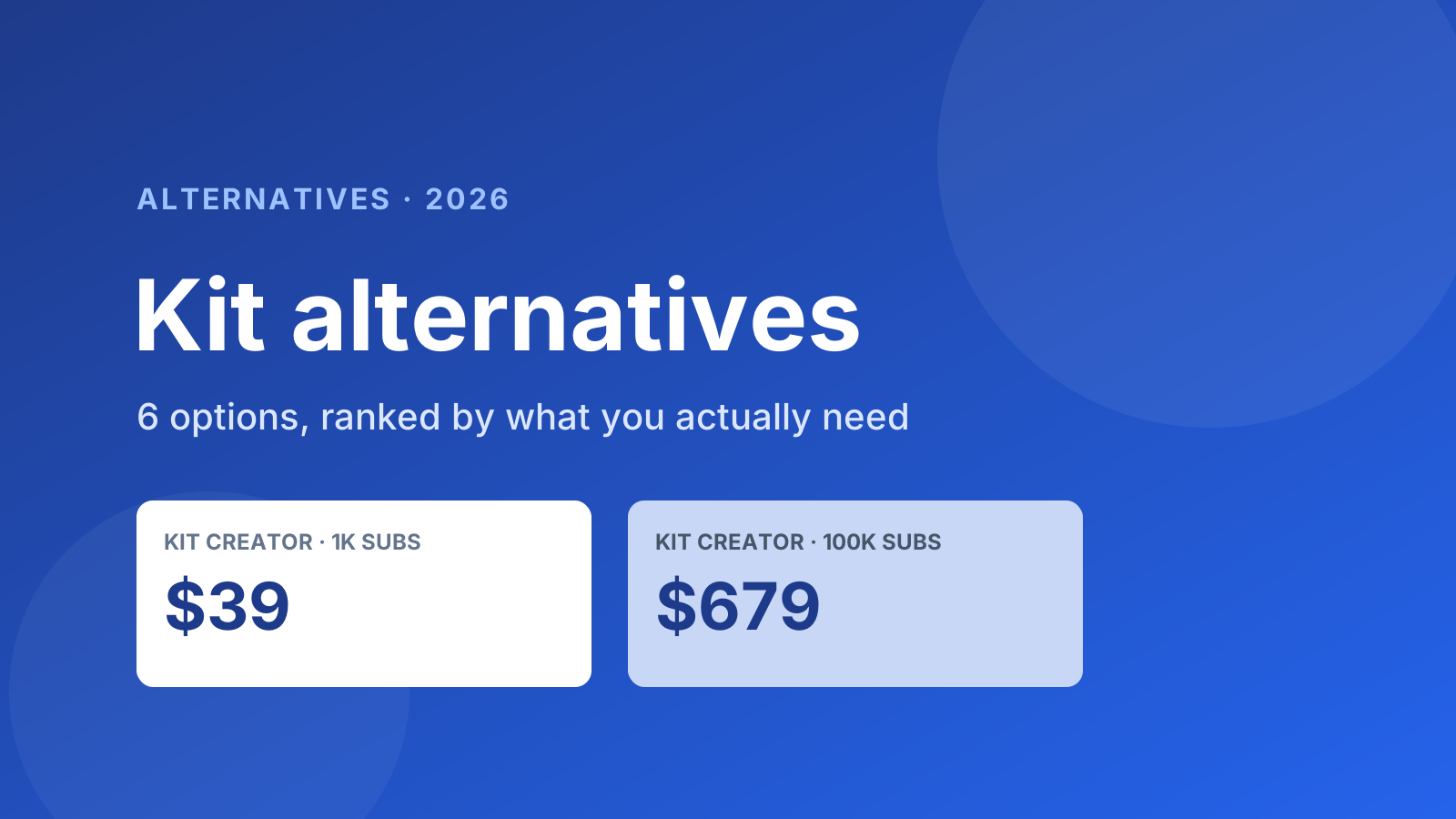
Quick answer: Almost nobody leaves Kit because it is bad — they leave because of the bill. Kit’s Creator plan costs $39/mo at 1,000 subscribers and $679/mo at 100,000, and EmailTooltester’s Roberta Phillips writes that “considering they target solopreneurs or really small teams, it shocks me to see that their prices are much higher than alternatives like MailerLite and Brevo” (EmailTooltester). Ranked by need: Bluey Email (best value once you outgrow the free plan), beehiiv (best for monetizing a newsletter), MailerLite (best simple, low-cost swap), EmailOctopus (cheapest paid tier), Ghost (best for owning your platform), and Flodesk (best flat rate). Full disclosure: Bluey is my own product; I ranked it against the same criteria and I will name where each rival beats it.
Kit (formerly ConvertKit) has a famously generous free plan and then a cliff. Understanding exactly where that cliff sits is the whole point of this page.
Why look for a Kit alternative?
Kit’s free Newsletter plan is unusually good: 10,000 subscribers, unlimited emails, forms, and landing pages — but only one automation (EmailTooltester). The moment you need a second automation, you are on Creator, and Creator prices by subscriber.
| Subscribers | Creator | Creator Pro |
|---|---|---|
| 1,000 | $39/mo | $79/mo |
| 5,000 | $89/mo | $139/mo |
| 10,000 | $139/mo | $189/mo |
| 25,000 | $199/mo | $279/mo |
| 50,000 | $379/mo | $519/mo |
| 100,000 | $679/mo | $879/mo |
EmailTooltester rates Kit 3.9/5 and lists its two biggest weaknesses as “it can get pricey” and “poor design options” — the design complaint being that Kit ships only 3 email templates (EmailTooltester). Phillips is direct about the value question: “Kit is not what we would consider a cheap email marketing platform, especially if you take into account that it lacks some important features.”
To be fair to Kit: it includes free list migration on paid plans, native selling of digital products and paid newsletters (at a 3.5% + 30¢ transaction fee), and unlimited sends on every tier. If your list is under 10,000 and one automation is enough, staying free on Kit is the correct financial answer and no list can beat it.
The 6 best Kit alternatives
1. Bluey Email — best value once you outgrow Kit’s free plan
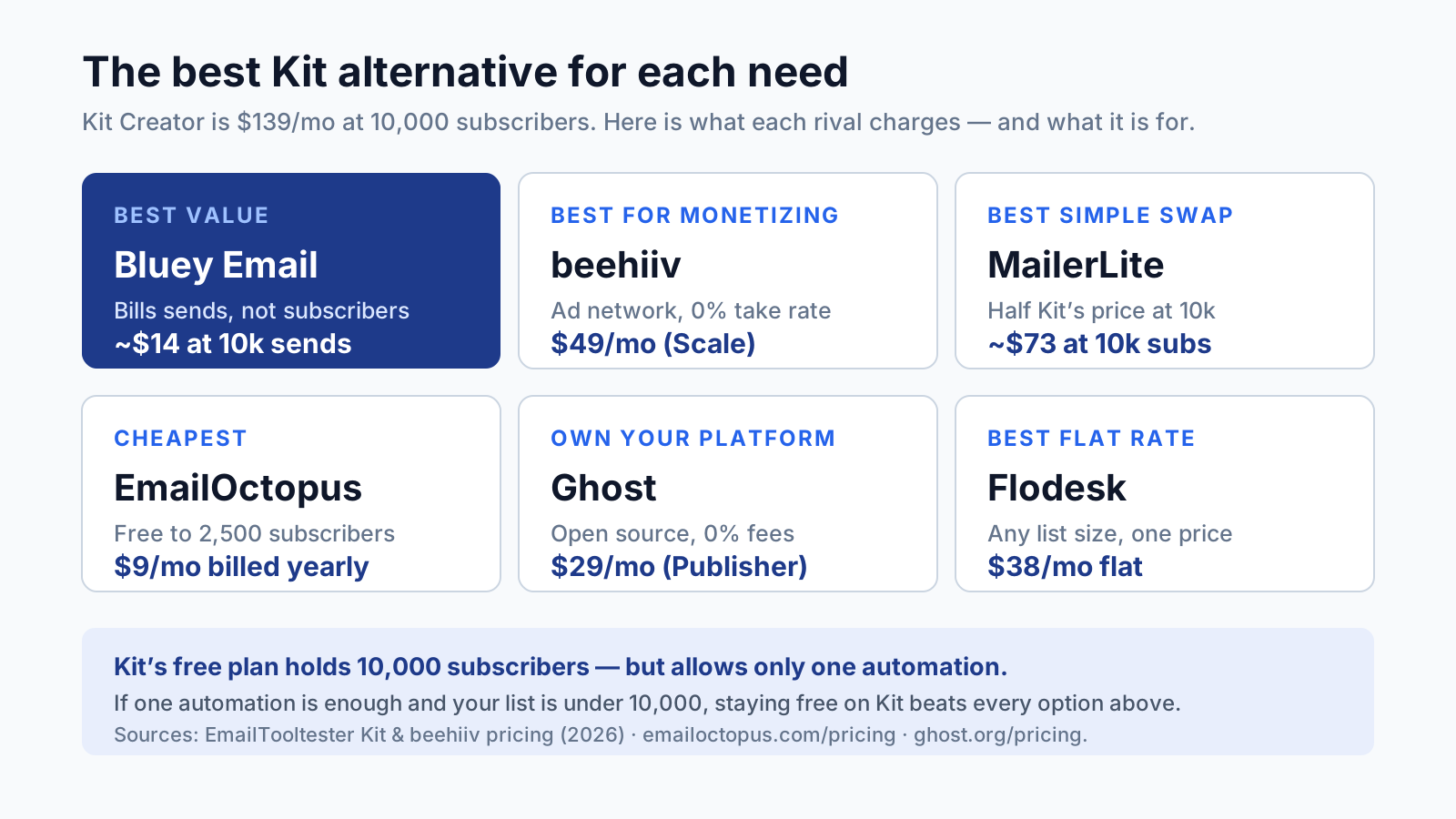
Best for: creators and small businesses who need real automation without a per-subscriber bill. Price: free (500 contacts / 500 sends); ~$14/mo to email 10,000 contacts once; Grow $30/mo with unlimited contacts. Why over Kit: Bluey bills by emails sent, so a 25,000-person list you email monthly does not cost $199/mo — storing contacts is free. It also bundles a built-in CRM, landing pages, and transactional email on one bill, plus more than three templates. Trade-off: Kit’s creator monetization ecosystem (paid newsletters, Creator Network, Recommendations) is more mature, and Kit’s free plan carries 10,000 subscribers where Bluey’s carries 500.
2. beehiiv — best for monetizing a newsletter
Best for: publishers whose newsletter is the business. Price: free up to 2,500 subscribers with unlimited sends; Scale $49/mo at 1,000 subscribers, $109/mo at 10,000 (EmailTooltester). Why over Kit: beehiiv takes a 0% cut of paid subscription revenue and adds an ad network, Boosts, a website builder, and podcasts (beehiiv). EmailTooltester ranks it ahead of Kit for newsletter creators. Trade-off: it is still per-subscriber pricing, its free tier has no automations, and it caps at 100,000 subscribers. See beehiiv alternatives.
3. MailerLite — best simple, low-cost swap
Best for: people who want Kit’s simplicity for less. Price: free plan (500 subscribers); Growing Business from $15/mo; roughly $73/mo at 10,000 subscribers — about half Kit’s $139. Why over Kit: better design tooling and a deliverability record EmailTooltester has repeatedly awarded. Trade-off: no CRM, thinner reporting, and no spam or design testing. See MailerLite alternatives.
4. EmailOctopus — cheapest paid tier
Best for: budget-first senders who just need campaigns out the door. Price: free for 2,500 subscribers / 10,000 emails per month; Pro from $9/mo billed yearly (EmailOctopus). Nonprofits get a 20% lifetime discount. Why over Kit: it is dramatically cheaper, and upgrading removes the branding restrictions. Trade-off: a much smaller feature set — no meaningful monetization, and the free plan stamps EmailOctopus branding on your emails and keeps reports for only 30 days.
5. Ghost — best for owning your platform
Best for: writers who want a website, memberships, and a newsletter they control. Price: Ghost(Pro) Starter $18/mo (billed yearly, 1,000 members, no paid subscriptions), Publisher $29/mo (paid subscriptions, custom themes, custom sending domain), Business $199/mo (10,000 members) (Ghost). Why over Kit: 0% transaction fees on paid subscriptions and unlimited email sends on every plan; Ghost is open source, so you can self-host and leave whenever you want. Trade-off: member limits are tight (1,000 on Starter and Publisher), and paid subscriptions require the $29 tier. It is a publishing platform, not a marketing-automation tool.
6. Flodesk — best flat rate
Best for: design-led creators who hate per-subscriber math. Price: a flat $38/month regardless of list size (EmailTooltester). Why over Kit: at 25,000 subscribers Kit’s Creator plan is $199/mo; Flodesk is still $38. Its templates are also far stronger than Kit’s three. Trade-off: lighter automation and analytics than Kit, and no free plan.
How to choose your Kit alternative
- Is your list under 10,000 and one automation enough? Stay on Kit’s free plan. Nothing here beats free.
- Do you email your list infrequently? Send-based pricing (Bluey) wins hardest when list size outpaces send volume.
- Do you sell paid subscriptions? beehiiv and Ghost both take 0%; Kit charges 3.5% + 30¢. On $5,000/mo of subscription revenue that is a ~$175/mo difference.
- Is your gripe design? Flodesk or MailerLite. Kit’s three templates are its most-cited weakness.
- Is your gripe price alone? EmailOctopus at $9/mo, or MailerLite at roughly half Kit’s cost.
- Do you want to own the whole stack? Ghost — open source, self-hostable, 0% fees.
Frequently asked questions
Why is Kit so expensive? Kit prices per subscriber, so the bill grows with people who never open your email. At 100,000 subscribers Creator is $679/mo (EmailTooltester). Send-based and flat-rate tools break that link.
What is the cheapest Kit alternative? EmailOctopus, at $9/mo billed yearly, with a free tier covering 2,500 subscribers and 10,000 emails a month (EmailOctopus).
What is the best free alternative to Kit? For pure subscriber headroom, nothing beats Kit’s own free plan (10,000 subscribers). beehiiv’s free Launch plan is next at 2,500 subscribers with unlimited sends, though it excludes automations (beehiiv).
Which alternative is best for selling paid newsletters? beehiiv or Ghost — both take 0% of subscription revenue, versus Kit’s 3.5% + 30¢ per transaction and Substack’s 10% (Substack).
Will I lose my automations if I switch? Automations never transfer between platforms; you rebuild them. Kit offers free migration into Kit on paid plans, which is worth remembering if you are evaluating both directions.
What is the best free Kit alternative? beehiiv is free up to 2,500 subscribers, MailerLite up to 250, and Bluey Email includes 500 contacts with every feature. beehiiv is the strongest free option for growth-focused newsletters.
Is beehiiv better than Kit for newsletters? For newsletter growth and monetization, often yes: beehiiv adds a built-in ad network, referral tools and paywalls. Kit still leads on creator-focused visual automation and tagging.
Which Kit alternative is best for paid subscriptions? Substack (free to start, around 10% of revenue), beehiiv (flat fee with built-in paywalls) and Ghost (0% revenue cut, self-hostable) are the go-to options for paid subscriptions.
The verdict
Kit is a good product with an awkward price curve: brilliant while free, expensive the moment you need a second automation. If the newsletter is your business, beehiiv or Ghost will keep more of your revenue. If you want the cheapest competent sender, EmailOctopus. If you want a flat rate, Flodesk.
And if what you actually want is Kit’s simplicity without a bill that scales with people who never open your emails, Bluey Email charges for sends instead of subscribers, and throws in a CRM, landing pages, and transactional email — the reason I built it that way. See the full field in Best Email Marketing Software in 2026, the head-to-head in Bluey Email vs Kit, or start with the complete email marketing guide.
— Shivam
1 thought on “6 Best Kit (ConvertKit) Alternatives in 2026, Compared by Need”