
From Rented Real Estate to Digital Ownership: The Ultimate Guide to Scaling Revenue Through Secure Email Marketing
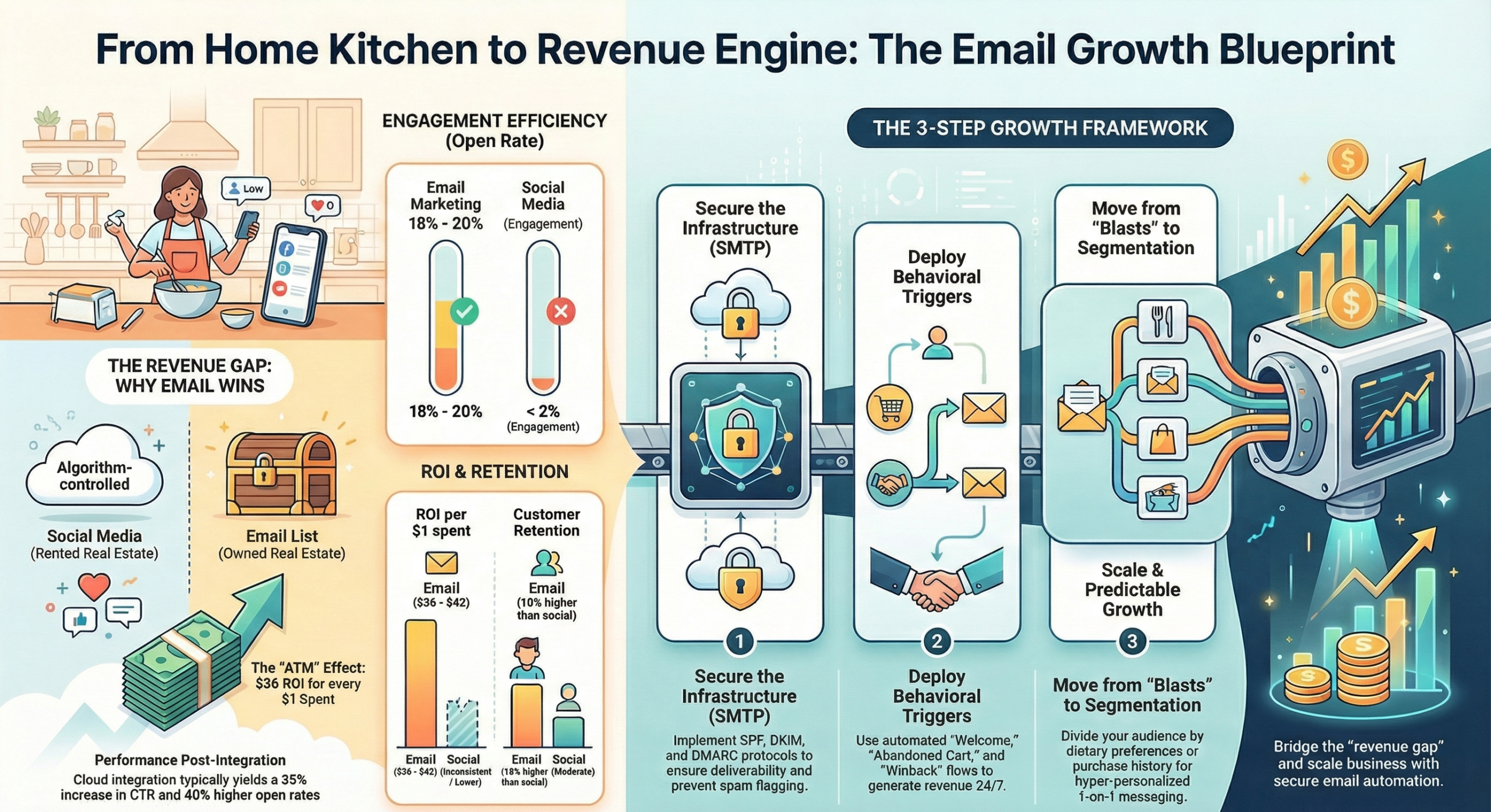
In the modern digital landscape, businesses face a stark reality: social media reach is “rented,” while email lists are “owned”. Many brands are currently standing at a precipice, watching as organic reach drops to historic lows due to the shift from social media to “interest media,” where AI-powered algorithms prioritize content based on user behavior rather than follower counts. For small businesses and home-based food enterprises, this volatility can be devastating. Relying solely on social platforms is akin to playing a “roulette table,” whereas an optimized email marketing strategy functions like an “ATM,” allowing you to press a button and generate revenue on demand.
The Strategic Shift: From Growth Hacking to Growth Engines
Growth marketing has evolved from the agile, experimental tactics of “growth hacking” into a disciplined, repeatable system for scalable growth. Unlike traditional marketing, which focuses on the top of the funnel (awareness), growth marketing manages the entire customer lifecycle, connecting every click and campaign to revenue and Customer Lifetime Value (CLTV). In home food enterprises, this transition is foundational to sustainability. By adopting lean innovation frameworks, small-scale culinary entrepreneurs can monetize their skills even in resource-constrained environments by leveraging cloud-based infrastructures.
The Foundation: Secure SMTP and Technical Credibility
To turn email into a reliable revenue driver, the technical infrastructure must be robust. The Simple Mail Transfer Protocol (SMTP) is the backbone of email transmission, but its basic architecture lacks native encryption, making it vulnerable to spoofing and phishing. Misconfigured servers often lead to blacklisting or emails being marked as spam.
To safeguard brand identity and ensure deliverability, businesses must implement three essential security layers:
- SPF (Sender Policy Framework): Specifies which mail servers are authorized to send emails on your behalf.
- DKIM (DomainKeys Identified Mail): Adds a cryptographic signature to verify message integrity.
- DMARC (Domain-based Message Authentication, Reporting and Conformance): Instructs receiving servers on how to handle failed authentication attempts (quarantine or reject).
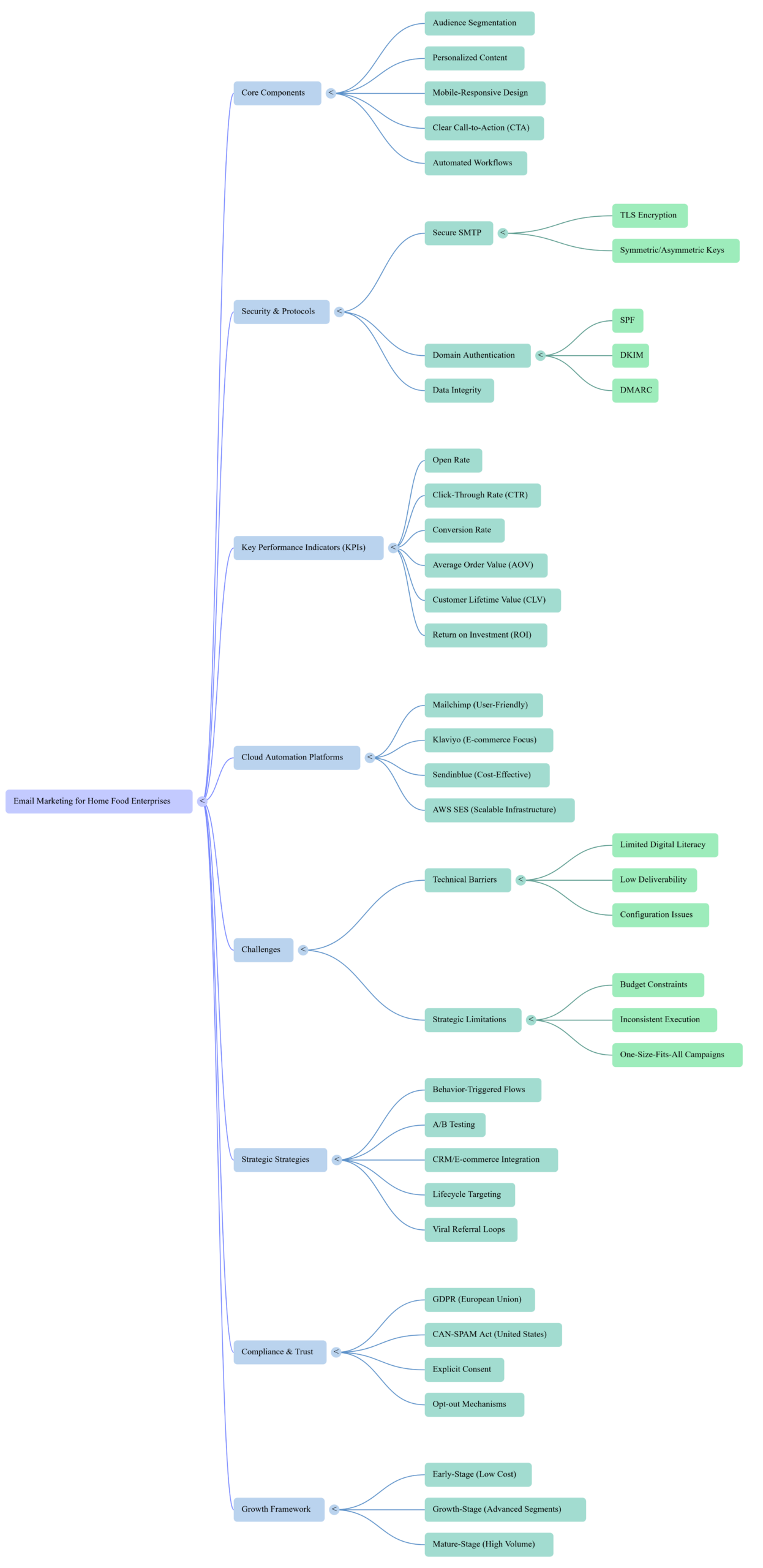
Furthermore, Transport Layer Security (TLS) ensures that data, such as sensitive customer identifiers and payment details, is encrypted during transit, mitigating “man-in-the-middle” attacks. This technical rigor is not just about security; it directly affects your domain reputation and deliverability scores, which are critical for campaign success.
Maximizing Profitability Through Customer Lifetime Value (CLTV)
CLTV is the total worth of a customer to a company over the lifespan of their relationship. An overwhelming 91% of marketers agree that investing in growing CLTV is more profitable than customer acquisition. Attracting a new customer can cost five times as much as retaining an existing one.
A mature approach to CLTV involves identifying key “customer moments,” such as the critical second purchase, where the initial cost of acquisition is finally covered. For home food businesses, increasing retention rates by just 5% can increase profits by 25% to 95%. Predictive analytics is an indispensable tool here, allowing companies to identify prospects likely to convert or customers at risk of “churn” (unsubscribing or leaving).
Advanced Automation: The “Set and Forget” Revenue Machine
Cloud-based automation platforms like Mailchimp, Klaviyo, and AWS SES provide flexible pathways for scaling outreach. Mailchimp is ideal for early-stage startups due to its user-friendly interface, while Klaviyo specializes in e-commerce-driven segmentation. AWS SES offers high-performance scalability for mature enterprises but requires higher technical proficiency.
Core automation functionalities include:
- Drip Campaigns: Pre-scheduled sequences that nurture leads over time, such as welcome series that educate prospects on your offerings.
- Behavioral Triggers: Reactive emails activated by user actions, such as cart abandonment reminders or “winback” sequences for inactive users.
- Replenishment Reminders: Automated nudges based on a customer’s typical order cycle—essential for food businesses selling meal kits or staples.
Integrating these tools with CRM and E-commerce systems (like Shopify or WooCommerce) allows for hyper-personalized messaging based on real-time purchase history. One case study showed that a home-based meal kit business increased monthly orders by 28% simply by implementing behavioral triggers and segmented messaging.
Segmentation and Personalization: Beyond the First Name
Effective segmentation divides your audience into groups based on dietary preferences (vegan, gluten-free), purchase frequency, or geographic location. Personalization must go beyond simple name tags; it should feel like a 1-on-1 conversation based on specific product categories or timing preferences. This approach strengthens brand identity and emotional connection, which is vital for food enterprises built on trust and quality.
Regulatory Compliance as a Competitive Advantage
Compliance with regulations like GDPR (European Union) and the CAN-SPAM Act (USA) is both a legal necessity and a way to build trust.
- GDPR requires explicit user consent and clear privacy notices.
- CAN-SPAM mandates accurate sender information and easily accessible unsubscribe mechanisms. Violating these can lead to severe financial penalties and reputational damage, whereas respecting consumer rights enhances long-term loyalty.
Converting Social Followers into Email Subscribers
Since social media platforms are vulnerable to algorithm changes—sometimes causing businesses to lose 90% of their traffic overnight—converting followers to subscribers is a survival strategy.
- Simplify the Signup: Use forms with only two fields: name and email.
- Use “Magic Links”: Allow followers to subscribe in one tap from social profiles.
- Boost Content: Use a small budget to boost social posts that contain direct signup links.
- Direct Inquiries: Don’t assume followers will find your link; ask for subscriptions clearly and consistently in your content.
Conclusion: Building Your Distribution Engine
The future of digital marketing in micro-food enterprises lies in a healthy mix of rented and owned audiences. While social media drives awareness, email drives retention and revenue. By implementing secure SMTP protocols, adopting cloud automation, and focusing on CLTV, home-based businesses can build a sustainable distribution engine that remains resilient regardless of platform shifts.
List of “Not to Dos” in Email Marketing
- Don’t “Blast” Everyone: Avoid one-size-fits-all, generic campaigns. Mass broadcasting to an unsegmented list leads to “ghosting” and high unsubscribe rates.
- Don’t Ignore Domain Authentication: Never send marketing emails without configuring SPF, DKIM, and DMARC. Failure to do so leads to low deliverability and your emails being flagged as spam.
- Don’t Rely Solely on Free Tools: While useful for startups, free-tier platforms often restrict the automation and CRM integration needed for real growth.
- Don’t Buy Email Lists: Your list should consist of people who “actually asked to hear from you.” Cold strangers rarely convert and can damage your sender reputation.
- Don’t Send Without a Clear CTA: Never fire off an email just to stay “top of mind.” Every email must have one clear, easy-to-find call-to-action (e.g., “Shop Now,” “Book Here”).
- Don’t Over-Design Your Emails: Avoid complex HTML templates that load slowly or break on mobile. Simple, conversational, text-based emails often perform better and feel more human.
- Don’t Hide the Unsubscribe Link: Not only is this illegal under CAN-SPAM and GDPR, but it also frustrates users and leads to spam complaints.
- Don’t Use Deceptive Subject Lines: Deceiving users to get an “open” destroys trust and violates transparency regulations.
- Don’t Send at Inconsistent Intervals: Avoid “burst” marketing where you ignore your list for months and then send daily. Inconsistency leads to audience fatigue and disengagement.
- Don’t Outsource Your Humanity to AI Only: While AI helps with analytics, outsourcing all engagement (comments/DMs) can make a brand feel insincere. Authentic human connection is your competitive “moat”.
10 FAQs: Scaling Revenue and Distribution
- What is the difference between a “rented” and “owned” audience? A rented audience lives on platforms like Instagram or LinkedIn where you are subject to algorithm changes. An owned audience (email or community) is a part of your own distribution engine that you control entirely.
- Why is email marketing considered more profitable than social media? Email marketing can generate a return of $36-$42 for every $1 spent. It offers a direct path from message to purchase without the “hope” factor of social media algorithms.
- What is Customer Lifetime Value (CLTV) and why does it matter? CLTV is the total revenue a customer generates over their entire relationship with your brand. Focusing on it is essential because retaining existing customers is significantly cheaper than acquiring new ones.
- How do SPF, DKIM, and DMARC help my business? These protocols authenticate your domain, proving to receiving servers that you are the legitimate sender. This prevents spoofing and ensures your marketing emails actually reach customer inboxes.
- What are “behavioral triggers” in email automation? These are automated emails sent based on specific user actions, such as abandoning a shopping cart, browsing a specific product, or a drop in order frequency.
- Which email platform should a startup use? Mailchimp and Sendinblue are recommended for startups due to their user-friendly interfaces and low-cost entry points. As a business matures, it might move to Klaviyo or AWS SES.
- Is social media useless for sales? No, but its primary strength is top-of-funnel awareness and community building. It should be used to attract people and then convert them into email subscribers for predictable sales.
- How often should I email my customers? For most small businesses, the “sweet spot” is 1 to 3 times per week. Sending too frequently can lead to spam complaints, while too infrequently causes people to forget your brand.
- What is the “ATM” analogy in email marketing? It refers to the ability of an optimized list to generate revenue on demand. When a trusted brand sends a valuable offer to its list, sales often appear within hours.
- How can I track the success of my email campaigns? Key Performance Indicators (KPIs) include Open Rates (subject line effectiveness), Click-Through Rates (content relevance), Conversion Rates (sales), and Average Order Value.